Bicycle Accident Right of Way in California
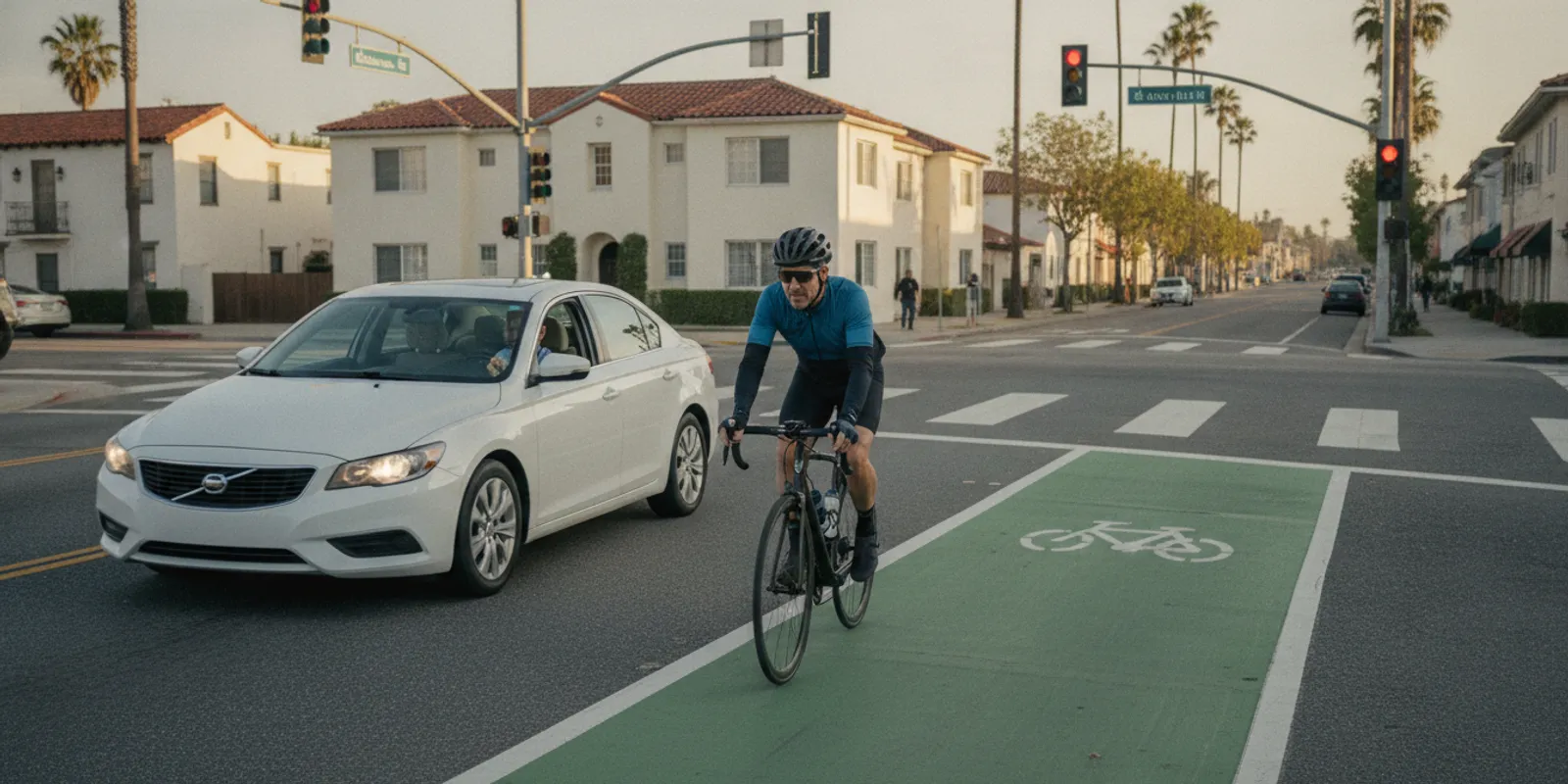
After a bicycle crash, one of the first questions is who had the right of way. The answer to a bicycle accident right of way California question depends on the location, traffic controls, road position, and what each person did. Neither a driver’s nor a cyclist’s assumption settles the issue. The scene, witness accounts, and records may help explain how the collision happened.
Talk with our team about your bicycle crash
This guide covers common California roadway situations and practical ways to document them. It is general information, not a decision about responsibility in a particular crash. If you were injured, make medical care the priority. Avoid guessing about fault before the facts are clear.
What does bicycle accident right of way California law require?
California roadway rules apply to cyclists using public roads, while also recognizing that bicycles have specific rights and duties. A cyclist may travel in a traffic lane, use a bike lane where available, or move out of a bike lane to turn or avoid a hazard. Drivers must account for people riding bicycles. Cyclists must follow applicable traffic controls and use due care.
The California Legislature publishes state laws through its official legislation and code information website. Vehicle Code rules address bicycles on roadways, turning, signaling, and passing. The code is organized by section and can be amended. Check current text or get advice about applying a rule to the facts instead of relying on a short summary alone.
Right of way is not blanket permission to proceed regardless of danger. A person with priority still needs to use reasonable care. A driver cannot assume a cyclist will yield just because the cyclist is smaller or riding in a bike lane. The questions include who was where, what each person could see, which signal or sign controlled, and whether either person had a reasonable chance to avoid impact.
It helps to separate three questions. First, what rule governed the movement? Second, what did each road user actually do? Third, what evidence can establish those details? A rule may describe what should happen, but a collision investigation must still establish the sequence. For example, the presence of a stop sign does not by itself prove whether a cyclist stopped, when a car entered, or how much time either person had to react.
How does bicycle accident right of way California work at intersections?
Intersections bring together people approaching from different directions, turning vehicles, pedestrians, and cyclists. Start with the traffic control: a signal, stop sign, yield sign, or no sign. Then identify each person’s approach, lane, speed, and movement. A red light or stop sign may establish an important duty, but the sequence and evidence still need examination.
At a signalized intersection
Record the direction each person was traveling and the signal phase, if anyone observed it. A driver turning across a cyclist’s path may have needed to yield, depending on the movement and signal. A cyclist entering against a red signal presents a different set of facts. Do not conclude that one detail settles everything. Signal timing, the turning path, visibility, and witness observations can help show whether a person entered lawfully and had time to react.
In a real-world reconstruction, note whether the cyclist approached in a bike lane, from a travel lane, or from a sidewalk or crossing. Note whether a vehicle was turning left or right, and where the first contact occurred. A witness who saw the light change may be useful, but so may a person who saw the vehicle’s approach and turn. Ask what the witness personally observed rather than asking them to confirm a theory.
At a stop-controlled intersection
Identify which approaches had stop signs and whether each person stopped. Note who entered first, whether another road user was already in the intersection, and whether the cyclist was riding on the roadway or walking the bicycle across a marked crosswalk. A cyclist riding through an intersection and someone walking a bicycle may be subject to different rules in a given situation. Photograph the signs and layout if it is safe.
Who arrived first may not be the only relevant question. A person may stop, look, and proceed when the way appears clear. Another road user may arrive shortly afterward or approach from a direction with a blocked sightline. Write down the sequence as specifically as possible: where each person stopped, when they began moving, and what happened next. Avoid replacing those details with a broad statement such as the car came out of nowhere.
When there is no signal or sign
Uncontrolled intersections call for careful reconstruction. Road width, traffic, and the intersection layout may affect the legal analysis. Ask witnesses where the vehicles were before impact, not only where they ended up. Skid marks, debris, damage, and final resting positions can help, but each clue may be incomplete. A driveway, parked vehicle, hedge, or building may also affect what a person could see.
Look at the approach from each person’s perspective. A photograph taken from the cyclist’s direction may show whether a parked van blocked a view. A second image from the driver’s approach may reveal a different obstruction. If a tree or construction barrier has since changed, note that too. Do not stand in traffic or recreate a dangerous maneuver to obtain a picture.
What if a crash happens in a bike lane or during a turn?
A bike lane does not make every bicycle movement predictable, and it does not remove a driver’s responsibility to look before crossing it. A motorist turning right may cross a lane used by a cyclist. A driver entering or leaving a driveway may cross the cyclist’s route. A cyclist may also move left to pass a stopped vehicle, avoid a pothole, or position for a turn. Evidence should show both road users’ positions and movements before contact.
California rules may require a driver to leave sufficient space when passing a bicycle. A close pass, a sudden turn across a cyclist’s path, or a door opened into a rider’s path can raise different factual questions. For a turning collision, map the paths: where did the car begin its turn, where was the bicycle, and when could each person see the other? For a driveway crash, note sight obstructions and whether the vehicle was entering or exiting.
Do not assume a cyclist must always remain in a bike lane. Road hazards, turning movements, and lane configuration can affect where it is safe or lawful to ride. A driver may have a reason to cross a bike lane, but must do so with appropriate caution. A diagram made soon after the crash can preserve these details better than a later general recollection.
Consider a simple example: a cyclist is riding beside a line of slow traffic when a car signals and turns right across the bike lane. Relevant details might include the cyclist’s distance from the intersection, the car’s speed and signal, the visibility between them, and whether either had time to respond. In another example, a cyclist moves left around a pothole shortly before a car passes. The location and size of the pothole, traffic spacing, and witness descriptions could help explain why the cyclist changed position. These examples show why a label such as bike lane crash cannot replace a factual account.
| Situation | Questions to investigate | Useful evidence |
|---|---|---|
| Signalized intersection | Which signal applied, and who was turning or proceeding straight? | Witnesses, signal or camera records, damage locations |
| Stop sign | Which approach had a sign, who stopped, and who entered first? | Sign and sightline photos, witness statements, scene diagram |
| Bike lane crossing | Was a vehicle turning or crossing the lane, and where was the cyclist? | Lane markings, vehicle positions, photographs, video |
| Driveway or parking maneuver | Was the vehicle entering, exiting, backing, or opening a door? | Property cameras, damage, obstruction and visibility records |
| Road hazard or lane change | Why did the cyclist change position, and was the movement visible? | Hazard photos, road condition records, witness accounts |
How can you document a bicycle right-of-way dispute?
If you can do so safely, take photographs before vehicles and equipment are moved. Capture the whole intersection, each approach, traffic controls, bike lane markings, signs, sight obstructions, debris, and bicycle and vehicle damage. Take both close and wide views. Include landmarks that show distance and direction. Do not enter traffic or delay urgent care to collect evidence.
For a useful photo set, begin with an image showing the whole scene. Then photograph each approach from the approximate perspective of the people involved. Take close views of a damaged wheel, scraped vehicle panel, broken light, or road hazard. Include a reference point, such as a lane line or curb, when it helps show scale. Make a note of where you stood and which direction the camera faced.
- Write down the date, time, exact location, weather, lighting, and direction of travel.
- Make a simple diagram showing lanes, turns, points of impact, and where people stopped.
- Get names and contact details for witnesses, and ask what they saw before impact.
- Keep the bicycle, helmet, clothing, and damaged equipment in their post-crash condition when practical.
- Save photographs, messages, repair estimates, medical paperwork, and insurance communications.
- Ask promptly whether nearby businesses, homes, vehicles, or public agencies have video that may be erased or overwritten.
A diagram does not need to look professional. Draw the road and label the lanes, direction of travel, traffic controls, and approximate points of impact. Use arrows for movement and a separate mark for final positions. Add a note if a measurement is only an estimate. That distinction is more useful than presenting an uncertain distance as exact.
Witnesses may remember different things. Ask for their own account rather than suggesting an answer. Someone who saw the approach and signal may provide more context than a person who heard the crash and arrived afterward. Keep original photo and video files when possible, since they may retain timestamps and other information. Do not edit the only copy.
Nearby video can disappear as routine recording systems overwrite old footage. If a business or residence may have a camera, note its address, camera direction, and the date and time range that could matter. Ask politely whether footage exists and how to preserve it. Do not trespass or pressure an owner to provide a recording. A lawyer may be able to make a formal preservation request when appropriate.
Medical records can document injuries and treatment, but they do not independently establish who had the right of way. Explain symptoms accurately to health care professionals and follow their instructions. If symptoms appear later or worsen, seek appropriate medical attention. Avoid posting speculation about the collision online; a short clip or comment may omit important context.
Can more than one person share fault after a bicycle collision?
Yes. California generally follows a pure comparative negligence approach. A person’s recovery in a claim may be reduced by the share of fault assigned to that person, rather than automatically barred because that person contributed to the collision. Applying the principle requires evidence and legal analysis. A detail such as a cyclist’s lane position does not by itself explain how a collision occurred or resolve every question about responsibility.
For instance, evidence might show that a driver turned across a cyclist’s path while the cyclist was also moving faster than a witness expected. Those facts would need to be assessed together, not reduced to a slogan that one person was at fault. Another collision may involve a clear traffic control violation by one person and no evidence of a contributing act by the other. The assignment of responsibility depends on the actual record.
Insurers may focus on a lane position, a late signal, or a failure to stop. You can provide a factual account without accepting a fault percentage before the evidence is reviewed. Be accurate and do not embellish. If you do not know an answer, say so. Keep copies of statements and documents you provide. Consider getting legal advice before signing a release or giving a recorded statement about a significant injury.
Claims can involve questions beyond right of way, including whether each person acted reasonably, what injuries the collision caused, and which insurance policies may apply. California deadlines can limit the time to bring a lawsuit. Special rules may apply to claims involving a public entity. The California Courts website offers general court information, but an overview cannot establish which deadline applies to a particular claim. Deadlines depend on the circumstances, so do not use an online article as a substitute for checking dates with a lawyer.
What should you do when an insurer contacts you?
Get the adjuster’s name, company, claim number, and the policyholder’s identity. Ask what information is requested and whether it can be provided in writing. Preserve receipts and records related to treatment, transportation, bicycle repair, and missed work. Do not guess at future medical needs or sign a settlement document before you understand its effect. An early offer may not account for the full course of recovery.
Organize a timeline while events are fresh: the trip before the collision, the approach, the impact, immediate symptoms, medical visits, and communications afterward. Separate what you personally observed from what someone else told you. This helps you answer questions accurately and spot gaps that may need investigation. Keep a copy of each letter, email, form, and attachment you send or receive.
If the insurer asks for a recorded account, clarify what topics it wants to cover and whether a response is required. Do not guess at speed, distance, or signal timing. You can explain what you remember and distinguish it from what you are unsure about. Avoid signing a broad medical authorization without understanding the records it could reach. For information about the firm’s auto accident practice and injury matters, review the firm’s site. Its auto accident FAQs discuss common questions about accident claims.
How can you prepare for a legal consultation?
Bring a concise account of what happened, scene photos, witness contacts, medical records you have, and letters or messages from insurers. Include the date and location and a map or sketch. List questions you want answered: what deadlines could apply, what evidence should be preserved, and whether more than one insurance policy may be relevant. You do not need to know the legal label for every fact.
For a local collision, details of the street layout and nearby businesses can matter. On the Central Coast, preserve the precise location rather than describing it only as near downtown or by the highway. Note the nearest intersection, direction of travel, and any landmark that could help identify cameras or witnesses. A clear location can make follow-up investigation more focused.
James McKiernan Lawyers handles personal injury matters, including bicycle collisions. You can read about the firm’s personal injury practice, its practice areas, and the firm’s background. These pages provide firm information; they do not determine how a particular collision will be resolved.
When you speak with a lawyer, explain both favorable and difficult facts. Mention a possible traffic violation, but also share anything that could raise questions about your own movement or visibility. Bring original files when practical and identify what you have not yet been able to obtain. An accurate assessment depends on the whole picture.
Contact James McKiernan Lawyers to discuss your options
Frequently asked questions
Does a cyclist always have the right of way in a bike lane?
No. A bike lane is relevant to road position, but the analysis also depends on traffic controls, turning movements, and what each person did. A driver crossing a bike lane should use care, and a cyclist must follow applicable rules.
Can a cyclist be partly responsible for a crash?
Yes. California comparative fault principles can account for more than one person’s conduct. A cyclist’s share of responsibility may affect a claim, but it does not automatically mean there is no potential recovery.
What if there were no witnesses?
Other evidence may still help, including photographs, vehicle damage, bicycle condition, road markings, medical records, and available video. Preserve what you have and note potential camera locations quickly.
Should I admit fault at the scene?
Give necessary factual information and cooperate with emergency responders, but avoid guessing about legal responsibility. You may not yet know all the facts or the extent of an injury. Provide a careful, truthful account.
Use evidence, not assumptions
Right-of-way questions after a bicycle collision are fact specific. Identify the traffic control, reconstruct the paths of travel, preserve witness and scene evidence, and keep records of injuries and insurance communications. If you were hurt, timely advice can help you understand deadlines and options while important evidence is still available.
Reach out to discuss a bicycle collision
A careful record of what happened can make it easier to evaluate the collision without relying on assumptions.