ATV Accident Injury Claims in California: Legal Guide
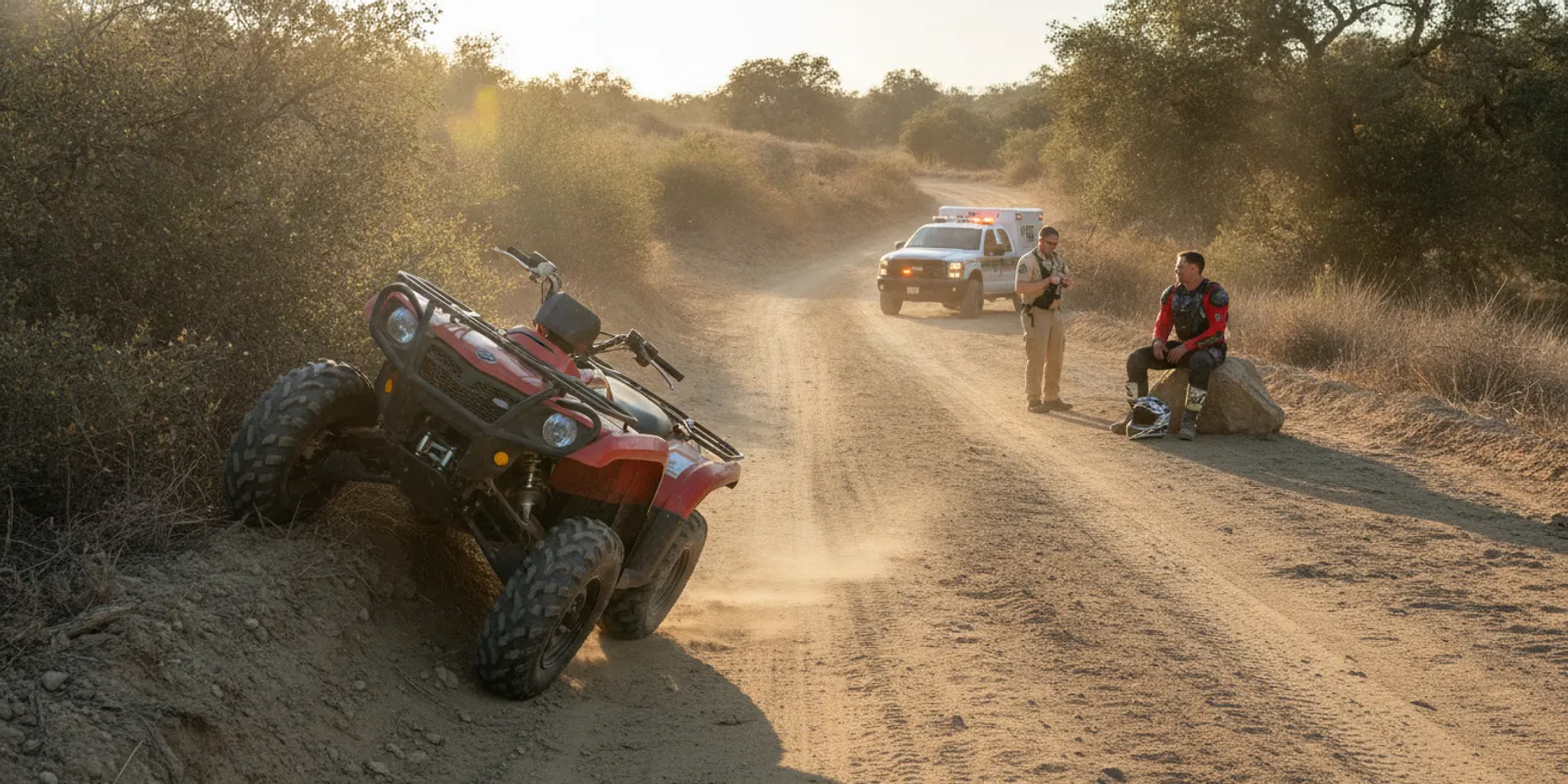
An ATV crash can cause serious injuries in seconds, whether it happens on a private property, an off-highway trail, or a road. An ATV accident injury California claim may involve more than the person driving: a property owner, vehicle owner, event operator, or insurer may also matter. The right next steps depend on where the crash happened, who controlled the vehicle and location, and what evidence remains.
Discuss your accident with a lawyer
How does an ATV accident injury California claim work?
An injury claim is a request for compensation based on another party’s legal responsibility for harm. A claim is not automatic just because someone was hurt. The available evidence must support a legal basis for holding a person or organization responsible, and the injured person must show how the incident caused losses.
California Courts describes negligence as a legal reason to bring a personal injury case when someone acts carelessly and causes injury. That basic idea can apply to an ATV crash, but the facts matter. A rider may have made a dangerous choice, or a person responsible for the vehicle or property may have contributed to the hazard. Read the California Courts overview of personal injury cases for general information about the legal basis for injury claims.
An ATV claim is not the same as a standard car collision claim. It may happen away from public roads, with no traffic signal, police report, or clear lane positions to explain what happened. The vehicle may be privately owned, rented, borrowed, or supplied for a guided activity. Each detail can change which insurance policies or parties need to be examined.
The word “ATV” can also cover different off-highway vehicles and settings. A crash involving a recreational vehicle on a trail raises different questions from a collision involving a motorcycle on a public road. A scooter crash may involve different vehicle rules and insurance. Do not assume that advice for a car, motorcycle, or scooter claim answers the questions raised by an off-highway ATV incident.
Who may be liable in an ATV accident injury California case?
Responsibility depends on the cause of the crash, the relationship between the parties, and the location. More than one person or organization may have contributed. A careful investigation looks at conduct and control, rather than assuming that the injured rider or the person behind the handlebars is the only relevant party.
The ATV operator
A rider may be responsible if careless operation caused a crash or injured someone. Examples may include traveling too fast for visibility or terrain, failing to pay attention, making an unsafe turn, following too closely, or riding in a manner that puts nearby people at risk. Alcohol or drug impairment may be relevant when supported by evidence. These are examples, not a conclusion about any particular crash.
Witness accounts, photographs, video, physical marks, and the vehicle’s condition can help establish what the operator did. If the operator disputes the account, small details can become important: the direction of travel, a sudden change in terrain, the distance between riders, and whether the operator had time to react.
The ATV owner or person who supplied it
The person driving is not always the owner. A family member, friend, rental business, employer, or recreational operator may have supplied the ATV. Depending on the facts, questions may arise about permission, the vehicle’s condition, and what the owner knew about the rider’s ability or the risks involved.
For example, an owner may have allowed an inexperienced person to use a powerful vehicle without reasonable safeguards. A maintenance problem may also have contributed. Establishing responsibility requires evidence; ownership alone does not prove that the owner caused the injury.
A property owner, event organizer, or trail operator
Where the crash happened can raise a separate line of inquiry. A landowner or operator may have had control over a dangerous condition, route, obstacle, or activity. Relevant questions include who owned or managed the property, who knew about the hazard, whether warnings or barriers were present, and whether people were allowed or invited to ride there.
A property owner is not automatically liable whenever someone gets hurt on land. A claim may depend on the condition that caused the injury, the owner’s knowledge and control, the visitor’s reason for being there, and other case-specific facts. ATV recreation can involve uneven ground and inherent risks, so it is important to identify whether the injury came from the terrain itself or a condition or decision that may have been avoidable.
An organized ride, tour, or event can add questions about supervision, route planning, safety instructions, participant agreements, and emergency response. Keep any registration materials, waivers, maps, messages, or rules you received. A waiver does not settle every legal issue by itself, and its effect depends on the circumstances and applicable law.
Another rider, business, or manufacturer
Another rider may have caused a collision or created an unsafe situation. A business may be relevant if its conduct in renting, maintaining, supervising, or organizing an activity contributed to the crash. A defective part or vehicle design can also warrant examination if a mechanical failure appears to have played a role.
Do not repair, discard, or alter a damaged ATV before documenting it, if it is safe and practical to preserve it. A qualified investigation may need to inspect the vehicle or parts. The possible involvement of a product maker is different from a claim that a rider simply lost control, so the cause should be evaluated before drawing conclusions.
How do property and location issues affect an ATV claim?
Start by identifying the precise place of the crash. “On a trail” may not be specific enough. Record the trail or access point, nearby landmarks, the direction of travel, and whether the location was public, private, part of a business, or part of an organized activity. A map pin and wide-angle scene photos can preserve context that is hard to recall later.
Land access can be complicated. A property might be privately owned but open to some recreational use, managed by a public body, or controlled by an event or business. The responsible entity and the rules for bringing a claim can differ. If a public entity may be involved, do not wait to seek legal guidance, because special claim procedures and shorter notice periods can apply.
Look for more than an obvious hole or rock. A route’s visibility, slope, surface, signs, gates, barriers, lighting, and maintenance history may be relevant. So may recent weather, trail changes, or reports of earlier incidents. Take photographs from a safe position and do not put yourself or others at risk to recreate the crash.
For a crash on the Central Coast, preserve the name of the trail or property and the nearest town or access road. Local geography can help locate witnesses, emergency responders, and potential records. The firm’s California office locations page provides information about its service areas. It is not a substitute for identifying the exact crash location and the person or entity responsible for it.
Which insurance policies may apply?
Insurance for an ATV crash is not always straightforward. A policy may cover some vehicles or uses but exclude others. Coverage can depend on whether the ATV was owned, borrowed, rented, used for work, or operated on a particular type of property. Do not assume that a car insurance policy covers an off-highway vehicle, or that the rider’s health insurance is the only relevant coverage.
Potential policies to identify may include an ATV policy, a homeowner or property policy, business insurance for a rental or event operator, or a policy held by another responsible party. These are possibilities, not guarantees. The language of each policy and the facts surrounding the incident control.
After a crash, notify appropriate insurers as required by the policy and keep a record of what you report. Provide accurate facts, but avoid guessing about speed, fault, or the cause if you do not know. Ask for written confirmation of claim numbers, adjuster contact details, and any requested documents. Keep copies of forms, letters, emails, and messages.
Be cautious about signing a release or accepting a settlement before you understand the injuries and the claim’s scope. Some injuries need continuing evaluation, and a signed release may limit later recovery. If an insurer asks for a recorded statement or broad medical authorization, consider getting legal advice first. A lawyer can explain the request and the potential consequences in light of your situation.
Insurance questions can overlap with broader personal injury issues. The firm’s personal injury legal services page offers general information about its practice. For a different type of road collision, see its auto accident information; an ATV crash may require a distinct analysis of vehicle use, property access, and coverage.
What evidence can help explain an ATV crash?
Evidence can disappear quickly. A trail may be cleared, weather may change the surface, a damaged vehicle may be repaired, and witnesses may leave. If you are able, ask someone you trust to document the scene while you focus on medical care. Keep original files and note when and where each item was created.
- Scene photographs and video: Capture the ATV, the full route, the immediate area, visible hazards, signage, barriers, tracks, and lighting. Take close and wide views without moving objects.
- Vehicle information: Record the make, model, owner, rental or registration details, visible damage, and any maintenance or inspection records you can obtain. Do not alter a suspected failed part.
- Witness details: Get names and contact information, and ask each person to describe what they personally observed. Avoid coaching or debating them about fault.
- Incident and emergency records: Keep any police, fire, ambulance, park, business, event, or property-management report number. Ask how to request a copy when appropriate.
- Medical records and expenses: Save discharge instructions, appointment details, bills, prescription records, and notes about symptoms and limitations. Follow medical advice and report changes to your providers.
- Communications and documents: Preserve messages with the owner, rental company, event organizer, insurer, or property manager. Keep waivers, rental terms, route maps, and safety instructions.
- Personal notes: Write down the timeline, weather, route, people present, what happened immediately before the crash, and how symptoms developed. Mark uncertain details as uncertain.
Medical records help connect injuries to the crash and show the care received, but they do not replace a full account of the event. Describe your symptoms honestly to healthcare providers. Do not exaggerate or minimize them. A consistent, accurate record is more useful than trying to predict how a claim will be valued.
Social media can also become part of a dispute. Consider avoiding posts about the crash, your activities, or your recovery while a claim is under review. Do not delete relevant evidence or messages. If you are concerned about an existing post, get advice about how to handle it rather than altering records without guidance.
What should you do after an ATV injury?
- Get to safety and seek medical care. Call emergency services when needed. Some serious injuries are not obvious at the scene, and prompt evaluation can protect your health and create a record of the symptoms.
- Report the incident. Notify the appropriate property manager, event organizer, rental company, or law enforcement agency when applicable. Request the report or incident reference number.
- Document what you can safely document. Photograph the scene and vehicle, save contact details, and preserve written materials. Do not risk another injury to collect evidence.
- Keep records together. Use a folder for medical documents, receipts, insurer letters, wage information, and incident materials. Add dates and brief notes while details are fresh.
- Be careful with statements and releases. Give accurate information when required, but do not speculate or sign documents you do not understand. Ask for time to review requests.
- Get case-specific guidance promptly. A lawyer can help identify potentially responsible parties, coverage questions, and deadlines based on the crash location and facts.
California personal injury deadlines are important, and the deadline may vary depending on the parties and circumstances. A claim involving a public entity can have separate, shorter procedures. Do not rely on a general online timeline to calculate your own deadline. Preserve the evidence and seek advice soon, particularly if a government-managed location or serious injury is involved.
How can shared fault affect recovery?
More than one person’s conduct can contribute to an ATV crash. California generally follows comparative fault principles, which can reduce a claimant’s recovery by the share of fault assigned to that claimant. The exact allocation is fact-specific and may be disputed by insurers or other parties.
For example, an insurer might argue that a rider ignored a warning, traveled too fast, or chose a route that was not suitable for their experience. The rider may respond that a hidden hazard, unsafe vehicle, or another person’s conduct caused the crash. Evidence about the route, visibility, instructions, vehicle condition, and timing can help evaluate competing accounts.
Comparative fault does not mean that an injured person should assume they have no claim. Nor does it mean that every allegation made by an insurer is correct. Preserve the facts, avoid public speculation, and get an informed review before accepting an assessment of responsibility.
What should an ATV claim comparison include?
The setting and parties can change the investigation. This table summarizes common questions, not automatic outcomes or guarantees of coverage.
| Crash setting or issue | Questions to investigate | Evidence to preserve |
|---|---|---|
| Another rider’s operation | What did each rider do before impact? Were warnings or instructions given? | Witness accounts, scene photos, messages, reports, and any available video |
| Borrowed or rented ATV | Who owned or supplied the vehicle? Was its condition or the rider’s experience relevant? | Rental terms, permission messages, maintenance records, vehicle details, and damage photos |
| Private property or event | Who controlled the area or activity? Was a hazard known, maintained, marked, or managed? | Location details, maps, signs, waivers, event materials, incident reports, and hazard photos |
| Possible mechanical failure | Did a part or vehicle defect contribute, or did the crash result from another cause? | Unrepaired vehicle and parts, purchase or service records, photographs, and inspection information |
| Insurance and shared fault | Which policies may apply? What facts support or challenge each account of responsibility? | Policy and claim correspondence, statements, medical records, scene evidence, and expense records |
Frequently asked questions
Can I make a claim if I was riding the ATV?
Possibly. A rider may have a claim if another person or organization contributed to the injury through negligent conduct or another valid legal basis. The rider’s own conduct can also affect how responsibility is evaluated. The answer depends on evidence, insurance, and the circumstances of the crash.
Can a landowner be responsible for an ATV injury?
Potentially, but not simply because the crash occurred on the land. Relevant facts may include who controlled the property, the condition that caused the injury, whether the owner knew about it, and why the rider was there. Public property and organized activities can raise additional rules, so prompt advice is useful.
Does homeowners insurance cover an ATV crash?
There is no universal answer. Coverage depends on the actual policy, the vehicle, the location, and how it was being used. An ATV policy, business policy, or another party’s insurance may also be relevant. Ask for the applicable policy information and do not treat an insurer’s initial comment as a full coverage analysis.
What if I do not know who owned the ATV or the property?
Write down every identifying detail you do know, including the location, vehicle description, people present, rental branding, event name, and any signs or documents. Preserve photographs and messages. A lawyer may help identify owners or operators through available records, but do not trespass or put yourself at risk to investigate.
How long do I have to bring a California ATV injury claim?
Deadlines depend on the claim and the parties involved. Different procedures may apply when a public entity is involved, and exceptions can affect a general deadline. Do not wait for every medical issue to resolve before asking about the time limit. A lawyer can assess the applicable rules from the facts.
Ready to discuss an ATV injury?
An ATV crash can leave injured people dealing with medical treatment, lost time, uncertain insurance, and unanswered questions about who was responsible. James McKiernan Lawyers represents people injured in California accidents. Learn more about the firm’s experience and approach, or use the contact page to request a conversation.
Talk with the firm about your ATV injury
Timely medical care, careful documentation, and a fact-specific review can help you understand the options available after an ATV crash.