Motorcycle Lane Splitting Accident Liability California: Who Is at Fault?
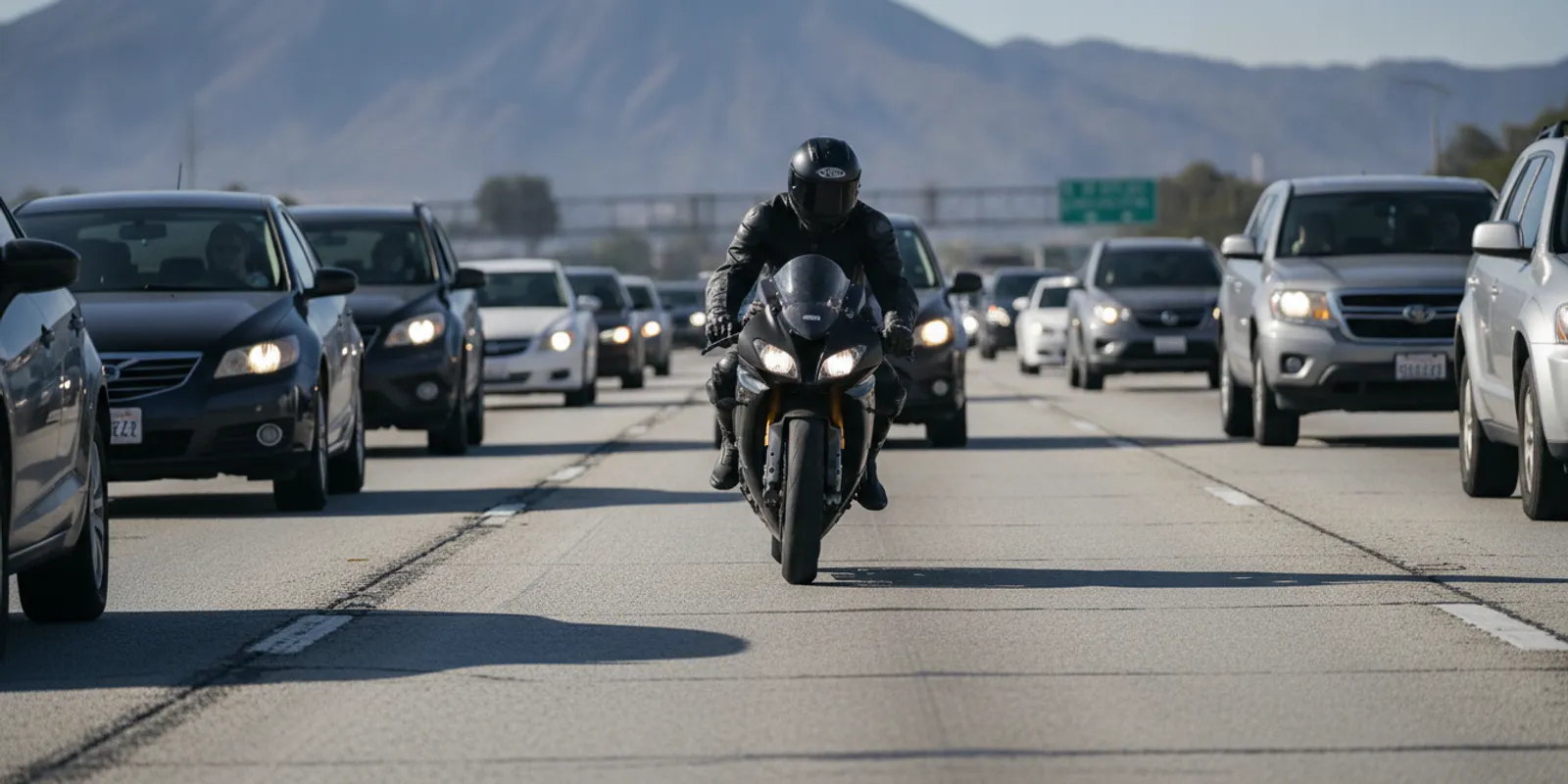
A collision while a motorcycle is moving between lanes can leave everyone asking the same question: who had the right of way, and who is responsible? Motorcycle lane splitting accident liability California cases turn on the conduct of every person involved, the traffic conditions, and the evidence—not simply on the fact that a rider was lane splitting. California permits lane splitting, but permission does not excuse unsafe driving. This guide explains the rules, how fault may be assessed, and what to do after a crash.
Discuss your motorcycle crash with a lawyer
What does California law say about lane splitting?
Lane splitting generally means riding a motorcycle between rows of stopped or moving vehicles traveling in the same direction. California allows this practice. The California Highway Patrol’s motorcycle safety guidance explains that lane splitting is legal and warns drivers not to intentionally block or impede a motorcyclist in a way that could cause harm.
Legal does not mean automatically safe in every circumstance. A rider still has to use reasonable care, and other road users must also drive carefully. Traffic speed, the width of the space between vehicles, visibility, the rider’s speed, and sudden lane changes can all matter when investigating a collision. The question is usually what each person did under the conditions at that moment.
CHP has published lane-splitting safety guidelines intended to help riders make safer choices. They are guidance, not a promise that a particular maneuver is safe or a rule that resolves liability in every case. A rider should consider traffic speed, surrounding vehicles, road conditions, and whether there is enough room to pass without creating a hazard.
How is motorcycle lane splitting accident liability California determined?
Liability is based on evidence of fault and the connection between a person’s conduct and the crash. Investigators and insurers may examine whether a rider or driver failed to use reasonable care. They may also consider whether more than one person’s conduct contributed to the collision.
For example, a driver who changes lanes without checking mirrors or blind spots may have contributed to a crash with a nearby motorcycle. A motorcyclist who travels too fast for the traffic conditions or fails to leave room to react may also face questions about their conduct. These are examples, not automatic findings. The exact facts matter, including what each person could see and how much time they had to respond.
California follows a comparative fault system. In general, an injured person’s recovery may be reduced by the share of fault assigned to that person. An allegation that a motorcyclist was lane splitting does not, by itself, establish that the rider caused the collision or eliminate a potential claim. The parties may dispute the percentages, and the evidence must be evaluated as a whole.
Common questions used to assess fault
- Was the motorcycle traveling at a speed suited to the surrounding traffic and roadway?
- Did a driver signal and check for motorcycles before changing lanes or turning?
- Was the lane gap wide enough for the maneuver, and could the rider be seen?
- Did any person make a sudden movement, stop, or turn that left others too little time to react?
- Did road conditions, congestion, lighting, or an obstruction affect visibility or control?
- Does physical evidence or a witness account support either person’s description?
These questions can help organize an investigation, but none settles responsibility alone. Statements made immediately after a frightening crash may be incomplete. A careful review can compare those statements with photographs, vehicle damage, video, and other records.
How can the same crash raise different fault questions?
Imagine that traffic is moving slowly and a motorcycle is traveling between two lanes. A car begins moving into the adjacent lane, and the motorcycle strikes its side. Investigators may ask whether the driver checked for nearby traffic, whether a signal was used, and whether the rider had time and space to stop. The impact point and vehicle damage may help establish where each vehicle was, but they may not answer every question by themselves.
Now consider a driver who remains within a lane but brakes suddenly. The rider may have to explain the distance available, the traffic flow, and whether the speed allowed a safe response. The driver’s reason for braking and what the driver could see may matter as well. A sudden stop does not automatically make the driver responsible, just as a rider’s presence between lanes does not automatically make the rider responsible.
A third situation may involve a car that intentionally moves toward a motorcycle to close a gap. That conduct raises different safety concerns from an ordinary lane change. Witness accounts, video, and the driver’s statements may help distinguish deliberate interference from a move made without seeing the rider. The facts must be examined before responsibility can be assigned.
Can a driver be at fault for hitting a lane-splitting motorcyclist?
Yes, a driver may be responsible if careless driving contributed to the collision. A motorcyclist can be difficult to notice in a mirror or blind spot, but drivers still have a duty to look for nearby traffic before changing lanes. Intentionally blocking or impeding a motorcyclist may create additional safety concerns, as CHP notes. A driver’s explanation that they did not expect a motorcycle to be between lanes does not automatically answer whether they acted reasonably.
Consider a vehicle that moves abruptly into a gap occupied by a motorcycle. Relevant facts may include whether the driver signaled, checked surrounding traffic, had a clear view, and had time to complete the maneuver safely. If the rider was moving quickly or was difficult to see, those facts may also be considered. The analysis is not simply “the car changed lanes, so the driver is at fault” or “the motorcycle was splitting, so the rider is at fault.”
Drivers should not try to discourage lane splitting by opening a door, swerving, or deliberately closing a gap. Such conduct can put a rider at serious risk. If you are a driver involved in a crash, preserve your account of what happened and avoid guessing about details you did not observe.
How does motorcycle lane splitting accident liability California account for rider fault?
A rider’s actions may be examined as part of the full liability analysis. Relevant questions could include speed relative to traffic, the size of the gap, the ability to stop, and whether the rider’s path was predictable. A rider’s choices may affect the fault allocation, but they do not necessarily bar recovery if another person also contributed.
The California Office of Traffic Safety report, Motorcycle Lane-splitting and Safety in California, examined crash and injury information involving lane splitting. Its findings describe the data studied; they do not decide what happened in an individual collision or establish that every lane-splitting maneuver is safe. An individual claim requires evidence about the specific road, traffic, and actions involved.
It is also important to distinguish a safety recommendation from a binding traffic rule. An insurer may point to a guideline or a rider’s speed when evaluating a claim. The response should focus on the facts and the applicable law, rather than assuming that a guideline automatically proves fault.
Which evidence can help explain a lane-splitting collision?
Evidence can disappear quickly. Vehicles move, road conditions change, and nearby cameras may overwrite recordings. If you are physically able, gather information without putting yourself or others in danger. If emergency responders are needed, prioritize safety and medical care over documenting the scene.
| Evidence | What it may help show | Practical step |
|---|---|---|
| Scene and vehicle photographs | Vehicle positions, damage, lane width, traffic conditions, sightlines, and road hazards | Take wide and close views from a safe location; do not enter traffic. |
| Witness information | What happened before impact, signals or lane changes, and where vehicles were positioned | Ask for names and contact details; note what each witness personally observed. |
| Video footage | Movement, timing, traffic flow, and the sequence immediately before the collision | Identify nearby dashcams or businesses promptly; request preservation when appropriate. |
| Police and incident records | Initial observations, statements, roadway details, and the responding officer’s documentation | Record the report or incident number and seek the available report through the proper agency. |
| Medical records | The nature and timing of reported injuries and treatment | Get appropriate care and follow medical instructions; keep visit and discharge paperwork. |
| Vehicle and riding records | Damage patterns, maintenance issues, or details that may clarify the ride | Preserve the motorcycle and relevant records before repairs or disposal, when possible. |
Make a written timeline while your memory is fresh. Record the direction of travel, lane positions, approximate traffic speed, signals, weather, and what happened immediately before impact. Separate what you saw from what someone else told you. Do not alter photographs or delete messages related to the crash.
What details should a useful timeline include?
Start with the location and direction of travel. Note the number of lanes, where the vehicles were positioned, and whether traffic was stopped, crawling, or moving at a steady pace. If you do not know an exact speed or distance, say so. An honest estimate is more useful than a precise number that you cannot support.
Next, write down the sequence rather than your conclusion. For instance, note that you saw a vehicle drift toward the lane line, then heard a horn, then felt an impact. Do not replace that sequence with a statement such as “the driver caused it.” The conclusion about fault requires analysis; your notes should capture what you actually observed.
Record environmental details that could change visibility or stopping distance. These may include glare, darkness, rain, roadway debris, construction markings, or a vehicle blocking the view. Note whether you saw a turn signal and where you were looking when the movement began. These details can help explain why two people remember a fast-moving event differently.
Helpful records may include photographs, medical documentation, repair estimates, insurance communications, and the names of witnesses. The firm’s auto accident resource explains other issues that can arise in a vehicle collision. If the crash happened near San Luis Obispo or elsewhere on the Central Coast, the firm’s office locations page lists its locations.
What should you do after a lane-splitting motorcycle crash?
- Get to safety and call for help. Move out of traffic only if it is safe. Contact emergency services when anyone may be seriously hurt or a hazard remains.
- Seek medical evaluation. Some injuries may not be obvious immediately. Describe your symptoms accurately and follow the medical professional’s advice.
- Exchange information. Obtain the other driver’s name, contact information, license and insurance details, and vehicle information when possible. Do not argue about fault at the scene.
- Document what you can safely document. Photograph the vehicles, roadway, signs, damage, and visible injuries. Collect witness contact information and note nearby cameras.
- Report the collision as required. Provide accurate information to the appropriate authorities and insurer. Keep copies of reports and any reference numbers.
- Preserve records and communications. Keep medical paperwork, bills, repair documents, photographs, and messages. Save insurer letters and note the date and substance of calls.
- Get advice before making a recorded statement or signing a release. You can ask what a request is for and take time to understand it. Do not speculate or accept a quick resolution before you understand the situation.
Be truthful when speaking with an insurer, but stick to what you know. Avoid posting crash details or images publicly while facts are being investigated. If you need help identifying next steps, the contact page provides a way to reach the firm. You can also learn about the firm’s background on its About Us page.
How can you keep the information organized?
Create one place for records connected to the collision. Keep copies of the incident number, photographs, medical paperwork, repair documents, and insurer letters. Label digital files with the date and a short description, such as “left side of motorcycle” or “intersection view.” A simple system makes it easier to locate a record when an adjuster or adviser asks about it.
Keep a communication log as well. Write down who contacted you, the date, what was requested, and how you responded. If you send documents, note which items you shared and retain copies. This can prevent confusion when several people or companies are communicating about the same event.
Do not repair, discard, or materially alter a damaged motorcycle before documenting its condition, if it is practical and safe to preserve the evidence. Necessary repairs may still be needed, especially for safety. Keep photographs, estimates, invoices, and any replaced parts or inspection records that are available. Ask questions before disposing of a vehicle or equipment that could help explain the collision.
How do insurance companies evaluate these claims?
An insurer may review the police report, statements, photographs, medical records, vehicle damage, and any available video. It may ask how the crash occurred and whether a person’s actions contributed to it. Different insurers can interpret the same evidence differently, and an initial position is not necessarily the final word on fault.
Keep a record of all communications. Note the adjuster’s name, the date, and any documents requested. Ask for requests and decisions in writing when appropriate. Read any release carefully. A signed release may affect the ability to pursue additional compensation later, depending on its terms.
Do not assume that an insurance company’s first fault assessment is conclusive. If the insurer argues that lane splitting alone proves the motorcyclist was responsible, the response may need to address the full circumstances, including the driver’s actions and the available evidence. An attorney can review the facts and explain possible options. The personal injury page offers more information about the firm’s work with injury claims.
What should you clarify when an insurer contacts you?
Ask who the caller represents and what information they are requesting. If a question is unclear, ask for it to be repeated or put in writing. You can take time to review a document before signing it. Avoid guessing about speed, distance, or timing when you do not know those details. It is reasonable to explain that you need to check a record or do not remember.
Keep the discussion focused on facts. A brief account of what you personally observed is different from agreeing with an insurer’s legal conclusion about fault. If the insurer presents a position, ask what evidence it relied on and keep a copy of the communication. You may want to get legal advice before giving a recorded statement or signing a release, especially when injuries or responsibility remain uncertain.
Claims may involve separate questions about vehicle damage, medical care, and who contributed to the crash. Keep those questions distinct in your notes. For example, a repair estimate documents damage; it does not, by itself, establish how the collision happened. Likewise, a medical record documents care and reported symptoms; it does not decide which person was at fault.
What facts may make a lane-splitting case harder to resolve?
Some collisions present conflicting accounts. There may be no independent witnesses or usable video. The vehicles may have moved before photographs were taken. A person’s injuries may affect how clearly they remember the sequence. In other cases, the parties may agree that a lane change occurred but disagree about speed, distance, or the time available to avoid impact.
Those challenges make careful documentation important. A crash reconstruction or other expert review may be useful in some cases, but whether it is appropriate depends on the facts. Do not assume that a single photograph or witness statement proves the entire sequence. Evidence should be considered together, including what it does and does not establish.
Timing can matter, too. Legal deadlines may apply to injury claims, and different rules can apply when a government entity may be involved. Deadlines depend on the facts and should not be guessed at. If you have questions about a possible claim, consider getting advice promptly rather than waiting for an insurer to finish its investigation.
Ask about your options after a motorcycle collision
Frequently asked questions
Is lane splitting legal in California?
Yes. California permits motorcycle lane splitting. Riders and drivers still must use care, and the surrounding circumstances matter when a crash occurs.
Does lane splitting automatically make a motorcyclist at fault?
No. The fact that a rider was lane splitting does not by itself decide fault. Investigators may consider the rider’s conduct, the driver’s actions, traffic and road conditions, and other evidence.
Can both the motorcyclist and driver share fault?
Yes. More than one person’s conduct may have contributed to a collision. California’s comparative fault principles may affect how responsibility and potential recovery are evaluated.
What evidence matters most after a lane-splitting crash?
There is no single most important item in every case. Photos, video, witness accounts, medical records, vehicle damage, and the police report may each help explain different parts of what happened.
Should I accept an insurer’s first offer?
Do not accept or sign a release until you understand what it covers and how it may affect your rights. You can ask questions and seek legal advice about the offer and the evidence.
Ready to discuss a California motorcycle collision?
Lane-splitting legality is only one part of a liability review. The actions of each road user, the conditions at the scene, and the available evidence all matter. Preserve what you can, get appropriate medical care, and seek legal guidance if you are unsure how to respond to an insurer.
Contact James McKiernan Lawyers to discuss next steps
Understanding the evidence and your options can help you make informed decisions after a difficult crash.