Train Accident Lawyer California Guide to Railroad Crashes
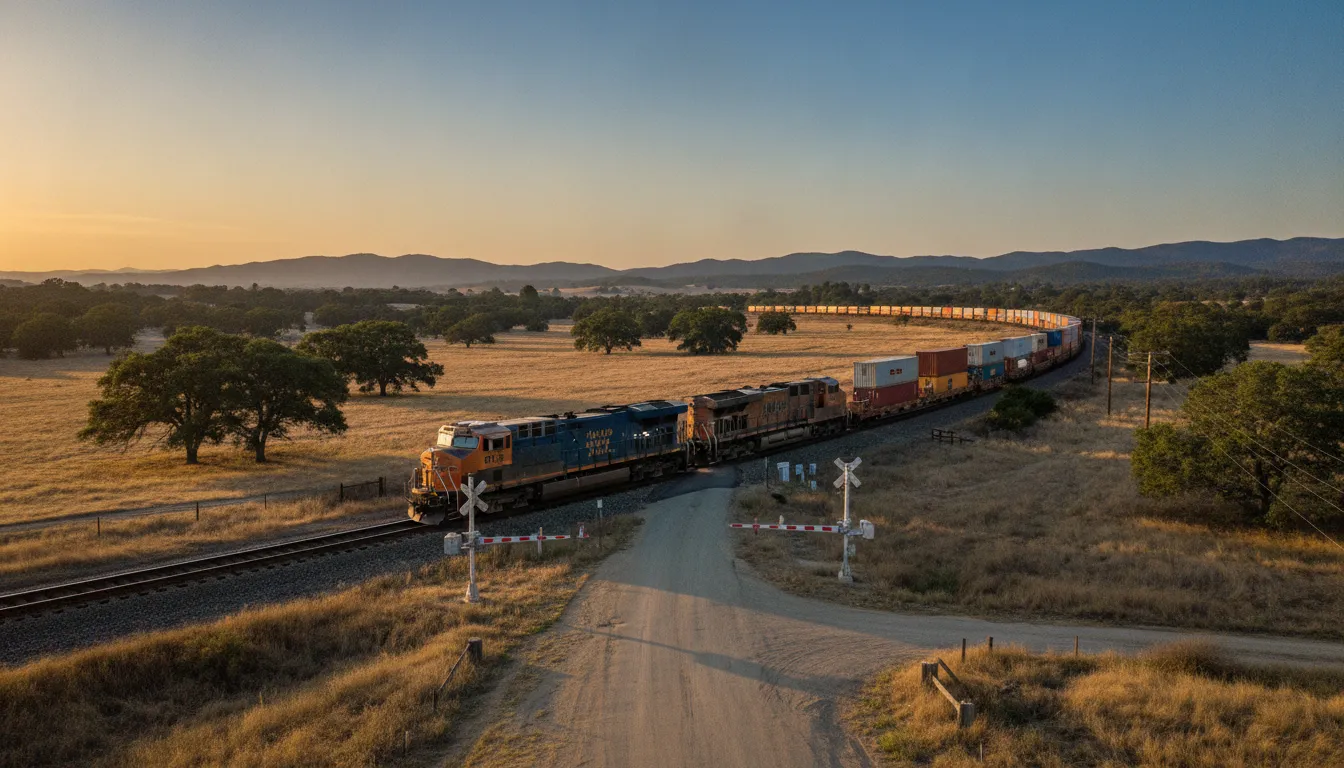
A railroad crossing crash can leave you dealing with serious injuries, unanswered questions, and pressure from insurers while you are still trying to recover. Even when warning gates and signals are present, determining what happened may require examining the crossing, train records, vehicle damage, and witness accounts.
After a railroad crossing crash, get medical attention right away. Preserve photographs and other evidence, and avoid giving a recorded statement before understanding your rights. Speak with a train accident lawyer California victims can rely on to investigate potential railroad, driver, equipment, or maintenance failures.
Federal rules require railroads to report certain grade-crossing crashes involving activation failures within 24 hours, including details such as the location, casualties, and train speed. That information can become important when responsibility is disputed. The first priority, however, is protecting your health and documenting what you can. The steps below explain what to do immediately after a railroad crossing crash.
Immediate Steps to Take After a Railroad Crossing Crash
If you are able, take these steps in order. Your safety and medical care come first, but early documentation can also preserve evidence that may later help establish what happened.
-
Move to a safe location if possible
If your vehicle can move and doing so will not worsen an injury, get away from the tracks and any damaged equipment. Do not approach a train, crossing gate, or downed electrical line. If you cannot move safely, remain inside the vehicle when appropriate, turn on your hazard lights, and follow emergency instructions.
-
Call 911 and report the crash
Ask for police, fire, and emergency medical assistance. Tell the dispatcher that the collision occurred at a railroad crossing, provide the crossing location or identifying number if visible, and explain whether anyone is trapped or injured. A police report can document the scene, witnesses, traffic controls, and initial statements.
-
Document the scene without putting yourself at risk
When it is safe, photograph or record the vehicles, train, crossing gates, warning lights, road surface, signs, visible damage, and surrounding conditions. Note the time, weather, direction of travel, and names and contact information for witnesses. Do not move damaged property unless emergency personnel direct you to do so. For additional guidance, review what to do after a vehicle accident in California.
-
Seek medical attention promptly
Accept evaluation at the scene or go to an emergency department as directed. Some injuries, including head, neck, and internal injuries, may not be obvious immediately. Follow the treatment plan, attend follow-up appointments, and keep records of medical visits, prescriptions, missed work, and related expenses.
-
Report suspected crossing or signal failures
Tell police and emergency responders if the gates did not lower, warning lights did not activate, bells did not sound, or another safety system appeared to malfunction. Federal regulations require a railroad to report certain crashes involving a grade-crossing activation failure to the Federal Railroad Administration within 24 hours. The report includes details such as the location, time, injuries, and authorized train speed. You should not assume that a working gate or signal eliminates every safety issue. Research from UC Berkeley’s Safe Transportation Research and Education Center notes that crossing crashes have declined as crossings have been closed and countermeasures such as gates and signal systems have been installed. Making the condition and operation of those systems important evidence. Preserve photos and notes rather than trying to investigate the equipment yourself.
Common Causes of Railroad Crossing Crashes
Railroad crossing crashes often result from a combination of driver behavior, unsafe conditions, and failures by the people or companies responsible for rail operations. Identifying the contributing factors can help explain how the collision happened and whether another party may be legally responsible.
Driver distraction, poor visibility, and human error
Human factors are a significant concern in train accidents. One California rail-injury resource, citing federal data, reports that human factors contribute to nearly 40% of train accidents. At a crossing, a driver may be distracted by a phone, passengers, navigation system, or other activity. A driver may also misjudge a train’s distance or speed, drive around a lowered gate, or fail to stop after a warning signal activates.
Poor visibility can make these risks worse. Darkness, fog, heavy rain, vegetation, glare, nearby structures, or inadequate lighting may prevent a driver from seeing a train. A signal, or the crossing itself in time to react. Obstructed sightlines should be examined carefully after a crash, particularly when a driver reports that the train or warning equipment was difficult to see.
Defective signals, gates, and crossing design
Warning systems are intended to give motorists and pedestrians time to stop. A malfunctioning signal, gate, bell, or roadway warning sign can create a dangerous false impression that the crossing is clear. A gate that fails to lower, lowers too late, or remains down without a clear warning can also contribute to a collision. Other possible infrastructure problems include poor road markings, inadequate lighting, damaged pavement, and a crossing layout that limits a person’s view of approaching tracks.
Research from UC Berkeley’s Safe Transportation Research and Education Center links the decline in rail crossing crashes over the past 30 years to measures such as closing crossings. Installing signal systems and gates, and using grade separation. The study also examined California’s large network of at-grade rail-highway crossings. These findings underscore why the condition, placement, and maintenance of safety equipment matter. Read the UC Berkeley research on railroad crossing safety countermeasures.
Train operator error and track defects
Responsibility may also involve the railroad or its personnel. A train operator could fail to follow operating rules, sound required warnings, maintain a proper lookout, or respond appropriately to a crossing hazard. Track defects, damaged rails, malfunctioning equipment, or inadequate inspection and maintenance can create additional dangers. Investigators may need to review maintenance records, signal data, event recorder information, video, witness accounts, and the railroad’s operating procedures to determine which failures contributed to the crash.
Who Can Be Held Liable for a Train Accident in California
Liability after a train crash may involve more than one person or organization. A careful investigation looks at the crossing, the train, the people operating it, and the actions of other drivers. The responsible parties may include:
Railroad companies
A railroad may be responsible when poor maintenance, defective equipment, inadequate warnings, or a failure to repair a known hazard contributes to the collision. Federal reporting rules can also provide important evidence. Under 49 C.F.R. section 234.7, a railroad must report a highway-rail crossing impact involving an activation failure within 24 hours. The report may include the location and time of the crash, casualties, and the train’s maximum authorized speed. Those records can help establish what the railroad knew and how it responded.
Train operators and other employees
An operator may share responsibility if distraction, excessive speed, inadequate observation, or a failure to follow safety procedures played a role. A railroad company can also be held accountable for negligent hiring, training, supervision, or scheduling. The facts matter, including dispatch records, event data, operating rules, signal logs, and witness accounts.
Government entities responsible for crossing design
A public entity may be liable when a dangerous road or crossing design, inadequate sight distance, malfunctioning traffic controls, or insufficient warnings creates an unreasonable hazard. Claims against government entities involve special notice rules and deadlines, so prompt legal review is important. Investigators may need to examine engineering plans, maintenance responsibility, inspection records, prior complaints, and the history of collisions at the crossing.
Drivers and other third parties
The driver of a car, truck, or other vehicle may be at fault for ignoring signals, stopping on the tracks, driving while distracted, or otherwise creating the collision. Fault can be divided among multiple parties. California’s pure comparative negligence rule may reduce a person’s recovery based on that person’s share of responsibility, even when another party was also negligent. Read more about the California pure comparative negligence rule.
Special rules for railroad workers
Railroad employees injured on the job may have rights under the Federal Employers’ Liability Act, or FELA. Enacted in 1908, FELA provides a framework for railroad workers to seek compensation from their employers when negligence contributes to an injury. FELA claims differ from ordinary passenger or motorist injury claims, and the evidence and deadlines should be evaluated by counsel familiar with railroad cases.
A train accident lawyer California victims can rely on will investigate every potentially liable party before accepting an early settlement offer. That may include preserving event data, obtaining crossing and maintenance records, consulting reconstruction professionals, and comparing each party’s conduct with applicable safety duties. You can also review our San Luis Obispo train accident lawyers practice page for more information about investigating railroad collision claims.
How a Train Accident Lawyer in California Builds Your Case
A strong railroad injury claim begins with a careful investigation, often before important evidence disappears or a railroad company controls the narrative. California has 7,719 at-grade rail-highway crossings, according to UC Berkeley SafeTREC, and each location may involve different warning systems, maintenance records, visibility conditions, and safety responsibilities. A train accident lawyer California victims can rely on examines the facts from multiple angles.
Investigating the crash and preserving evidence
The legal team may inspect the crossing, roadway, lighting, signs, gates, signals, sight lines, and surrounding conditions. They gather photographs, witness statements, police reports, medical records, and vehicle damage evidence while the scene is still documented accurately.
They also send preservation requests to protect evidence held by the railroad or other parties. That may include locomotive event-recorder or “black box” data, onboard video, dispatch communications, signal and crossing-maintenance records, inspection logs, crew information, and train-speed data. Federal regulations require certain grade-crossing signal-failure impacts to be reported to the Federal Railroad Administration within 24 hours. With details such as the location, casualties, and maximum authorized train speed. Those records can help establish what happened and whether a safety system failed.
Using experts to explain what happened
Train crashes can involve technical questions that are difficult to answer from photographs alone. Accident reconstruction experts can analyze skid marks, impact points, vehicle movement, signal timing, sight distances, train speed, and the sequence of events. Their work can help determine whether a driver could reasonably see a warning. Whether a gate or signal operated properly, and whether a railroad, contractor, manufacturer, or another party contributed to the collision.
Preparing for railroad defenses and insurance negotiations
Railroad companies typically have experienced legal teams, investigators, and insurers working soon after a crash. Your attorney handles those communications, evaluates statements and proposed settlements, and challenges efforts to shift responsibility onto an injured person. The lawyer may also identify every applicable claim and deadline, including required railroad or FRA-related reporting and claim procedures, rather than relying only on an insurance adjuster’s investigation.
James McKiernan Lawyers brings more than 40 years of experience and has handled over 30,000 cases. Former Judge James McKiernan provides insight into how courts evaluate evidence and how opposing counsel may assess a claim. The firm also helps address medical bills and negotiates with insurers to pursue a fair recovery. Learn more about the firm’s train accident lawyers in San Luis Obispo. Representation is provided on a contingency-fee basis, so there is no fee unless the firm wins.
Attorney Advertising. This article is for informational purposes only and does not constitute legal advice. Past results do not guarantee future outcomes. Every case is unique and must be evaluated on its own facts.
Compensation Available in California Train Accident Claims
The compensation available after a train or railroad crossing crash depends on the injuries, losses, and evidence in your case. A claim may seek payment for immediate expenses as well as long-term effects that are harder to calculate. Here are the categories commonly considered:
| Compensation type | What it may cover |
|---|---|
| Medical expenses | Emergency treatment, hospital care, medication, rehabilitation, equipment, and reasonable future medical care related to the injury. |
| Lost wages and earning capacity | Income lost during recovery and the potential reduction in your ability to earn if the injury affects your work or career long term. |
| Pain and suffering | Physical pain, emotional distress, loss of enjoyment of life, and the ongoing impact of serious trauma. These losses do not come with a simple price tag, so the facts and lasting effects matter. |
| Property damage | Repair or replacement costs for a vehicle and other personal property damaged in the collision, subject to the available evidence and applicable limits. |
| Wrongful death damages | Eligible surviving family members may seek damages connected to funeral expenses, lost financial support, and the loss of a close relationship. |
Every case is different. Prior James McKiernan Lawyers settlement examples have ranged from $16,000 to $1.35 million, but past results do not predict what any new claim is worth. Read more about how much your accident case may be worth and the factors that can affect an evaluation.
James McKiernan Lawyers has recovered more than $350 million for clients. The firm works on a contingent fee basis, meaning there is no fee unless the case is won. A free initial consultation can help you understand your options before deciding how to proceed.
Frequently Asked Questions
What should I do immediately after a railroad crossing crash?
Move to a safe location if you can, call 911, and request medical attention even if your symptoms seem minor. Follow your doctor’s instructions, preserve photographs and other evidence, and avoid giving a recorded statement to an insurer before you understand your rights. If possible, note the crossing location, warning signals, witnesses, and vehicles involved.
What are the common causes of train accidents in California?
Common causes may include signal or gate failures, inadequate warnings, unsafe crossing design, distracted or impaired driving, defective equipment, and human error. California rail crossing crashes have declined over the past 30 years as crossings closed and safety countermeasures. Including gates and signal systems, were deployed, according to UC Berkeley SafeTREC.
Who can be held liable for a railroad crossing accident?
Potentially responsible parties may include a railroad, train or crossing-operator, equipment manufacturer, contractor, driver, or public entity. Liability depends on the evidence, including maintenance records, warnings, signal operation, conduct, and the circumstances of the collision. A lawyer can investigate before important evidence is lost.
How can a train accident lawyer in California help with my claim?
A lawyer can preserve evidence, identify the parties whose negligence contributed to the crash, review police and medical records, consult accident-reconstruction professionals, and handle communications with insurers. Counsel can also evaluate losses such as treatment costs, lost income, and the impact of the injury on your daily life.
How do FELA claims differ from other personal injury claims?
The Federal Employers’ Liability Act, or FELA, applies to certain railroad employees injured in connection with their work. It is different from a typical claim brought by a driver, passenger, or pedestrian. If you are a railroad worker, ask a lawyer to assess which rules, deadlines, and proof requirements apply to your situation.
Ready to Discuss Your Railroad Crossing Crash?
After a railroad crossing crash, understanding your options can make the next steps easier to manage. A conversation with a train accident lawyer in California can help you discuss what happened and determine whether a legal claim may be appropriate. To schedule a free consultation, contact us online or call 800-200-4878. Our team can listen to your concerns and explain how to move forward without pressure.