California Pure Comparative Negligence Rule: What It Means for Your Injury Case

Accident victims in California can still get paid even when they share blame for a crash. Shared fault does not have to stop you from seeking a fair legal settlement for your losses.
Call (800) 200-4878 today for a free case evaluation and learn how much your injury claim may be worth even if you share some of the fault.
The California pure comparative negligence rule allows you to collect money even if your own actions led to a car crash. Under this law, you can seek a settlement as long as you were not 100 percent to blame for your injuries. The money you get is simply reduced by your percentage of fault, so a victim who is 40 percent at fault still recovers 60 percent. This system ensures everyone pays for their part while protecting your right to get paid for medical bills and lost wages after a crash. It replaced older legal rules that often left victims with nothing if they were even slightly at fault for the accident.
Navigating the legal system after a crash is difficult when insurance companies try to blame you for your own injuries. You need to know how these rules impact your case and how much money you can actually collect. Understanding the California pure comparative negligence rule is the first step toward protecting your recovery.
How Shared Fault Works Under California Law
The California pure comparative negligence rule is a legal tool used to split fault in injury cases. Under this rule, you can still get money for your losses even if you were partly to blame for the accident. This approach ensures an injured person receives fair compensation based on the actual cause of the harm. If you are found at fault, the court reduces your total payout by your share of the blame. Our personal injury attorneys help clients navigate these fault rules to maximize their recovery.
The Basics of Shared Fault in California
California is one of 13 states that uses the pure version of shared fault law. This means there is no cap on how much fault you can have while still being able to sue for damages. Even if you are 99% at fault, you can still seek one percent of your total losses from the other side. This differs from states that use modified rules, where you might recover nothing if your fault reaches 50% or more. In California, the law stays open to you no matter your share of the blame. The goal is to make each person financially responsible for their part in causing a crash.

California Civil Code 1714
The foundation for shared fault law comes from California Civil Code 1714. This statute says that every person is responsible for the results of their own willful acts. It also covers injuries caused by a lack of ordinary care or skill. People must act with a normal level of safety to protect others around them. If they do not, they may be held liable for the harm that follows. The law also recognizes that a person’s own lack of care can reduce their compensation. But the law does not block you from recovering anything at all. Courts and insurance companies use this code to determine how claims are paid out.
Li v. Yellow Cab Co. and the Shift to Shared Fault
Before 1975, California followed a much stricter rule called contributory negligence. Under that old system, even one percent of fault barred you from recovering any money at all. This often produced unfair results for victims who suffered significant losses. The California Supreme Court changed this in the landmark case of Li v. Yellow Cab Co. The court called the old rule unjust for the modern world and established shared fault as a better fit for today’s needs. This shift allowed accident victims to recover compensation for medical bills and lost wages even when they made a mistake. Since then, this rule has been the standard for all injury claims in California. With over $350 million recovered for clients, our firm knows how to fight insurance tactics that try to place excessive blame on victims.
How Shared Fault Works After a California Accident
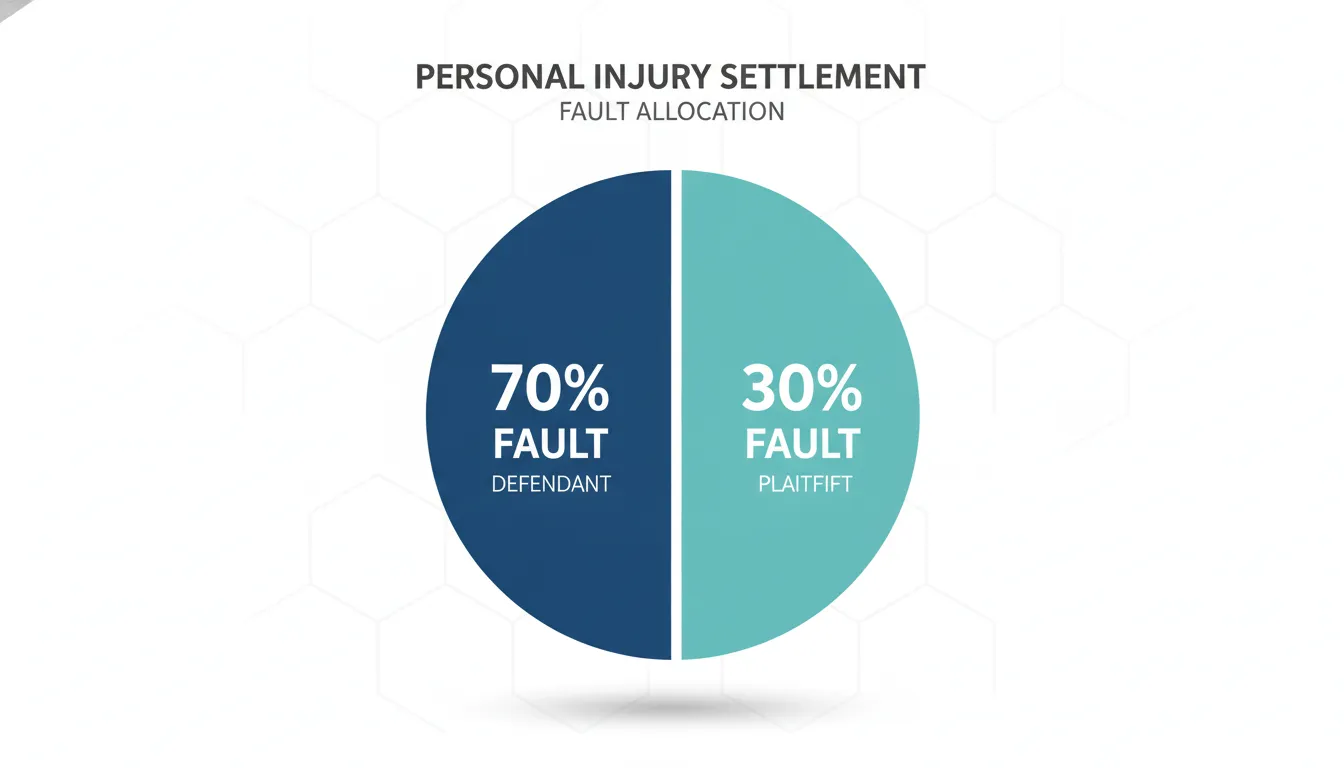
When you file an injury claim after a crash, the court or insurance company assigns a fault percentage to each party. Your final compensation equals your total damages minus your percentage of fault. If your medical bills and lost wages total $100,000 and you are found 25% at fault, you recover $75,000. The remaining amount falls on the other driver or their insurance provider. This calculation applies to all types of personal injury cases, including car accidents, slip and falls, and wrongful death claims.
Calculating Your Recovery
Several factors go into how courts determine fault percentages. The jury or insurance adjuster considers evidence such as police reports, witness statements, traffic camera footage, and expert testimony. They weigh each party’s actions leading up to the incident to decide who caused it and by how much. For example, if you ran a red light but the other driver was speeding, the court might assign 60% fault to you and 40% to the other driver. You would then recover 40% of your total damages. Learn more about how fault works in our guide to California car accident claims.
Types of Damages You Can Recover
Under the shared fault system, you can still pursue compensation for the full range of damages, though your percentage of fault reduces the final payout. These include medical expenses, lost income, property damage, pain and suffering, and loss of enjoyment of life. Insurance companies often try to undervalue these damages while inflating your fault percentage. Having an experienced attorney review your case helps ensure nothing is overlooked. See our personal injury claim example for a breakdown of how damages are calculated in real cases.
Pure vs. Modified Comparative Negligence: Key Differences
Understanding how California’s approach compares to other states is important, especially if your accident involved a driver from another state or if you are considering a case in federal court.
| Feature | Pure Comparative (California) | Modified Comparative (Most States) |
|---|---|---|
| Maximum fault allowed | No limit (even 99%) | 50% or 51% bar |
| Can you recover at 50% fault? | Yes | No |
| Can you recover at 99% fault? | Yes (1% of damages) | No |
| Number of states using this system | 13 | 33 |
| Fairness to partially at-fault victims | Highest | Moderate |
| Insurance company incentive to shift blame | High | Moderate |
California’s pure approach offers the most protection for injured victims. Even in cases where you bear significant responsibility, the law guarantees some level of recovery. Read our settlement vs. trial guide to understand which path may work best for your situation.
Common Tactics Insurance Companies Use Against You
Insurance adjusters know that reducing your compensation means shifting blame onto you. They employ several strategies to maximize your assigned fault percentage and minimize their payout. Recognizing these tactics helps you push back.
Delay and Record Gaps
Insurance companies may delay their investigation to allow evidence to disappear. Witness memories fade, traffic camera footage gets deleted, and police reports become harder to obtain. This creates gaps that the adjuster fills with assumptions about your fault. Acting quickly after a crash preserves critical evidence. Contact a personal injury lawyer as soon as possible after an accident to protect your claim.
Misstating the Legal Standard
Some adjusters tell victims that California uses a modified comparative negligence rule, implying that fault above 50% means zero recovery. This is false. Under pure comparative negligence, you can recover even at 99% fault. Never accept a legal interpretation from an insurance adjuster without independent verification from your own attorney.
Focusing on Minor Actions
Adjusters scrutinize every small decision you made before the crash. Did you glance at your phone? Were you driving the speed limit? Did you brake in time? They take these minor factors and magnify them to argue you caused the accident. A skilled attorney counters this by presenting the full context of what happened, including the other driver’s actions.
Pressure to Settle Before You Understand Fault
Insurance companies often offer a quick settlement within days of a crash. They know that victims need money for medical bills and vehicle repairs. But accepting an early settlement waives your right to seek additional compensation later. Understanding fault percentages takes time and evidence gathering. Learn more about how long personal injury settlements take so you know what to expect.
How a California Personal Injury Attorney Protects Your Recovery
Insurance companies have teams of adjusters and lawyers whose job is to pay you as little as possible. Navigating the shared fault system without legal representation puts you at a severe disadvantage. An experienced attorney levels the playing field and protects your right to fair compensation.
Gathering Independent Evidence
Your attorney conducts an independent investigation of the accident. They interview witnesses, obtain traffic camera footage, review police reports, and consult with accident reconstruction experts. This evidence provides a complete picture of what happened and prevents the insurance company from filling in gaps with assumptions about your fault. Our firm has 500+ 5-star reviews from clients who trusted us to handle their cases.
Negotiating Fault Percentages
Fault is rarely a fixed number. It is a point of negotiation. Your attorney argues for a lower fault percentage by presenting evidence that shifts responsibility to the other party. Even reducing your fault from 40% to 25% can mean thousands of additional dollars in your pocket. Our team recovered over $350 million for past clients by aggressively challenging inflated fault assessments.
Valuing Your Full Damages
Many victims accept low settlements because they do not understand the true value of their claim. An attorney calculates not just current medical bills and lost wages, but also future medical costs, reduced earning capacity, and ongoing pain and suffering. Insurance companies rarely volunteer to pay what a case is actually worth. See our guide on how much injury settlements are worth for a better understanding of what to expect.
Taking Your Case to Trial When Necessary
If the insurance company refuses to offer a fair settlement, your attorney can take the case to court. In front of a jury, the facts of the case are presented impartially, and a neutral third party assigns fault. Many insurance companies offer better settlements when they know your attorney is prepared to go to trial. Contact James McKiernan Lawyers for a free consultation and case evaluation today.
Frequently Asked Questions
Can I still recover damages if I was more than 50% at fault in California?
Yes. Under California’s pure comparative negligence rule, there is no bar to recovery at any fault level. Even if you are found 99% at fault, you can still recover 1% of your total damages from the other party. This is different from the majority of states where fault above 50% blocks all recovery.
How does the court determine fault percentages in a personal injury case?
Courts assign fault percentages based on evidence including police reports, witness testimony, traffic camera footage, expert analysis, and the actions of each party leading up to the incident. A jury or judge weighs each party’s contribution to the accident and assigns a percentage of responsibility to each person involved.
Does pure comparative negligence apply to all types of personal injury cases in California?
Yes, the pure comparative negligence rule applies to most civil injury cases in California, including car accidents, motorcycle crashes, pedestrian accidents, slip and fall cases, and wrongful death claims. The same formula of reducing damages by the plaintiff’s fault percentage is used across all of these case types.
How can a lawyer help me get a lower fault percentage?
An attorney gathers independent evidence, interviews witnesses, works with accident reconstruction experts, and negotiates with insurance adjusters to present the strongest case for reducing your fault percentage. A reduction from 40% to 20% doubles your recovery. Our firm has recovered over $350 million for clients by challenging inflated fault assessments.
Ready to Schedule Your Free Consultation Today?
Understanding how California’s pure comparative negligence rule applies to your accident is the first step toward getting the compensation you deserve. Contact James McKiernan Lawyers to speak with an experienced personal injury attorney who can evaluate your case, explain how fault percentages may affect your recovery, and fight for the maximum compensation available under California law. We have recovered over $350 million for clients and maintain a 500+ 5-star review rating. Your initial consultation is free, and we handle cases on a contingency fee basis, which means you pay nothing unless we win your case.
Call us today at (800) 200-4878 to schedule your free case evaluation.
Attorney Advertising. This article is for informational purposes only and does not constitute legal advice. Past results do not guarantee future outcomes. Every case is unique and must be evaluated on its own facts.