Multi Vehicle Collision Liability in California
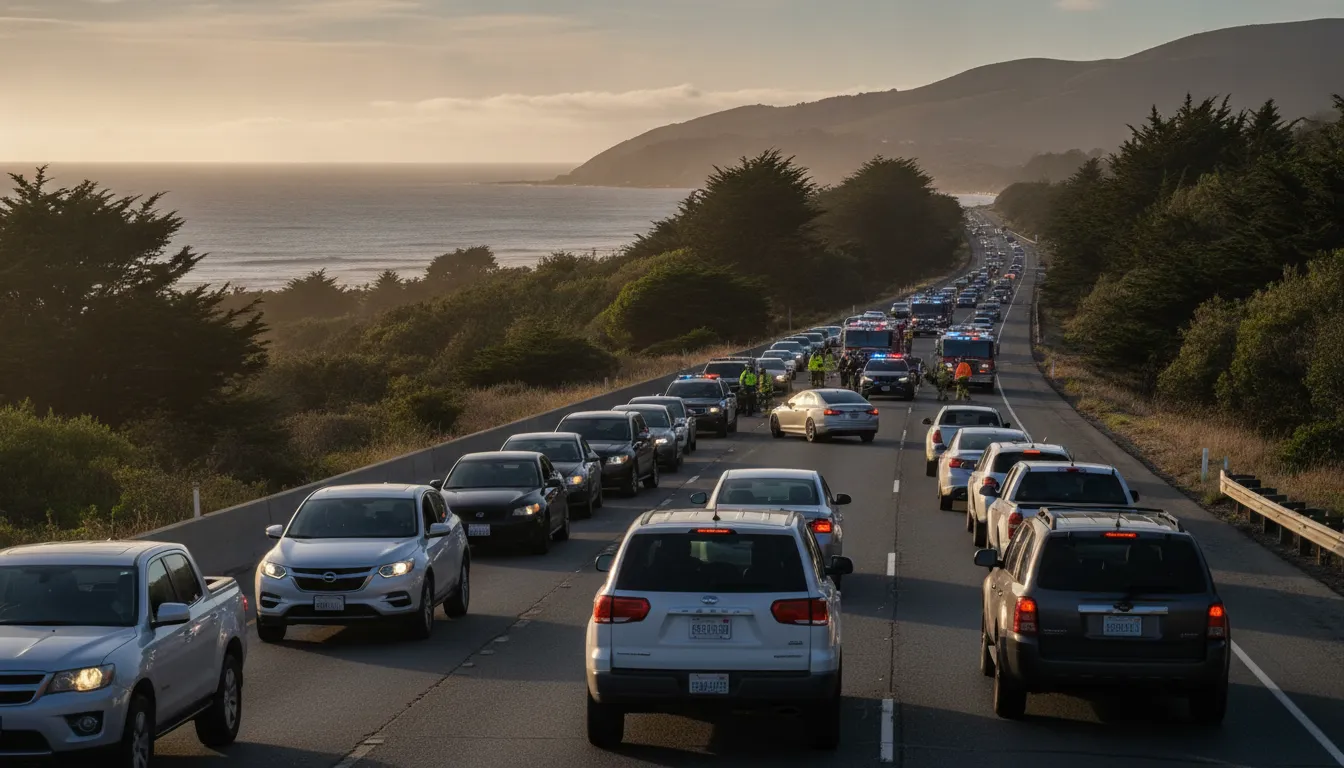
When three or more vehicles collide, the first impact is only one part of the story. Multi vehicle collision liability california claims may involve several drivers, separate insurance policies, and injuries caused by more than one impact. California generally assigns responsibility according to what each person did, how that conduct contributed to the crash, and what the evidence shows.
For a free consultation about an injury collision, call 800-200-HURT or contact James McKiernan Lawyers.
What is multi vehicle collision liability california?
Multi vehicle collision liability california refers to the process of determining which drivers or other responsible parties may be legally responsible for a chain-reaction crash and the resulting injuries or property damage. It is not a legal conclusion reached simply by counting impacts or identifying the vehicle that was hit first.
California Civil Code section 1714 establishes a general duty to use ordinary care. In a collision case, an investigation usually asks whether a person owed a duty of reasonable care, failed to act as a reasonably careful person would have acted, and caused harm as a result. The same analysis can apply to each driver in a multi-car crash.
A driver who starts a collision may bear substantial responsibility, but another driver can also contribute by following too closely, speeding, changing lanes unsafely, driving while distracted, or failing to stop when a reasonable driver could have avoided a later impact. The sequence, timing, visibility, road conditions, and available stopping distance all matter.
Liability is also different from a traffic citation. A citation, collision report, or insurance determination can be important evidence, but none of those items automatically resolves a civil injury claim. The parties may disagree about what happened, and a judge or jury may ultimately decide disputed issues if the claim does not settle.
How is fault divided when several drivers contribute?
California uses a comparative fault approach. An injured person may still have a claim even if that person contributed to the collision, although a factfinder may reduce damages by the person’s percentage of responsibility. The allocation depends on the facts, not on a fixed rule that places all fault on the first or last vehicle.
For example, imagine a driver who looks down at a phone and strikes slowing traffic. A second driver may have been following so closely that there was no reasonable stopping distance. A third driver may then move into an adjacent lane without checking whether it is clear. Each person’s conduct may require separate analysis, and the percentages cannot be responsibly predicted without reviewing the evidence.
California Civil Code section 1431.2 also addresses the relationship between comparative fault and different categories of damages. In general, a party’s responsibility for noneconomic damages is several, meaning the party is responsible for that party’s proportionate share. Economic damages and other issues can involve additional rules and should be evaluated with the actual parties, insurance policies, injuries, and evidence in mind.
Responsibility can sometimes extend beyond drivers. Depending on the facts, an investigation may need to consider a vehicle owner, an employer, a rideshare or delivery relationship, a vehicle manufacturer, a public entity responsible for a dangerous roadway condition, or another party. That does not mean another party is liable in every crash. It means the investigation should not stop before identifying who controlled the relevant risk and whether that person’s conduct legally contributed to the harm.
Common ways a chain-reaction collision begins
Multi-vehicle crashes can begin in different ways. Understanding the possible starting point helps investigators test each driver’s account against physical evidence and traffic rules.
Following too closely
California Vehicle Code section 21703 prohibits following another vehicle more closely than is reasonable and prudent, considering speed and traffic conditions. A driver who leaves too little space may be unable to stop when traffic slows, even if the vehicle ahead brakes lawfully. In a chain reaction, however, the fact that a driver made a rear impact does not end the analysis. The speed of traffic, the time available to react, the condition of the roadway, and earlier impacts may all matter.
Speeding or driving too fast for conditions
California Vehicle Code section 22350 prohibits driving at a speed that is greater than is reasonable or prudent for the conditions. Speed can affect both whether a driver could have avoided an impact and the force transferred through the vehicles. Investigators may examine roadway design, weather, lighting, traffic density, sight distance, vehicle data, and witness observations rather than relying on damage alone.
Distracted or impaired driving
A driver who is looking at a phone, adjusting a device, or driving under the influence may fail to see slowing traffic or a stopped vehicle. California Vehicle Code section 23123.5 addresses handheld wireless device use, while section 23152 addresses driving under the influence. A suspected violation still needs to be connected to the collision and the claimed injuries.
Unsafe lane changes
A sudden merge or lane change can cause a sideswipe, force another driver to brake, or place a vehicle in the path of traffic. California Vehicle Code section 21658 addresses remaining within a lane until it is reasonably safe to move. Photos, dash-camera footage, lane markings, vehicle damage, and witness accounts may help establish where each vehicle was moving before the first impact.
Sudden stops and unexpected hazards
A sudden stop is not automatically negligent. A driver may need to brake for traffic, debris, a pedestrian, an emergency vehicle, or another immediate hazard. The key questions include whether the stop was reasonably necessary, whether the driver had a safe alternative, and whether following drivers had a reasonable opportunity to respond. The presence of an unexpected hazard may also change how later impacts are evaluated.
How is multi vehicle collision liability california assessed from crash evidence?
Reliable liability analysis reconstructs the collision step by step. It asks where every vehicle was before the first impact, how long each driver had to react, which impacts occurred in what order, and which impact caused a specific injury or loss. That is why a multi-vehicle claim can require more evidence than a typical two-car crash.
- Collision reports: The report may contain diagrams, statements, measurements, officer observations, and information about citations. It is evidence to review, not necessarily the final answer on civil fault.
- Photographs and video: Scene images, dash-camera footage, surveillance recordings, and traffic-camera material may show lane position, signal status, weather, vehicle spacing, and the timing of events.
- Vehicle damage: Damage patterns, debris, paint transfer, and crush points can help distinguish an initial impact from later impacts. The vehicles should be preserved when their condition may be disputed.
- Witness accounts: A witness who saw the vehicles before the crash may provide information that is different from a person who arrived after the impacts. Names and contact information should be preserved promptly.
- Electronic data: Some vehicles may contain event data that records information about speed, braking, or other vehicle conditions. Access and interpretation depend on the vehicle and the circumstances.
- Medical and employment records: Treatment records, bills, wage information, and symptom timelines help connect the claimed harm to the collision and distinguish prior conditions from crash-related injuries.
- Roadway and weather evidence: Lighting, visibility, lane markings, construction, roadway defects, rain, fog, and traffic congestion may affect what a reasonably careful driver could see and do.
Do not enter active traffic, move evidence unnecessarily, or confront another driver to obtain proof. If it is safe, photograph the scene from a protected location and preserve the original files. Ask about nearby video promptly because some systems overwrite recordings quickly.
For practical guidance on preserving information after a rear-end sequence, see the firm’s guide to documenting a rear-end collision. For the broader claim process, review the California car accident claim process.
What happens when one impact causes a later impact?
In a chain-reaction crash, the driver who caused the first impact is not automatically responsible for every injury that follows. Investigators may need to separate the consequences of each impact. A later driver may have had a reasonable chance to stop, or may have contributed a new act of negligence that caused a separate collision.
For instance, an initial impact could push a vehicle into the next lane. A driver in that lane may have had very little time to react. Another driver farther back may have had more distance but may have been traveling too fast to stop. These circumstances can lead to different liability questions for each driver and different explanations for the injuries claimed by each person.
Injuries can also be affected by more than one impact. A medical record may help show when symptoms began, how they changed, and what treatment was needed. Do not minimize symptoms because the vehicle damage appears modest, and do not assume that every symptom has the same cause. Prompt medical evaluation and complete records are important for health and for a later claim.
How do insurance claims work when multiple policies are involved?
More than one insurance company may investigate the same crash. Each carrier has its own interests, and insurers may disagree about the order of impacts, the percentage of fault, the cause of an injury, or the amount of available coverage. A statement given to one carrier may later be compared with statements to other carriers and with the physical evidence.
Before giving a recorded statement or signing a release, make sure you understand what claim the document addresses and what rights it may affect. Be accurate and describe what you personally observed. Avoid guessing about speed, distance, or the intentions of other drivers. Keep copies of claim numbers, letters, estimates, medical bills, and communications.
When several injured people are making claims, policy limits and coverage questions may become important. Your own policy may also contain uninsured or underinsured motorist coverage that could be relevant if a responsible driver has no insurance or not enough coverage. The availability and effect of that coverage depend on the policy and facts. Learn more about underinsured motorist coverage options before assuming another driver’s policy will cover the full loss.
A settlement offer is not a final measure of fault or claim value. It may be worth discussing the evidence and the release language with a lawyer before accepting an offer, especially when several drivers, injuries, or insurance policies are involved.
James McKiernan Lawyers represents people injured in multi-vehicle collisions and other personal injury matters. The firm’s California personal injury practice provides more information about its services and consultation process.
If you were injured in a multi-vehicle crash, call 800-200-HURT before giving up rights that may matter to your claim.
Frequently Asked Questions
Who is usually at fault in a multi-car collision?
There is no automatic rule that places all fault on one vehicle. The driver who caused the first impact may have significant responsibility, but other drivers may share fault if their conduct contributed to later impacts or injuries. Evidence about speed, following distance, lane position, braking, visibility, and timing helps determine each person’s role.
Who is at fault in a three-car rear-end collision in California?
The answer depends on how the sequence unfolded. A driver who followed too closely may be responsible for striking the vehicle ahead, while another driver may have contributed by speeding or failing to stop. The first car in the chain is not automatically responsible for every later impact, and the last car is not automatically the only responsible driver.
Can I recover compensation if I share some fault?
Possibly. California’s comparative fault rules may allow an injured person to pursue a claim even when that person contributed to the collision. Any recovery may be reduced by the person’s assigned share of fault. The evidence, injuries, damages, and conduct of every involved party should be evaluated before a percentage is assumed.
What should I do after a multi-vehicle collision?
Move to safety if possible, call emergency services when needed, exchange information, identify witnesses, and seek medical attention for injuries. Photograph the scene only from a safe location. Preserve original photos, videos, vehicle records, medical records, and insurer communications. Avoid guessing about facts you did not observe.
Can a passenger bring a claim after a multi-car crash?
A passenger may have an injury claim when another person’s negligence caused harm, even if the passenger was not driving. The possible sources of recovery depend on the drivers, policies, facts, and available coverage. Read more about passenger injury claims in California.
Talk with a California Personal Injury Lawyer
Multi-vehicle collision liability is fact-specific. A careful review may need to identify the sequence of impacts, compare each driver’s conduct with California safety rules, preserve evidence, and determine how injuries and losses relate to the crash. James McKiernan Lawyers offers a free initial consultation by phone, Zoom, or in person and serves clients on California’s Central Coast and statewide.
This article provides general information, not legal advice for a specific collision. No result is guaranteed. A lawyer can review your facts, explain possible next steps, and help you understand how California rules may apply.
For a free consultation about your California collision, call 800-200-HURT or contact James McKiernan Lawyers today.