How to Document Injury Evidence After an Accident
The hours after an accident can blur together. You may be in pain, worried about your vehicle, missing work, or fielding calls from an insurance adjuster. Knowing how to document injury evidence can protect your ability to show what happened, how seriously you were hurt, and how the injury has changed your life.
You do not need to build a legal case alone. But the records, photographs, and details you preserve now can become difficult or impossible to recreate later. Start with your health and safety. Then, when you are able, take practical steps to preserve the evidence.
Start With Medical Care and Follow Through
Medical records are often among the most persuasive forms of injury evidence. They connect the accident to your symptoms, document what your providers observed, and show the care you needed over time.
Seek medical attention promptly, even if you believe your injuries are minor. Some injuries, including concussions, soft-tissue injuries, and back injuries, may not fully appear until hours or days after a collision or fall. Waiting can give an insurance company room to argue that something else caused your condition.
Be accurate when you speak with medical providers. Explain where you hurt, when symptoms began, whether they are worsening, and how the accident occurred. Do not minimize pain because you do not want to complain. At the same time, do not exaggerate. Clear, consistent information is more credible than a dramatic account.
Keep copies of discharge instructions, imaging reports, prescriptions, referrals, bills, and appointment summaries. Continue recommended treatment unless a provider changes the plan. Gaps in care can be used by insurers to question whether you were truly injured, even when there are understandable reasons for those gaps.
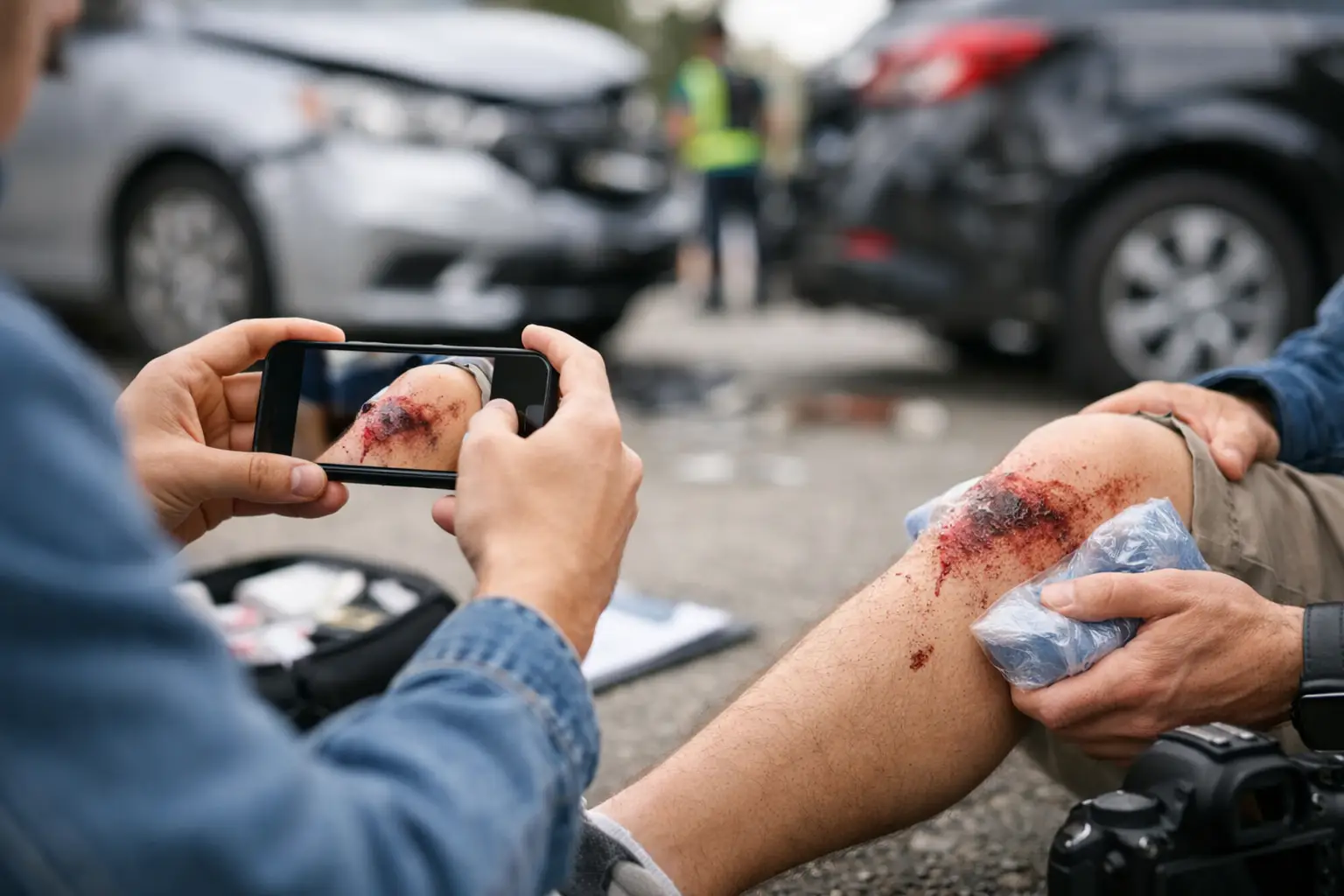
Photograph Injuries Early and Often
Bruising fades. Swelling changes. Cuts heal. A photograph taken the day of the incident may show something that is no longer visible when an adjuster reviews the claim weeks later.
Take well-lit, clear photos of each visible injury as soon as it is safe to do so. Photograph the injury from more than one angle and include both close-up and wider shots that show its location on your body. Continue taking pictures as the injury develops and heals. A simple sequence can show the progression from fresh bruising or swelling to recovery, scarring, or ongoing limitations.
If a family member helps take photos, ask them to keep the images in their original format. Avoid heavy filters, editing, annotations, or screenshots that can remove useful date and file information. Back up the originals to a secure cloud folder or another device.
Preserve Evidence From the Scene
The scene may tell the story before anyone has a chance to dispute it. If you can do so without putting yourself at risk, photograph or record the conditions that caused the injury.
After a motor vehicle crash, that may include vehicle damage, skid marks, debris, traffic signals, road conditions, nearby businesses, and the other driver’s license plate. After a slip and fall, it may include the substance or hazard involved, poor lighting, broken flooring, missing warnings, and the area around the fall. For a dog bite, photograph the location, the dog if it is safe, torn clothing, and the injury.
Do not return to a dangerous location just to obtain evidence. Your safety comes first. If you were unable to take photos, write down what you remember as soon as possible. Note the date, time, location, weather, lighting, who was present, what you saw, and what anyone said immediately after the incident.
Get Names and Information While It Is Available
Witnesses can be valuable, particularly when the other party denies responsibility. If possible, obtain names, phone numbers, email addresses, and a brief note about what each person observed. Do not pressure anyone or argue about fault. Simply preserve a way for your attorney to contact them later.
For a traffic collision, obtain the responding agency and report number. You should also keep the other driver’s insurance and contact information. If a business or property owner creates an incident report, request a copy or write down the manager’s name and the time you reported the injury.
Keep a Daily Injury Journal
Medical records show appointments and diagnoses. Your own journal can show the human impact that records alone may miss.
Use a notebook, phone note, or calendar to make short, dated entries. Record your pain level, sleep problems, headaches, mobility issues, medication side effects, missed activities, and emotional strain. Describe specific limits: needing help carrying groceries, being unable to drive your children to school, missing a family event, or waking repeatedly because of pain.
This is not about writing perfectly. It is about creating an honest record while details are fresh. A few sentences several times a week can be more useful than trying to reconstruct months of symptoms from memory.
Save the Financial Paper Trail
An injury claim may include more than the first emergency bill. Save documents that show the financial consequences of the accident, including medical bills, pharmacy receipts, mileage to appointments, repair estimates, invoices for necessary help at home, and records of damaged personal property.
If you miss work or lose income, keep pay stubs, schedules, sick-time records, and written communication from your employer about missed shifts or work restrictions. Self-employed people should preserve canceled jobs, invoices, calendar entries, and prior earnings records that help show the loss.
Keep these materials in one place. A labeled folder, envelope, or secure digital file can prevent valuable paperwork from getting lost during a stressful time.
Be Careful With Insurance Communications and Social Media
Insurance adjusters may contact you quickly, sometimes before you understand the full extent of your injuries. You can provide basic information needed to open a claim, but be cautious about recorded statements, broad medical authorizations, or quick settlement offers. Early offers often arrive before treatment is complete and before the real cost of an injury is known.
Save every letter, email, text message, voicemail, and claim number. Write down the date of each phone call, the name of the person who called, and what was discussed. Do not guess about fault, speed, symptoms, or future recovery.
Social media can also become evidence. A single photo from a good day may be used to suggest you are not injured, even if it does not reflect the pain or limitations you experience the rest of the week. Consider making accounts private and avoid posting about the accident, your injuries, or physical activities while the claim is pending.
Do Not Repair, Dispose Of, or Alter Key Evidence Too Soon
Damaged property can help explain the force and mechanics of an accident. Before repairing or disposing of a vehicle, bicycle, motorcycle, helmet, damaged clothing, shoes, or other relevant item, take detailed photographs and speak with an attorney if possible.
This does not mean you must leave a damaged vehicle untouched indefinitely. It means evidence should be documented before it disappears. In serious cases, an attorney may arrange for an inspection or preserve information from the vehicle before repairs are made.
How to Document Injury Evidence Without Hurting Your Claim
The strongest evidence is usually straightforward, timely, and consistent. Keep originals whenever possible. Do not alter photos, ask witnesses to change their account, or post accusations online. Avoid comparing your situation to someone else’s claim because every injury, insurance policy, and set of facts is different.
It also helps to act quickly. Surveillance video from a store, intersection, or nearby property may be overwritten within days or weeks. Witness memories fade. Vehicle damage is repaired. An experienced personal injury attorney can send preservation requests, investigate the incident, and handle insurers while you focus on recovery.
For more than 50 years, James McKiernan Lawyers has helped California injury victims protect evidence and pursue compensation after serious accidents. The firm has handled more than 35,000 cases and offers free consultations 24/7, with no attorney fee unless compensation is recovered.
If you are unsure whether a photo, bill, medical record, or message matters, save it. The evidence that feels small today may help tell the full truth of what this accident has cost you tomorrow.