How to Prove Distracted Driving After a Crash
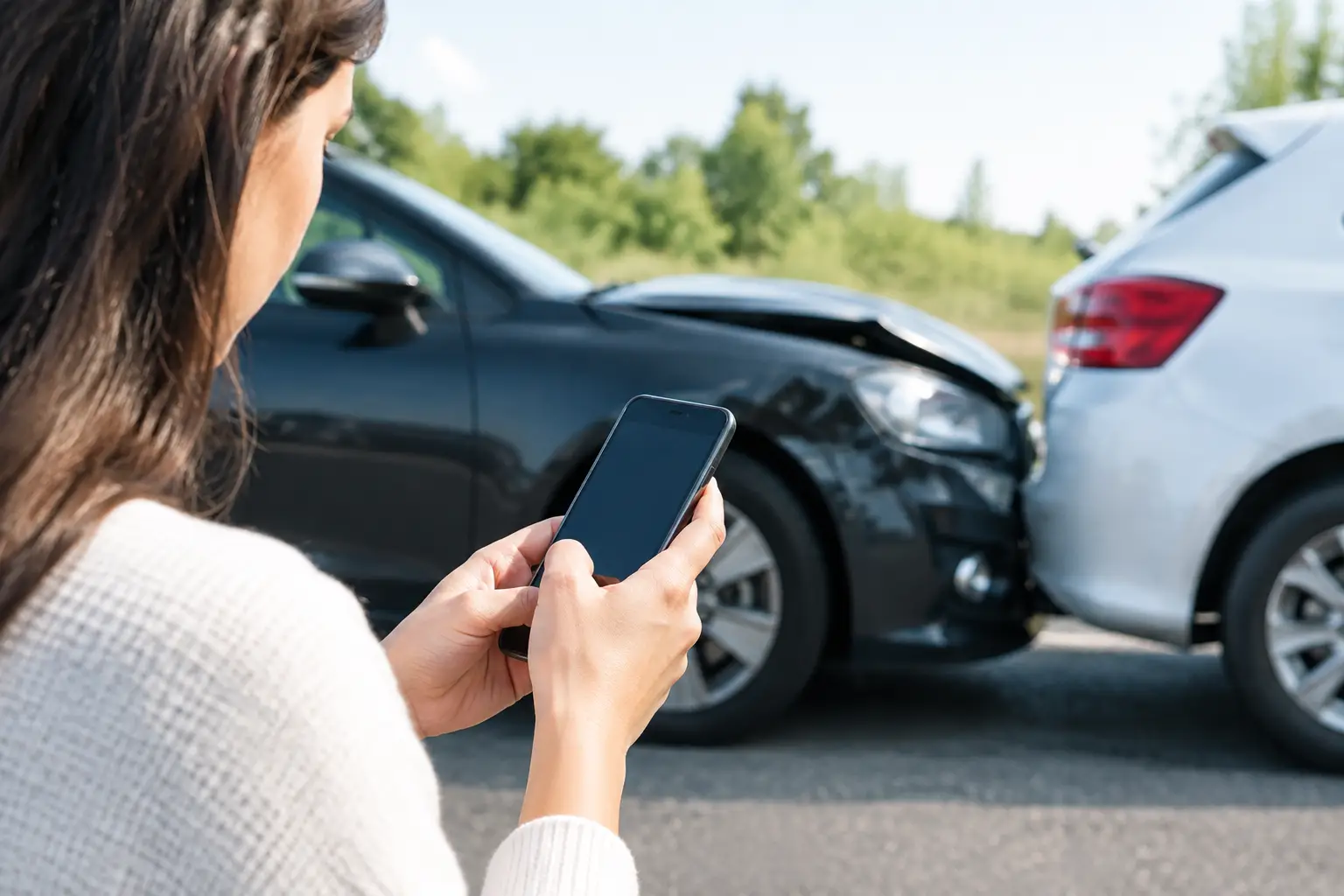
A driver looks down for two seconds, drifts across a lane, and changes someone else’s life. The problem is that the driver may deny using a phone, eating, adjusting a screen, or doing anything other than watching the road. Knowing how to prove distracted driving can make a meaningful difference in a California injury claim, especially when the insurance company is looking for reasons to minimize what happened.
Distracted driving cases are rarely proved by one dramatic piece of evidence. More often, the truth comes from details that fit together: the point of impact, a witness who saw the driver looking down, vehicle data, surveillance video, and phone records that place activity at the precise time of the crash. The strongest cases begin with fast action, before that evidence disappears.
What Counts as Distracted Driving?
Distracted driving is any behavior that takes a motorist’s eyes, hands, or attention away from safe driving. Texting is the most familiar example, but it is far from the only one. A driver may be distracted by a navigation system, social media, a call, food, a child or pet in the vehicle, grooming, or adjusting music and climate controls.
California generally prohibits drivers from holding and operating a phone while driving. But a distracted driving claim does not depend solely on proving a traffic citation or a phone violation. A driver can be negligent when their attention is diverted in other ways, even if no officer saw the distraction at the scene.
The legal question is straightforward: Did the driver’s lack of attention contribute to the collision and your injuries? The proof can be more complicated, which is why early investigation matters.
How to Prove Distracted Driving With Evidence
A distracted driver may say they never touched their phone. Their insurer may argue that traffic stopped suddenly, visibility was poor, or the crash was unavoidable. Evidence gives your side of the story a foundation that does not rely on the other driver’s honesty.
Start with the police report, but do not stop there
A police report may identify witnesses, record the officer’s observations, document statements made at the scene, and note whether a citation was issued. If the other driver admitted, “I looked down,” that statement can be important.
Still, an officer may arrive after the crash and may not have enough information to determine whether distraction caused it. A report that does not mention phone use does not end the investigation. It simply means other evidence may be needed.
Witness accounts can reveal what the driver was doing
Independent witnesses can be especially persuasive because they have no financial stake in the claim. Someone driving behind the other vehicle may have seen the driver looking at a phone, weaving, braking late, or failing to react to stopped traffic.
Get names and contact information if you can do so safely. If you were too injured or shaken to gather it, an attorney can work to identify witnesses through the report, nearby businesses, residential cameras, or other available sources. Memories fade quickly, so a prompt statement is often more useful than one collected months later.
Video can disappear within days
Dash cameras, nearby homes, intersections, stores, parking lots, buses, and commercial vehicles may have recorded the collision or the seconds leading up to it. Video can show a driver failing to brake, drifting out of a lane, or continuing forward while traffic was stopped.
Many systems automatically record over old footage in a short time. Do not assume that a business will preserve video just because a crash occurred nearby. A prompt preservation request can be critical. If you are able, photograph the area and note possible camera locations, but do not put yourself at risk to investigate.
Phone records may establish timing and activity
Cell phone records can sometimes show calls, texts, or data use near the time of impact. These records typically do not reveal the actual content of messages, and the availability of detailed information depends on the carrier, device, account, and legal process.
Even so, timing can be powerful. If records show a burst of phone activity moments before a rear-end crash, that may support the conclusion that the driver was not paying attention. Phone evidence must be properly requested and analyzed. Waiting too long can make retrieval harder and gives the other side time to shape the narrative first.
Vehicle data and crash reconstruction can fill in the gaps
Modern vehicles may store event data that helps show speed, braking, steering, seat belt use, and other information shortly before a crash. This data may reveal that a driver never braked, braked too late, or made no evasive move despite an obvious hazard.
In serious collisions, a crash reconstruction expert may use physical evidence such as vehicle damage, skid marks, debris patterns, roadway geometry, and electronic data to explain how the collision occurred. This work can be particularly valuable after a high-speed crash, truck collision, motorcycle crash, or fatal wreck where the consequences are severe and fault is disputed.
The Crash Scene Can Tell Its Own Story
A rear-end collision is not automatic proof of distraction, but certain facts can raise serious questions. A driver who hits stopped traffic at full speed, crosses a center line without correcting, fails to notice a red light, or strikes a pedestrian in a marked crossing may have been inattentive.
Photographs matter. Take pictures of the vehicle positions, damage, debris, traffic signals, road conditions, injuries, and anything that may explain sight lines. Save your own dashcam footage, photographs, call logs, and messages related to the crash. Keep copies in more than one place when possible.
The other driver’s vehicle should not be repaired, sold, or destroyed before relevant evidence is evaluated. The same is true of electronic records and video. An experienced injury attorney can send formal preservation notices to put potential evidence holders on notice that the material must be retained.
What to Do After You Suspect Distraction
Your health comes first. Seek medical care, follow treatment recommendations, and keep records of appointments, symptoms, work missed, and out-of-pocket costs. A gap in care can give an insurer an opening to argue that your injuries were not serious or were caused by something else.
You should also avoid arguing with the other driver or accusing them on social media. A simple comment can become a disputed fact later. Give police the facts you know, save evidence, and be cautious with insurance adjusters. You can report the crash, but you are not required to accept an early settlement or provide a recorded statement before you understand the full impact of your injuries.
If you have photographs or a witness who saw phone use, preserve that information immediately. Do not alter screenshots, edit video, or post crash footage online. Original files and clear documentation of when they were created are far more useful than material that appears changed or incomplete.
Why Insurance Companies Fight These Claims
Distraction can establish fault, but insurers often challenge it because it increases pressure to pay fairly. They may claim that no one can know what the driver was doing, suggest you were partly responsible, or focus on a missing detail in the police report.
California’s comparative fault rules can reduce compensation if an injured person is found partly at fault. That does not mean you have no claim. It means the facts must be investigated carefully, including speed, lane position, visibility, traffic signals, and each driver’s actions before impact.
A fair claim should account for more than vehicle repairs. Depending on the circumstances, it may include medical expenses, future treatment needs, lost income, reduced earning ability, pain and suffering, and the ways a serious injury changes daily life. In a fatal collision, surviving family members may have separate rights to seek accountability for their loss.
Get Help Before Critical Evidence Is Lost
The hours after a crash can feel like a blur. Meanwhile, surveillance footage is overwritten, vehicles are repaired, witnesses become harder to find, and insurers begin building their file. You do not need to solve the case alone while you are trying to heal.
For more than 50 years, James McKiernan Lawyers has represented California injury victims and families, handling more than 35,000 cases. Our team can investigate the collision, preserve evidence, deal with insurance companies, and pursue the compensation your recovery requires. Consultations are free, available 24/7, and there is no attorney fee unless compensation is recovered.
If you suspect a driver was distracted, act while the evidence still exists. A timely conversation with a trusted personal injury attorney can protect your options and give you room to focus on what matters most: your recovery and your family.