Electric Scooter Accident Lawyer California Guide
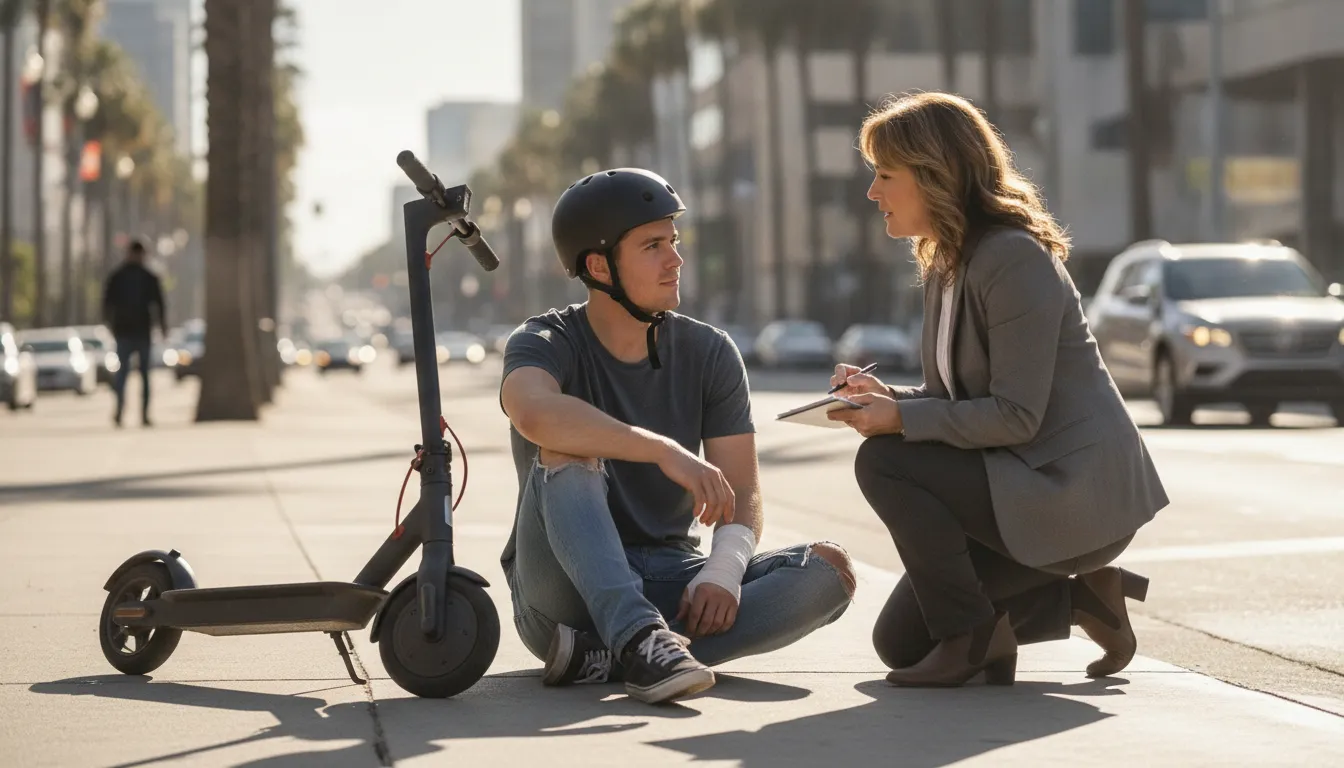
If you were hurt while riding an electric scooter in California, you may be wondering who should pay for your medical care and other losses. An electric scooter accident lawyer in California can investigate the crash, preserve evidence, identify potentially responsible parties, and deal with insurers while you focus on recovery. Liability may involve a driver, rental company, manufacturer, maintenance contractor, public entity, or more than one party.
For a free consultation about your accident, call 800-200-HURT.
The right next step depends on how the collision happened, the severity of your injuries, the available insurance, and the deadlines that apply. The guide below explains the issues that commonly shape a California electric scooter claim.
Who May Be Liable After an Electric Scooter Crash in California?
Electric scooter crashes do not always fit into one simple category. The person who caused the collision may be responsible, but the scooter itself, a dangerous roadway, or a business relationship can also matter. A careful investigation should examine the entire chain of events before anyone accepts blame or signs away a claim.
A negligent driver
A motor vehicle driver may be liable if they were speeding, distracted, impaired, turning carelessly, or failed to yield. Drivers have a duty to operate safely around other road users, including people on scooters. A collision may also involve a rideshare driver, delivery driver, commercial vehicle, or uninsured motorist. Photos, traffic-camera footage, vehicle damage, witness accounts, and the police report can help clarify what happened.
The rider or another scooter user
The scooter rider has duties too. A rider who ignores a traffic signal, travels where scooters are prohibited, or operates carelessly may be assigned some responsibility. Another rider or cyclist could also cause the crash. California uses a pure comparative negligence rule. That means an injured person may still recover damages when partly at fault, although the recovery can be reduced by the assigned percentage of fault.
A rental or share company
When a rented scooter is involved, preserve the rental receipt, trip history, app screens, and any user-agreement terms. A share operator may have responsibility if poor maintenance, an unsafe deployment decision, or a defect contributed to the collision. User agreements often contain liability waivers, but a waiver does not automatically decide every legal issue. The facts, wording, and applicable law must be reviewed.
A manufacturer or maintenance contractor
Brake failure, a defective tire, steering problems, a broken frame, or another mechanical issue may support a product-liability or negligence investigation. Keep the scooter in its post-crash condition if possible. Do not repair, discard, or modify it before it can be documented. Maintenance records and similar incidents may be important evidence.
A public entity or property owner
A damaged roadway, missing warning, dangerous construction area, or unsafe surface may have contributed to the crash. A responsible city, county, or other entity may be involved, but claims against public entities can have special notice rules and shorter deadlines. Prompt legal review is especially important when a government-owned road or facility may be part of the case.
What California E-Scooter Rules Can Affect Fault?
California electric scooter cases often turn on where the scooter was being operated, what each road user did, and whether a local ordinance applied. The rules are not just technical details. An insurer may point to an alleged violation to argue that the rider caused or worsened the crash. That argument still must be tested against the evidence and the conduct of every other person involved.
Traffic duties apply on shared roads
Electric scooters are motorized devices subject to rules that address safe operation and interaction with traffic. Riders generally must obey applicable signals, travel restrictions, and right-of-way rules. A rider should yield where required and use reasonable care around pedestrians. A driver cannot assume that a scooter has no right to be on the road simply because it is smaller than a car.
California law and local rules can change. Cities may establish operating zones, speed restrictions, parking requirements, and other requirements for scooter use. The location matters. A rule applying in one California city may not apply in another. Evidence should show the exact street, lane, sidewalk, path, signal, and conditions at the time of the crash.
Comparative fault is not an automatic bar
Suppose an insurer argues that a rider was partly at fault for using the wrong lane. The claim does not necessarily disappear. Under California’s pure comparative negligence approach, damages may be reduced to reflect the rider’s share of responsibility. The other driver’s speed, lookout, braking, and failure to yield may still be examined. Fault is an evidence question, not simply a label attached by an adjuster.
Safety conduct and injury evidence
Helmet use, visibility, lighting, clothing, and attention may become part of the discussion, especially in a head injury claim. The absence of a helmet does not automatically determine who caused the collision. It may raise a separate argument about injury severity, which requires medical and factual analysis. A prompt medical evaluation is important because head and orthopedic injuries can require care even when symptoms seem manageable at first.
For broader shared-road guidance, review these electric scooter and bicycle accident safety considerations. They can help explain the safety context, but they do not replace a fact-specific review after a crash.
The California Department of Motor Vehicles publishes additional guidance for two-wheeled vehicle operation. Rules can change, so check the applicable law and local ordinance for the place where the crash occurred.
What Should You Do After an Electric Scooter Accident?
- Get medical attention. Call emergency services for urgent symptoms and arrange a prompt medical evaluation even when pain appears limited. Some injuries develop delayed symptoms. Tell the provider that the injury came from a scooter crash, describe every symptom, and follow the recommended care plan.
- Report the collision. Contact law enforcement when a motor vehicle, serious injury, hit-and-run, or dangerous roadway is involved. Request the report information. If a rental scooter was involved, report the incident through the company’s official channel. But avoid guessing about fault or giving a recorded statement before you understand the claim.
- Preserve scene evidence. If you can do so safely, photograph the scooter, roadway, traffic controls, debris, lighting, weather, visible injuries, vehicle damage, and surrounding businesses. Take wide and close views. Note the exact location and time. Ask witnesses for their names and contact information.
- Save digital records. Preserve the rental receipt, trip route, app messages, account notices, photographs, video, and any incident number. Ask nearby businesses or residents whether cameras may have captured the crash. Video can be overwritten, so make this request quickly.
- Keep an injury and expense log. Save medical bills, prescriptions, mileage, transportation costs, wage records, and communications with insurers. Record missed work, changes in daily activities, and symptoms. Medical records help show the treatment and diagnosis, while an expense log helps document the financial effect.
- Be careful with insurers and social media. Give necessary notice, but do not speculate about the cause of the crash or minimize your injuries. Do not post photos, videos, or comments about the accident or your recovery. Do not sign a release before you know the full extent of your losses.
These steps are also summarized in the firm’s guide to steps to take after an electric scooter accident. The article concerns car crashes, so scooter-specific evidence, rental data, and roadway rules still need separate attention.
How Do Insurance and Scooter-Share Claims Work?
Insurance is often less straightforward for an electric scooter than for a car. Coverage can depend on who was injured, who caused the crash, the type of scooter, the rental agreement, and the wording of each policy. Do not assume that a rider has no possible coverage, and do not assume that a rental company will pay automatically.
| Potential source | When it may matter | Questions to investigate |
|---|---|---|
| At-fault driver’s policy | A vehicle driver may have caused the collision. | Was the driver identified, insured, or covered by a commercial or rideshare policy? |
| Rider’s household policies | A personal auto or homeowner’s policy may contain relevant provisions, depending on its terms. | Does the policy address the scooter, medical payments, uninsured motorists, or exclusions? |
| Scooter-share operator | The rental company may have insurance or contractual obligations connected to its device and platform. | What coverage and agreement applied during the trip, and did maintenance or deployment contribute? |
| Product or maintenance responsibility | A defect or neglected repair may have caused the crash. | Can the scooter be preserved, inspected, and matched to maintenance records? |
| Public entity or property coverage | A roadway or property hazard may have contributed. | Who controlled the location, and do special claim procedures or deadlines apply? |
Insurance adjusters may ask for a recorded statement or early medical authorization. A California personal injury lawyer can help evaluate what should be provided and what should be reserved. Coverage questions can be particularly difficult when several parties have competing explanations.
The firm’s overview of how car accident claims work explains general claim steps. Scooter cases add rental records, device condition, local operating rules, and potentially multiple defendants to that process.
What Compensation May Be Available for Scooter Injuries?
A claim is evaluated from the evidence of the injury and the losses it caused, not from a standard scooter-accident number. Potential damages may include reasonable medical expenses, future treatment, lost wages, reduced earning ability, physical pain, emotional distress, and property damage when supported by the facts. A serious injury may also require an assessment of long-term care, rehabilitation, accommodations, or changes to daily life.
Head injuries, fractures, road rash, ligament damage, and other orthopedic injuries can affect work and ordinary activities. Some symptoms are not obvious at the scene. Keep appointments, follow treatment instructions, and tell your providers about changes in pain, memory, sleep, mood, balance, or movement.
Research published in the National Library of Medicine describes head and orthopedic trauma among injuries associated with electric scooter crashes. That research is general information, not a diagnosis. The CDC’s Heads Up guidance also emphasizes steps that can reduce the risk of head injury.
California’s comparative negligence rule can reduce a recovery if the evidence assigns part of the responsibility to the injured person. That does not mean an insurer’s first percentage is final. A complete review may show that another driver, a share operator, a manufacturer, a maintenance contractor, or a public entity bears responsibility too.
Organize records that connect each loss to the crash. Useful materials can include medical bills, wage documentation, receipts, photographs, testimony from family or coworkers, and a clear treatment timeline. For more on the evidence process, see documenting injury evidence for your accident claim.
When Should You Contact an Electric Scooter Accident Lawyer California?
Contact an electric scooter accident lawyer California victims can rely on promptly when the injury is serious or fault is disputed. Legal advice can also help when a rental company or manufacturer may be involved. Early action can preserve the scooter and obtain video. It can also identify witnesses and protect communications before evidence disappears.
Situations that deserve prompt review
- A driver left the scene or denies hitting you.
- You suffered a head injury, fracture, surgery, permanent impairment, or symptoms that continue.
- The scooter failed, was poorly maintained, or was rented through a share platform.
- A dangerous street, construction area, sidewalk, or signal may have contributed.
- More than one person or company may share responsibility.
- An insurance adjuster is pressuring you to give a statement or accept a quick settlement.
- You missed work or expect continuing medical care.
California generally gives an injured person two years from the date of an accident to file a personal injury lawsuit, but exceptions and different rules can apply. Claims involving a public entity can have special procedures. Waiting can also make it harder to locate video, inspect a scooter, or obtain complete records. A deadline should not be treated as a reason to delay a consultation.
The broader injury-claim guide explains how an attorney can help with insurance communications and the claims process. A scooter case may require additional work on device data, rental terms, traffic rules, product evidence, and comparative fault. The firm represents California injury victims and brings experience to complicated liability questions.
Before you discuss a settlement, call 800-200-HURT for a free consultation.
Frequently Asked Questions
Can I sue if I was injured on an electric scooter?
You may have a personal injury claim if another person or entity caused the crash through negligence, a dangerous condition, a defective scooter, or another legally recognized basis. The responsible party could be a driver, rider, rental company, manufacturer, maintenance contractor, or public entity. The available claim and damages depend on the evidence, the injury, and applicable deadlines.
Can a scooter rental company be liable?
Possibly. A rental company may become part of an investigation when poor maintenance, a mechanical defect, unsafe deployment, inadequate warnings, or another company action contributed to the accident. The rental agreement may contain a waiver, but the waiver does not answer every question. Preserve the trip information, scooter details, app records, and incident communications for review.
What if I was partly at fault?
California follows pure comparative negligence. You may still be able to recover damages when you share some responsibility, but the amount can be reduced by your percentage of fault. The final analysis should consider everyone involved, including a driver who failed to yield, a rental operator, a manufacturer, or a roadway owner.
Does a personal injury lawyer require an upfront fee?
James McKiernan Lawyers states that it works on a contingency fee model, described as No Fee Unless We Win. Ask the firm to explain the agreement, including how fees and case expenses are handled, before signing. A consultation can also help identify evidence to preserve and deadlines that may affect your options.
Talk With a California Personal Injury Lawyer
Electric scooter claims can involve traffic rules, medical evidence, insurance coverage, rental agreements, product issues, and more than one potentially responsible party. James McKiernan Lawyers focuses exclusively on personal injury representation and has decades of experience handling complex accident claims. The firm states that clients pay no fee unless the case is won.
Do not let an early insurance offer or a missing piece of evidence decide what your claim is worth. Gather your records and learn what options may be available based on your specific facts.
Schedule a free consultation today. Call 800-200-HURT to discuss your California electric scooter accident claim.