Slip and Fall Lawyer California: Premises Liability Guide
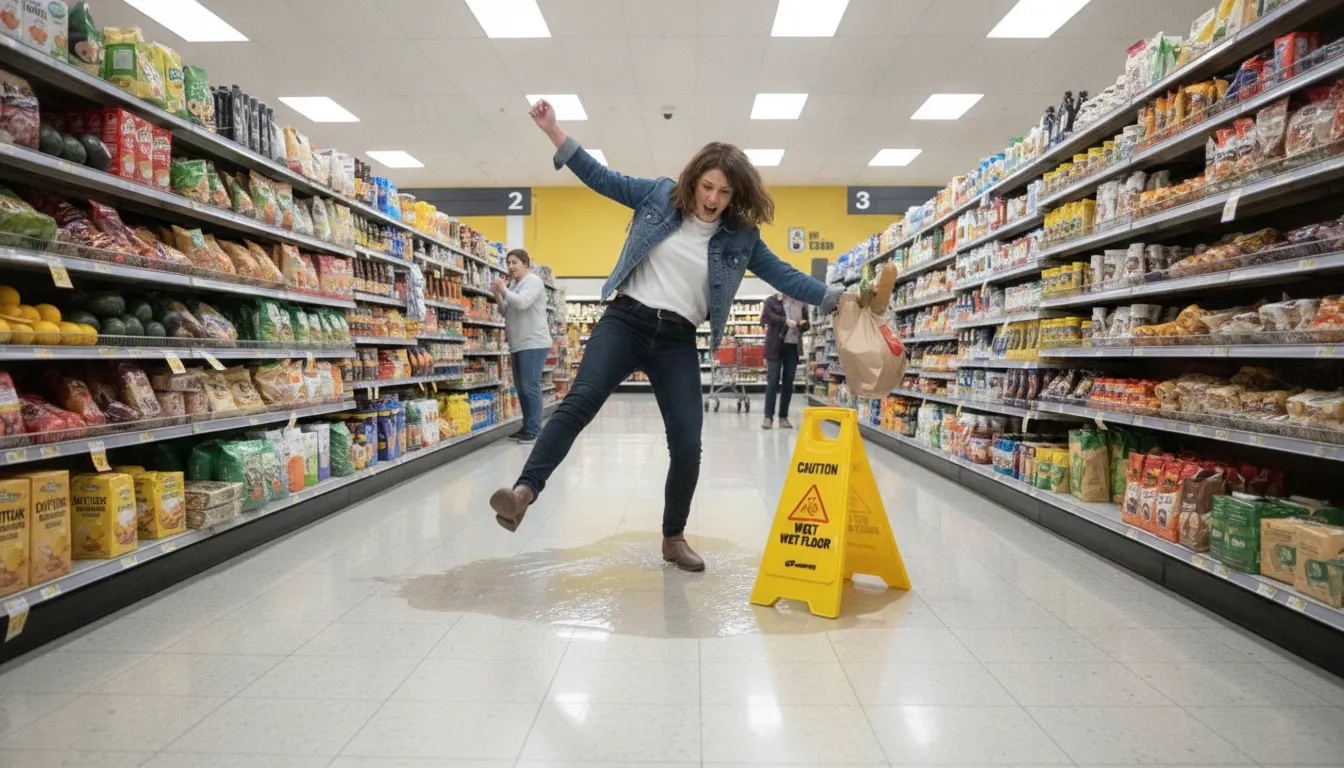
A single puddle on a grocery store floor can lead to life-altering head injuries. When businesses ignore spills, innocent customers pay the price with their health and finances.
Call (800) 200-4878 now for a free consultation with a slip and fall lawyer California victims trust.
A slip and fall lawyer California helps you recover medical bills, lost wages, and pain after an accident on a commercial property. Under state law, property owners must keep their buildings safe for visitors by finding and fixing dangers like wet floors or poor lighting. If a store owner knew about a hazard but did nothing to stop it, they are often seen as negligent and liable for your harm. You may still recover compensation even if you were partly at fault, though you must meet the two-year legal deadline. An experienced firm can gather evidence like store video to build your case and ensure insurance companies treat your claim with respect.
Proving that a business was at fault is the first step toward recovering compensation for your injuries. To start your case, you should learn the basics of premises liability in California.
Slip And Fall Lawyer California: What Is Premises Liability in California?
Premises liability is a legal rule that holds property owners responsible when someone gets hurt on their land. California law requires commercial property owners to maintain safe conditions and warn visitors of known hazards.
Premises liability holds property owners accountable when someone gets hurt on their land. In California, this law applies to all types of commercial properties, including grocery stores and retail shops. If a store owner does not keep their property safe, they may have to pay for the resulting injuries.
Your Rights as a Visitor
California laws protect visitors from hidden or dangerous conditions while shopping or visiting a business. Commercial buildings have a legal duty to protect invited guests from hazards that are not open and obvious. As a customer, you are an “invitee” under the law, which gives you the highest level of protection because the owner profits from your presence. They must take reasonable care to find and fix any problems that could cause harm.
The Rule of Reasonable Care
State courts evaluate the “reasonableness” of a property owner’s actions to determine fault. Under California law, owners must maintain their premises in a safe condition and warn guests of known hazards. The court asks whether the owner acted as a prudent person would in the same situation. If the owner knew about a risk but did nothing, they are likely negligent. Every slip and fall case is unique and must be evaluated on its own facts.
Proving Negligence: Actual vs. Constructive Notice
To win a slip and fall case, you must show the property owner had “notice” of the hazard. Actual notice means they knew about it. Constructive notice means they should have known because it existed long enough for a reasonable inspection to find it.
More than 1 million people seek medical help for fall injuries each year. These accidents can happen anywhere, from a local grocery store to a large parking lot. To win your case, you must prove the owner had notice of the hazard before you fell. Without proof of notice, winning a premises liability claim becomes very difficult.
The Duty of Care and Actual Notice
California law imposes a duty on landowners to maintain safe property. Actual notice is the most direct way to prove fault. It means the owner or an employee knew the hazard existed. This happens if a worker sees a spill but does not clean it up, or if a customer reports a broken bottle to staff. If the owner knew about the danger and did not act, they are liable for your injuries.
Proving Constructive Notice
Proving notice is often the hardest part of the legal process. If no one told the owner about the hazard, you must prove “constructive notice” meaning the hazard existed long enough that a careful owner should have discovered it. For instance, if a leaking cooler has been pooling water for an hour, the store should have fixed it. California law requires owners to inspect their premises frequently. This rule ensures store owners cannot avoid responsibility by simply not looking.
Evidence Used to Prove Notice
Building a strong case requires clear proof. Photographs of the scene can demonstrate how long a hazard existed. Dried residue around a spill, footprints through a wet area, or collected debris all suggest the hazard was present for an extended period. You should consult a slip and fall evidence checklist to see what other proof you might need.
Common Hazardous Conditions in California Retail Stores
Retail stores contain numerous hazards that can cause serious falls: wet floors, loose mats. Produce debris, uneven pavement, broken stairs, and poor lighting are among the most dangerous conditions.
Property owners in California have a duty to keep their stores safe. When they fail, serious injuries occur. CDC data shows falls are the second leading cause of traumatic brain injury deaths in the United States.
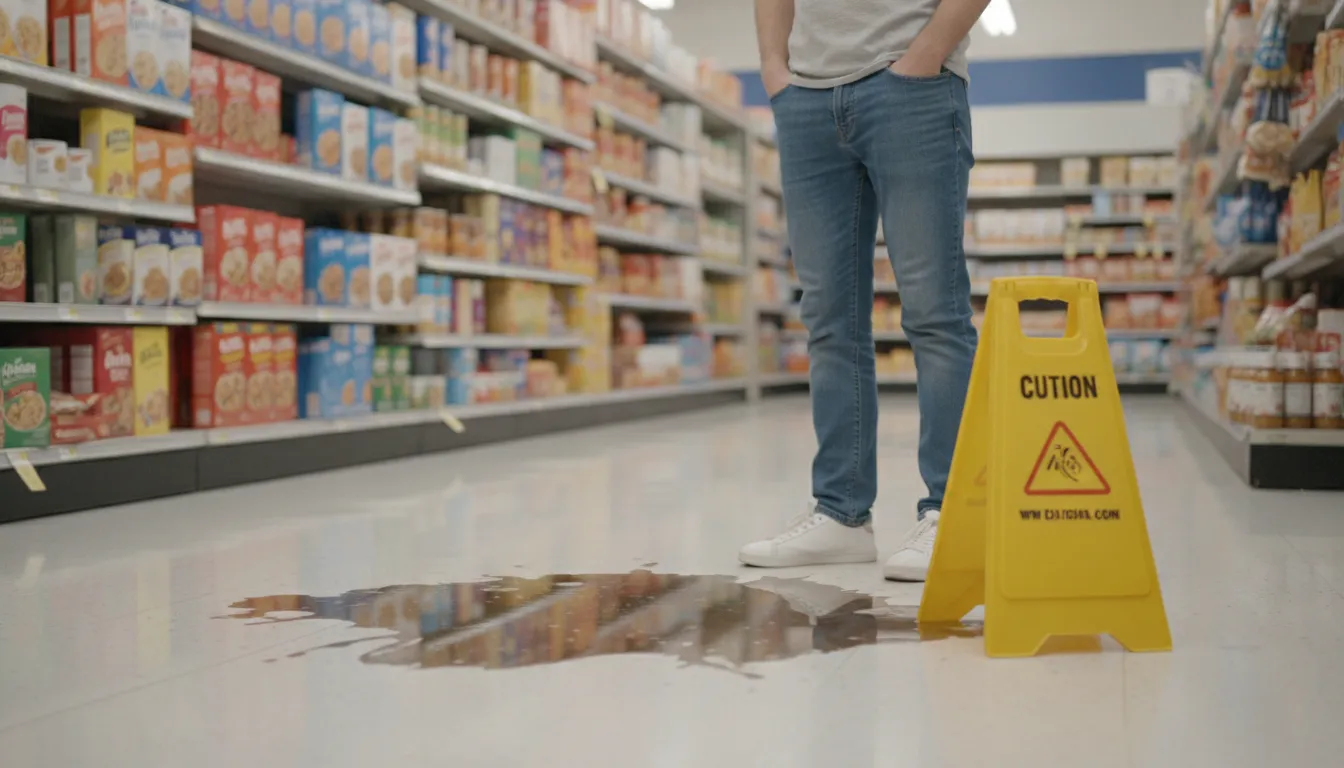
- Wet floors and spills. Liquid on a slick floor is a top cause of falls. Leaky coolers, spilled drinks, and tracked-in rain all create hazards. Stores must clean up spills promptly.
- Loose floor mats or rugs. Mats that bunch up or have curled edges become trip hazards. Stores must ensure all rugs lay flat and remain secure.
- Produce debris in grocery aisles. Loose grapes, onion skins, and fallen leaves become slippery on hard floors. Employees must patrol aisles regularly to remove these items.
- Recently mopped floors. Mopped floors stay slick for some time afterward. Stores must use clear warning signs or barricades near wet areas.
- Uneven pavement and cracks. The duty of care extends to parking lots. Large cracks and uneven sections can catch a foot and cause a fall.
- Broken stairs and handrails. Loose steps and missing handrails make it difficult for guests to maintain balance, especially in multi-level stores.
- Poor lighting. Dimly lit aisles and dark parking lots hide other hazards. Adequate lighting is a basic safety requirement.
California’s Comparative Fault Rule Explained
California follows pure comparative negligence, meaning you can recover compensation even if you are mostly at fault. Your award is reduced by your percentage of fault, but you are not barred from recovery.
California uses pure comparative negligence under Proposition 51. The court assigns a percentage of fault to each person involved. Even if you are partly to blame, you can still win your case, though your award is reduced by your share of fault.
How Fault Affects Your Recovery
You can pursue a premises liability claim even if you are 99% at fault. If a jury finds you mostly to blame, you still recover 1% of your total losses. For instance, with $100,000 in damages and 40% fault assigned to you, you would receive $60,000. This rule is more favorable than laws in other states that bar recovery when the plaintiff is over 50% at fault. According to the California Courts, victims recover damages based on their specific level of responsibility.
Common Defense Arguments
Insurance companies often exploit this rule to minimize payouts. They may argue you should have seen the hazard, were looking at your phone, or walking too fast. They might claim the danger was “open and obvious.” If they prove you were distracted, a judge may reduce your award. An experienced attorney knows how to counter these arguments and keep the focus on the store owner’s failure to maintain safe premises.
Maximizing Your Compensation
To achieve the best outcome, you must show the owner bore greater fault than you. This requires strong evidence including video footage and witness statements. An attorney can gather store records and safety logs to establish that the owner knew about the risk, shifting more fault onto them and maximizing your recovery.
What Damages You Can Recover After a Slip and Fall
California law allows slip and fall victims to recover economic damages (medical bills, lost wages) and non-economic damages (pain and suffering). The statute of limitations is generally two years from the accident date.
A slip and fall accident often leads to significant medical expenses and lost income. California law allows victims to seek compensation for both financial losses and personal suffering.
Economic Damages for Financial Losses
Economic damages cover tangible financial costs. This includes all medical care from the initial emergency visit to ongoing physical therapy. It also covers lost wages if you cannot work. If your injury reduces your future earning capacity, you can seek compensation for that loss as well. Under California law, these costs must be proven with bills, receipts, and pay stubs.
Non-Economic Damages for Pain and Suffering
Non-economic damages compensate for pain, mental distress, and loss of enjoyment of life. Unlike some other states, California does not cap these damages for most slip and fall cases. You can seek full compensation for how the accident has affected your daily life. Premises liability settlement amounts vary based on the specific facts of each case.
Deadlines for Filing Your Claim
California law sets a strict time limit for filing a lawsuit. In most cases, you have two years from the date of the fall to begin your legal claim. Missing this deadline means losing your right to seek compensation entirely. Speaking with an attorney promptly ensures you meet all procedural requirements.
Why You Need a California Slip and Fall Lawyer
Hiring an attorney leads to significantly higher settlements. Data shows represented victims receive about 3.5 times more compensation than those who handle claims alone. James McKiernan Lawyers has recovered over $350 million for more than 35,000 clients.
Facing a large insurance company alone is difficult. Property owners and their insurers often attempt to shift blame to the victim. An experienced premises liability attorney can build a strong case while you focus on recovery.
Legal Representation Leads to Higher Payouts
Data from the Insurance Research Council shows that represented claimants receive approximately 3.5 times more in settlements than those who negotiate alone. This additional compensation helps cover long-term medical needs and lost income. Without legal representation, you may accept an initial offer that falls far short of your actual needs.
James McKiernan Lawyers brings unique advantages to your case. Founder James McKiernan is a former Superior Court Judge who understands courtroom strategy from the bench. The firm has recovered over $350 million for more than 35,000 clients. This track record demonstrates the ability to win difficult premises liability cases.
| Factor | Handling It Alone | With a California Lawyer |
|---|---|---|
| Evidence Collection | You must locate all video and records. | Lawyers use legal tools to obtain proof. |
| Legal Knowledge | Complex state laws are hard to navigate. | Led by a former Superior Court Judge. |
| Negotiation Power | Insurers often ignore unrepresented claims. | Aggressive advocacy against insurance firms. |
| Settlement Value | Typically far below actual costs. | Averages 3.5 times higher compensation. |
| Time Commitment | Significant burden during recovery. | We handle the entire process for you. |
Frequently Asked Questions About Slip and Fall Claims
Common questions about California slip and fall claims address how fault is determined, what evidence is needed, how long cases take, and whether stores can avoid liability.
-
What should I do immediately after a slip and fall in a store?
Seek medical attention right away. Report the accident to store management and ask them to document it. Take photos of the hazard and your injuries. Collect contact information from any witnesses. Preserve the clothing and shoes you were wearing. Contact a slip and fall lawyer California before speaking with any insurance adjuster.
-
How long does a California slip and fall case take to resolve?
Most slip and fall cases resolve within 6 to 18 months. Simple cases with clear liability and minor injuries may settle within a few months. Complex cases involving serious injuries, disputed liability, or multiple defendants can take 2 years or longer, especially if they proceed to trial.
-
Can I still recover if I was partially at fault for the fall?
Yes. California’s pure comparative negligence rule allows you to recover compensation even if you were partially at fault. Your award is reduced by your percentage of fault. For example, if you are found 30% at fault, you receive 70% of the total damages. Only a complete lack of any defendant fault would bar your recovery.
-
What types of evidence help prove a slip and fall case?
Key evidence includes store surveillance video, incident reports filed with management, photographs of the hazard, witness statements. Medical records, maintenance logs showing inspection schedules, and receipts or bank records proving you were at the store. An experienced attorney can help preserve and obtain this evidence before it is lost.
-
Does a store’s insurance cover my slip and fall injuries?
Most commercial property owners carry general liability insurance that covers visitor injuries. The policy typically pays for medical expenses, lost wages, and pain and suffering up to policy limits. Insurance adjusters will try to minimize the payout, which is why having legal representation is critical to ensuring fair treatment.
Attorney Advertising. This article is for informational purposes only and does not constitute legal advice. Past results do not guarantee future outcomes. Every case is unique and must be evaluated on its own facts.
Ready to Speak With a Slip and Fall Lawyer California Victims Trust?
You do not have to navigate the legal system alone. James McKiernan Lawyers has helped over 35,000 injured Californians recover more than $350 million. Our team includes a former Superior Court Judge who understands how to build winning cases against negligent property owners.
Call (800) 200-4878 now for a free, no-obligation consultation. We work on a contingency basis, meaning you pay nothing unless we win your case.