Rental Car Accident Lawyer: California Coverage Guide
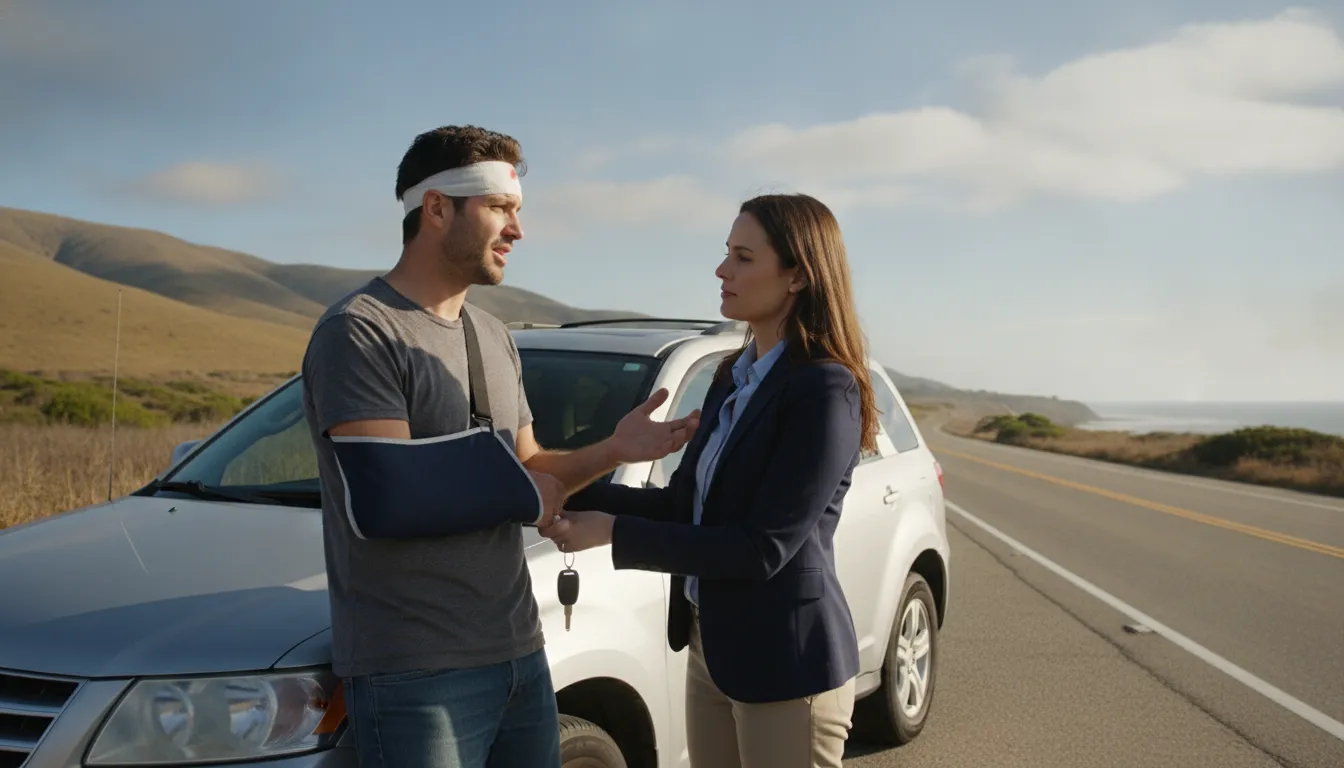
A rental-car collision can leave you sorting through several insurance policies while you are still dealing with injuries, vehicle damage, and lost time at work. The fact that one driver was behind the wheel of a rental does not, by itself, determine who must pay.
A rental car accident lawyer can help identify the responsible parties, review the renter’s policy, rental agreement, and available coverage, and pursue the claim that fits the facts. California’s Department of Insurance cautions that auto policies do not always automatically cover rental vehicles, so coverage should be verified rather than assumed: California Department of Insurance rental coverage guidance.
After getting medical attention and reporting the crash, preserve the rental documents, photographs, communications, and witness information. The next question is how liability and insurance coverage may interact after a California rental-car crash.
Who May Pay After a California Rental-Car Crash?
Start with a simple question: who caused the collision, and what insurance or other coverage is available? A rental-car claim can involve more than one potential source of payment. The answer may depend on the drivers’ actions, the rental agreement, vehicle ownership, applicable California law, and the terms of each insurance policy.
If you were injured, do not assume the first insurer that contacts you has identified every responsible party or available source of coverage.
If another driver caused the crash
The other driver’s liability insurance may be the primary place to pursue compensation for injuries and other losses. That does not make payment automatic. The insurer may examine fault, the accident evidence, the nature of your injuries, and the policy’s available limits. Policy limits vary, and the available coverage may not be enough to address all losses.
For example, a claim may become more complicated when the other driver disputes responsibility, several vehicles are involved, or the driver’s policy does not provide enough coverage. Your own policy may also need to be reviewed for uninsured or underinsured motorist coverage. This is a coverage question, not a conclusion that your insurer will automatically pay.
If the rental driver contributed to the crash
If the person driving the rental vehicle caused or partly caused the collision, that driver’s personal auto insurance may apply, depending on the policy. Coverage purchased through the rental company may also matter. The rental agreement and any protection selected at the counter or online should be preserved and reviewed, rather than treated as universal coverage.
In some cases, more than one person may share responsibility. The facts might include speeding, distraction, an unsafe lane change, a road hazard, or another driver’s conduct. Responsibility should be evaluated from the available evidence instead of assigned solely because one vehicle was a rental.
If a vehicle problem contributed
A rental company is not automatically liable merely because it owned or rented the vehicle. However, maintenance records, inspection history, a faulty part, or another vehicle defect may become relevant if a mechanical problem contributed to the crash. Other parties may also need to be considered based on who made, serviced, maintained, or controlled the vehicle.
California drivers and passengers on the Central Coast can review California car accident claims, coverage, and liability for more information. A rental car accident lawyer can help organize the contracts, policies, reports, photographs, witness accounts, and medical records needed to assess which claims may apply. Until that review is complete, avoid assuming that the rental company, another driver, or a particular insurer is solely responsible.
How Does the At-Fault Driver’s Insurance Apply?
Use this quick decision tree as a starting point. It does not replace a review of the crash evidence, rental agreement, and complete policy language.
| What happened? | Coverage source to review first | What to confirm |
|---|---|---|
| Another driver caused the crash | That driver’s liability policy | Fault, policy limits, injuries, and whether your own underinsured-motorist coverage may also apply |
| The rental driver caused or shared fault | The renter’s auto policy and rental-company protection | Who was authorized to drive, what protection was selected, exclusions, and the rental agreement |
| A vehicle defect or maintenance issue contributed | Evidence involving the rental company, service provider, or manufacturer | Maintenance records, inspection history, the defect, and whether it caused or contributed to the collision |
| The at-fault driver has no insurance or not enough coverage | Your uninsured or underinsured-motorist coverage | Your policy terms, notice requirements, applicable limits, and how the claim interacts with other sources |
When another driver causes a rental-car collision, an injured person may pursue a third-party claim against that driver’s liability insurer. The claim can seek compensation for losses supported by the facts and available coverage. It is not automatically resolved simply because one driver was operating a rental vehicle.
The insurer will examine how the collision happened, the available evidence, the injuries and property damage, and the terms of its policy. California fault allocation can also matter. If the evidence shows that more than one person contributed to the crash, responsibility may be divided rather than assigned entirely to one driver. The effect of that allocation depends on the facts of the individual case.
Policy limits can affect the claim
An at-fault driver’s insurance may cover qualifying losses, but the policy’s limits can restrict what that insurer will pay. Policy limits vary, and the amount offered by an insurer is not necessarily the full value of an injured person’s losses. Medical treatment, time away from work, vehicle damage, and other consequences may need to be documented before the available coverage can be evaluated.
There may be other coverage to review if the at-fault driver’s insurance is unavailable or insufficient. A careful coverage analysis can include the injured person’s own policy and any applicable uninsured or underinsured motorist protection. The parties involved, the contracts, and the precise cause of the collision all matter. A rental company is not automatically liable, and an insurer is not required to accept a conclusion that has not been supported by evidence.
Your own policy may not cover every rental
Do not assume that your personal auto policy follows you into every rental vehicle. The California Department of Insurance warns that not every auto insurance policy automatically provides rental-vehicle coverage. Some policies cover a rental only when it is a replacement or substitute vehicle provided while the insured vehicle is being repaired. Other policy terms may address rentals differently.
That distinction can matter when the renter’s own policy is being considered for vehicle damage, liability, or another part of the claim. Review the declarations page, policy language, endorsements, rental agreement, and any protection purchased at the counter. The Department of Insurance recommends verifying coverage before renting a car. Its consumer alert explains rental-vehicle coverage questions.
After a Central Coast collision, preserve the rental paperwork, insurance correspondence, photographs, and medical records. For broader guidance on California car accident claims, coverage and liability, a lawyer can assess how the available policies and evidence fit together before you accept a release or settlement.
Does the Renter’s Policy or Rental Company’s Protection Cover the Loss?
Coverage for a rental-car collision may come from the renter’s personal auto policy, protection purchased from the rental company, or another applicable policy. These sources do not work the same way, and having an auto policy does not automatically mean every rental-car loss is covered. The California Department of Insurance advises consumers to verify coverage before renting.
Start by reviewing the renter’s policy and the rental agreement together. An auto policy might cover damage to the rental vehicle or another vehicle when the renter shares responsibility. But the result depends on the policy language and the facts of the crash. The California Department of Insurance warns that some policies cover a rental only when it is a replacement or substitute vehicle while the insured vehicle is being repaired. Read the California Department of Insurance guidance on rental coverage.
Rental companies may offer protection when the vehicle is picked up, and a contract may describe other coverage or responsibilities. Do not assume that a basic rental agreement, an optional product, or a statement made at the counter answers every question. Look for the documents that explain what was purchased or included, who is insured, which losses are addressed, and what exclusions or conditions may apply. Preserve the agreement, receipts, emails, policy declarations, and any claim correspondence.
Property damage and bodily injury are separate questions
Insurance handling for damage to the rental car is not necessarily the same as insurance handling for bodily injury. Property-damage questions may involve repairs, loss of use, towing, or a claim against the renter. An injured driver or passenger may have a separate claim for medical treatment, lost income, and other losses against a person or entity whose conduct caused the collision. A policy that helps with vehicle damage does not automatically resolve an injury claim. And an injury claim should not be evaluated solely by looking at the rental-car repair bill.
When maintenance or a defect may matter
The rental company is not automatically liable simply because it owned or supplied the vehicle. However, maintenance records and inspection evidence may matter if a mechanical defect or inadequate maintenance contributed to the crash. One possible line of investigation is whether a problem with the rental vehicle existed before the collision and whether it played a role in causing the loss. Maintenance and vehicle-condition evidence can be relevant in a rental-car claim.
A rental car accident lawyer can help organize the policy and contract documents. Separate property damage from bodily injury issues, and identify which parties and coverage sources require further investigation. Liability and coverage depend on the specific facts, contracts, applicable law, and available insurance.
What Does Credit-Card Rental Coverage Actually Do?
Credit-card rental coverage can help with certain losses involving a rental vehicle, but it is not a substitute for understanding every source of insurance. The benefit usually applies when you rent from a traditional rental-car company and follow the card issuer’s rules. It may address damage to the rental vehicle, subject to the benefit guide, enrollment requirements, and exclusions.
That distinction matters if you use a peer-to-peer vehicle-sharing service. The California Department of Insurance explains that personal vehicle-sharing programs are not the same as traditional rental-car programs and may be handled differently by insurance companies and credit-card companies. Credit-card coverage typically addresses traditional rental companies, not peer-to-peer services. Some peer-to-peer arrangements may exclude vehicle damage, potentially leaving the renter responsible. Read the California Department of Insurance consumer alert on rental coverage before assuming your card benefit applies.
Primary and secondary coverage are not the same
Some card benefits may be described as primary coverage, while others may be secondary. Primary coverage may respond without requiring you to make your personal auto insurer the first point of contact. Secondary coverage may apply only after another applicable policy has been used, or it may address amounts not covered elsewhere. The exact meaning depends on the card’s current benefit terms. Do not rely on a general description from a rewards page or a past trip. The benefit guide controls.
Check exclusions before you rent
Coverage can depend on who is driving, the type of vehicle, the rental period, the rental agreement, and whether you declined or accepted other protection. Certain vehicle categories, uses, locations, or violations may be excluded. A claim may also involve more than damage to the rental car. Injuries, damage to another vehicle, medical expenses, and liability questions can involve separate policies and legal issues.
Before leaving the rental counter, confirm whether the card requires you to pay with that card. Decline the rental company’s collision protection, or notify the issuer promptly after a crash. Keep the rental agreement, benefit guide, receipts, photographs, police report, and every insurer communication. The California Department of Insurance advises consumers to verify auto insurance coverage before renting. If a collision causes injuries, a rental car accident lawyer can help evaluate how the card benefit fits with other available coverage.
How Can a Rental Car Accident Lawyer Help Evaluate Damages and Liability?
A rental-car collision can create several separate questions: who caused the crash, which insurance policies apply, and which losses can be included in a claim. Liability is not automatic for the renter, rental company, vehicle owner, or an insurer. It depends on the facts, contracts, applicable law, and available coverage.
Potential economic damages may include reasonable medical costs, lost wages, and vehicle or other property damage. Depending on the circumstances, a claim may also involve noneconomic losses such as pain and suffering, emotional trauma, or a reduced ability to enjoy life. Keep bills, wage records, repair estimates, photographs, and medical documentation together. For a clearer explanation of how bodily-injury losses differ from vehicle losses, see this guide to personal injury and property damage.
Do not assume that the other driver’s policy is the only source of recovery. A third-party claim against the at-fault driver’s insurer may be appropriate, but available limits and the policy’s terms matter. Other potential issues can include the renter’s own coverage, protection purchased from the rental company, a maintenance problem, or another responsible party. Reviewing the rental agreement, insurance declarations, claim correspondence, and crash evidence can help identify which theories are supported.
If the responsible driver’s coverage is insufficient for the injuries and losses, your own underinsured motorist coverage may deserve review. Whether it applies, and how it interacts with other coverage, depends on the policy and the facts. Learn more about underinsured motorist coverage before assuming it is available or unavailable.
Be careful with a release, recorded statement, or settlement document. Signing may affect claims that have not yet been evaluated, including ongoing treatment or additional insurance sources. An insurer’s adjuster may be focused on resolving the claim for the insurer, so understand insurance adjuster tactics before agreeing to terms. A California rental car accident lawyer can review coverage, liability, third-party claims, and the potential damages before you make an irreversible decision.
What Should You Do After a Rental-Car Collision?
A collision can leave you dealing with injuries, a damaged rental vehicle, and several insurance companies at once. Take practical steps first, then preserve information that may help clarify what happened. California’s Department of Insurance recommends stopping immediately and moving only if it is safe to do so.
- Get to safety and seek medical care. Stop the rental car. If anyone is injured, call 911 and request emergency medical assistance. Even when an injury seems minor, consider prompt medical evaluation and follow the provider’s instructions. Keep records of visits, diagnoses, prescriptions, and related expenses.
- Notify law enforcement. Call the police and cooperate with the basic investigation. Ask how to obtain the accident report when it becomes available. A report may preserve important details about the vehicles, scene, and people involved, although it is not the only evidence used to evaluate liability.
- Exchange and record identifying information. Collect each driver’s name, address, telephone number, driver’s license information, insurance details, license plate, and vehicle identification number. Ask to see the driver’s license and registration to verify the information. Also record the names and contact information of passengers and witnesses. Do not argue about fault at the scene.
- Photograph the scene and vehicles. If it is safe, take photographs of all visible damage, the positions of the vehicles, traffic controls, road conditions, lighting, and any visual obstacles. Photograph the rental vehicle from several angles before repairs or other changes. Save videos and original files rather than relying only on edited or posted copies.
- Report the collision to the rental company. Follow the reporting instructions in the rental agreement and keep confirmation of your report. Preserve the rental contract, protection or coverage documents, inspection records, repair estimates, towing and storage receipts, and any correspondence about the vehicle. Coverage and responsibility depend on the contract, policies, applicable law, and facts. The rental company is not automatically liable, but maintenance records may matter if a vehicle defect or maintenance problem contributed to the collision.
- Notify potentially involved insurers, carefully. Report the crash as required by applicable policies, but do not guess about responsibility or the full extent of your injuries. Several sources of coverage may be relevant, including the other driver’s policy, your own policy, rental-company protection, or uninsured or underinsured motorist coverage. Keep copies of claim numbers, letters, emails, estimates, and bills.
- Preserve your complete claim file. Keep medical records, wage-loss information, receipts, photographs, witness messages, police documents, and notes describing symptoms and missed activities. Avoid deleting texts, call logs, dashcam footage, or social media material related to the collision. These records can help a California car accident lawyer evaluate coverage, liability, and available evidence.
- Do not rush into a recorded statement or release. An insurer or rental company may ask for a recorded statement, broad authorization, or release before you understand the injuries and coverage issues. You do not have to decide immediately. Before signing a release, accepting payment, or making a detailed recorded statement, consider speaking with a rental car accident lawyer about California claim mistakes to avoid.
The right next step depends on the collision, the available documents, and the coverage involved. Early legal advice can help you preserve evidence without making assumptions about who is responsible.
Which Coverage Source May Apply?
| Possible source | What it may address | What to check |
|---|---|---|
| At-fault driver’s liability policy | Injuries and losses caused by that driver’s conduct | Fault evidence, policy limits, exclusions, and claim requirements |
| Renter’s personal auto policy | Some rental-vehicle liability or damage, depending on the policy | Whether the rental qualifies and whether coverage is primary or secondary |
| Rental-company protection | Specific losses described in the rental contract or selected protection | Contract language, covered drivers, exclusions, and reporting deadlines |
| Credit-card benefit | Potential rental-vehicle damage coverage | Benefit guide, eligible rental type, payment method, and exclusions |
| Uninsured or underinsured motorist coverage | Potential protection when another driver’s coverage is absent or insufficient | Your policy terms, notice requirements, and how coverage interacts with the claim |
This table is a starting point, not a coverage decision. The applicable source depends on the collision, contracts, policy language, and evidence.
Frequently Asked Questions
Who pays if you crash a rental car?
Payment depends on who caused the collision, the rental agreement, and the available insurance. The at-fault driver’s policy, the renter’s auto policy, rental-company protection, or uninsured-motorist coverage may be involved. No party is automatically liable, so the facts and policy terms must be reviewed.
Does my personal auto insurance cover a rental car accident?
It may, but coverage is not automatic. The California Department of Insurance warns that some policies cover rental vehicles only as replacement or substitute vehicles while the insured car is being repaired. Review your policy before relying on it, and confirm whether it covers vehicle damage, liability, and injuries. California Department of Insurance guidance explains these coverage limits.
What should I do immediately after a rental car collision?
Stop and move only if it is safe. Call 911 for injuries and notify the police. Exchange identifying information, record license plates and vehicle identification numbers, collect witness contacts, and photograph the damage and scene. Preserve the rental agreement, insurance communications, medical records, and receipts. These steps follow the California Department of Insurance accident guide.
Can I recover compensation if another driver caused the crash?
You may be able to seek compensation for accident-related medical costs, lost wages, property damage, pain and suffering, and emotional trauma. The amount and available sources depend on the evidence, your injuries, applicable coverage, and any disputed responsibility. Avoid signing a release or accepting a settlement before understanding what claims it may close.
When should I speak with a rental car accident lawyer?
Consider legal advice when injuries, disputed fault, multiple insurers, rental-company damage claims, or inadequate coverage complicate the claim. A lawyer can help preserve evidence, analyze coverage, and communicate with insurers while you focus on medical care. Do not give a recorded statement or sign documents you do not understand.
Ready to Discuss Your Rental-Car Injury Claim?
Insurance and liability issues can become difficult when a rental agreement, multiple policies, and a potential settlement are involved. A review of your claim may help you understand your options before you sign a release or accept an offer.
Contact James McKiernan Lawyers for a free, no-obligation consultation.