Marital Settlement Agreement California Guide
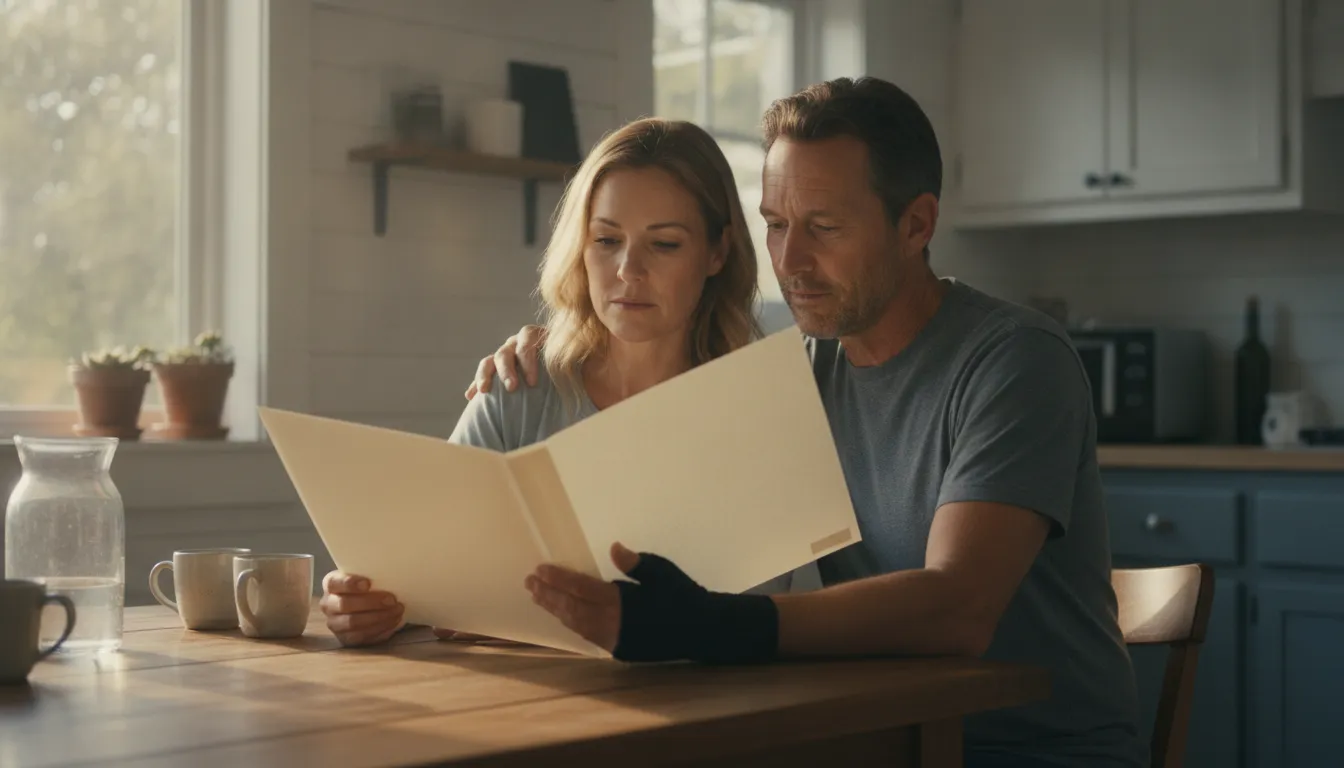
A marital settlement agreement California couples sign is a written deal about property, debts, and support. It can also say what happens to money from a personal injury claim. If you were hurt in a crash or another accident while you were married, that recovery may be part of the conversation. The agreement does not replace your injury claim. It records how you and your spouse will treat the money if a divorce or legal separation moves forward.
This guide is for someone injured in the last few months who is also facing a separation. It explains what the agreement can cover, how California treats injury damages, and which facts to gather. It is general information, not legal advice for your divorce or your injury case. James McKiernan Lawyers handles personal injury claims. A family law lawyer handles the divorce paperwork.
What is a marital settlement agreement in California?
A marital settlement agreement is a contract between spouses, or domestic partners, who have agreed on the issues in a divorce or legal separation. People also call it a written agreement or a stipulated judgment attachment. The California Courts self-help guide says the writing should cover property, debts, and whether either spouse will pay support. If those issues are missing, the court may reject the judgment.
The agreement is not a casual note. Both people usually sign it. It is then attached to the judgment forms the court reviews. Once a judge signs the judgment, the terms can become a court order. That is why vague lines about “we will split everything later” cause trouble. The writing should say who gets which asset, who pays which debt, and what happens to support.
For an injured person, one asset may be a claim that has not paid yet. The claim might be a car crash, a fall, or another injury that happened during the marriage. The agreement can say whether a future check is separate property, community property, or a mix. It can also say who is reimbursed for medical bills already paid. Leaving the claim out does not make it disappear. It leaves a fight for later.
How a marital settlement agreement California couples sign becomes a court order
California Courts explain a no-hearing path when spouses agree and there are no minor children in that particular guide. You still have to finish the case. The court looks for a signed written agreement, the first filing fee or a fee waiver, and a form saying financial disclosures were served. Disclosure is the sworn exchange of income, assets, and debts. Hiding a pending injury claim can undermine the deal.
Several forms usually travel with the agreement. Appearance, Stipulations, and Waivers, form FL-130, tells the court both people are participating and that they waive a trial. The judgment form, often FL-180, becomes the final order, and the signed agreement is attached. A Declaration Regarding Service of Declaration of Disclosure, form FL-141, reports that financial information was exchanged. Names and numbers can change, so use the current forms on the California Courts site.
An injury case adds timing problems. The insurer may not have offered anything when you sign. A lawsuit may still be open. Medical care may not be finished. A good clause says what happens to money received later, not only money already in the bank. It should also say who controls the injury claim. A spouse who is not the injured person does not automatically become the client in that claim.
Which injury issues belong in the agreement?
The agreement is a property document. It is not a demand letter to an insurer, and it is not a medical record. Stick to issues a family court needs in order to divide the marital estate. The list below is a starting point for a conversation with a family law lawyer. It is not a form you should copy into a judgment.
- Whether a pending injury claim exists, and the date the injury happened.
- Who is the injured person, and who is pursuing the claim.
- How much has already been paid, and where that money sits.
- Who paid medical bills, lost wages, or other expenses, and from which account.
- Whether future settlement money is called separate property, community property, or a mix.
- Any reimbursement one spouse expects for bills paid from community or separate funds.
- Who keeps or pays health insurance liens and other medical liens tied to the injury.
- That the clause does not settle the injury claim against the at-fault party.
Child custody and child support are separate court issues. Do not assume an injury clause decides parenting time. If you have minor children, use the court process for those orders. This article does not walk through that process.
How California characterizes a personal injury recovery
California is a community property state. Family Code section 760 is the baseline. Property acquired during marriage is community property unless a statute says otherwise. Injury damages have their own statutes. The date of the injury, not the date of the check, is the first question. A crash in March and a settlement the next January can still be “during marriage” if you were married in March.
Family Code section 780 says money received for personal injuries is community property if the claim arose during the marriage. You can read the current text on Family Code section 780. That rule has two important limits. Section 781 and section 2603 can change the result. Read them together. Do not stop at the first sentence you find online.
Family Code section 781 makes the recovery the injured person’s separate property in defined situations. One is when the claim arose after a judgment of dissolution or legal separation. Another is when the injured spouse is living separate from the other spouse. Separate living is a fact question. A short hotel stay is not the same as a true separation. The statute also says a spouse who paid injury expenses can seek reimbursement from that separate-property recovery.
Section 781 has another rule. If one spouse has a claim against the other that arose during the marriage, money paid for those injuries is the injured spouse’s separate property. That can matter in a crash where one spouse was driving. It does not decide fault in the injury case. Fault is a different lawsuit, with its own evidence.
Family Code section 2603 covers community estate personal injury damages. That phrase means money for injuries when the claim arose during marriage and section 781 does not make it separate property. It also excludes money that has been mixed with other community assets. If the check was deposited into a shared account and spent, tracing gets harder.
Under section 2603, those damages “shall be assigned” to the injured spouse. A court can divide them differently only when justice requires it, after looking at finances, time since the recovery, and the rest of the case. Even then, at least one-half goes to the person who was hurt. That is not the same as an automatic 50/50 split of every dollar. Pain and suffering is not a joint bank account just because you were married.
Section 782 deals with an injury one spouse causes the other. Money one spouse pays the other for those injuries is the injured person’s separate property. Again, the divorce paper does not decide the crash. It decides how the family estate treats the money.
What changes the result in a real claim?
Statutes set the frame. Facts decide the case. These are the details that usually matter when an injury recovery shows up in a separation.
| Fact | Why it matters | What to gather |
|---|---|---|
| Date of the injury | The claim’s start date drives community or separate character | Crash report, incident date, and marriage date |
| Living apart or still together | Section 781 can treat a recovery as separate if you were living apart | Move-out date, leases, and mail forwarding |
| Judgment already entered | A claim that arises after dissolution or legal separation is treated differently | Any signed judgment or separation order |
| Who paid the bills | A spouse who paid expenses may have a reimbursement claim | Card statements, lien letters, and wage records |
| Where the money went | Mixing a check into a joint account can change tracing under section 2603 | Deposit records and the account name |
| Claim still open | Unpaid future money needs its own clause | Insurer letters and the lawyer’s file status |
None of these rows guarantees an outcome. A judge, or the two of you in a signed agreement, applies the facts. Bring documents, not guesses.
How should you prepare before you sign?
Do this before anyone drafts the clause. The order keeps the injury file and the divorce file from contradicting each other.
- Write down the injury date, the marriage date, and any date you began living apart.
- List every account that received settlement money, wage-loss payments, or MedPay.
- Collect medical bills, lien letters, and proof of who paid them.
- Ask your injury lawyer what is still unpaid and what liens must be resolved.
- Tell your family law lawyer the claim exists, including a claim that has not settled.
- Do not sign a release with an insurer just to “simplify” the divorce.
- Read the proposed clause out loud. If you cannot explain it, do not sign it yet.
Keep the injury negotiation separate from the marital negotiation. An insurer’s release ends claims against that insurer. A marital settlement agreement divides property between spouses. Signing one does not sign the other. Mixing the two documents is a common way people give up rights they did not mean to give up.
What the agreement should not try to do
A marital settlement agreement cannot award damages against the driver who hurt you. That is the injury case. It also should not guess at a dollar figure you have not been offered. Inventing a number can box you in later, with the insurer or with the court.
Do not use the agreement to value pain and suffering. California’s pure comparative negligence rules decide how fault reduces an injury recovery. Those rules live in the injury case. A divorce clause that says “we agree husband was 20 percent at fault” can be misused later. Leave fault findings out unless your injury lawyer has reviewed the words.
Do not trade away reimbursement rights by accident. Section 781 says a spouse who paid injury expenses from separate or community funds can seek reimbursement. If you intend to waive that, the clause should say so in plain words. If you do not intend to waive it, say that too.
Tax treatment is a different question. Some parts of a physical-injury settlement are excluded from income, and some parts, such as interest or punitive damages, may not be. This article does not give tax advice. Ask a tax professional before you allocate interest or punitive damages in the agreement. Our guide to whether a car accident settlement is taxable covers the tax question in more detail.
How this differs from loss of consortium and a minor’s settlement
A spouse sometimes has a separate claim for loss of companionship, comfort, and household help. That claim belongs to the spouse who lost those things, not automatically to the injured person. It has its own proof and its own value. A marital settlement agreement should not pretend the two claims are one pot unless both people, and both lawyers, mean that. Read more in our guide to loss of consortium damages.
Money recovered for a child is also different. A minor’s settlement often needs court approval, and the funds may have to be held for the child. Parents do not simply drop that money into a marital property split. If a child was hurt, say so early. Our page on personal injury settlements for minors in California explains why those funds are handled apart from the parents’ divorce.
Wrongful death is different again. Surviving family members may have claims of their own, and the estate may have a claim too. A divorce agreement does not assign those claims just because spouses are separating. If a family member died, start with the wrongful death rules, not with a property form. The personal injury practice overview is the right door for the injury side of that conversation.
What to do if the injury claim is still open
Many people reach a separation while the insurer is still investigating. You can still disclose the claim. Disclosure is about honesty, not about having a final number. Describe the claim, the date, the insurer, and that the amount is unknown. Your family law lawyer can propose a clause that assigns future proceeds when they arrive.
Be careful with joint accounts. If a partial payment arrives, depositing it into an everyday shared account can make tracing harder under section 2603. Ask both lawyers before you move the money. Do not spend a settlement on marital bills and assume you can sort it out from memory.
Also watch the injury deadline. A divorce does not pause the time limit to sue the person who hurt you. California injury claims often face a short filing window. Waiting for the marital agreement to be signed can cost you the injury case. Talk to an injury lawyer about that deadline even if the divorce feels more urgent this week.
Frequently asked questions
Does a marital settlement agreement settle my injury claim?
No. The agreement is between spouses about their property and support. Your claim against a driver, a property owner, or an insurer is a different case. A release with that insurer is a different signature. Read both documents before you sign either one.
Is settlement money always split in half because we were married?
No. If the claim arose during marriage and is community estate personal injury damages, section 2603 assigns those damages to the injured spouse. A court can divide them differently only when justice requires it, and at least half still goes to the injured person. Other facts, including living apart, can make the recovery separate property under section 781.
What if we were already living apart when I was hurt?
Section 781 can treat the recovery as the injured person’s separate property when the claim arose while the spouses were living separate. Whether you were “living separate” depends on the facts, not on a single night away. Bring leases, move dates, and how you handled money to your family law lawyer.
Can my spouse be reimbursed for medical bills they paid?
Often, yes. Section 781 says a spouse who paid injury expenses from separate property or community property can seek reimbursement from the injured person’s separate-property recovery. The agreement should say whether that right is kept or waived. Bring the receipts so the number is real.
Who should I call first?
Call an injury lawyer about the crash, the deadline, and any insurer. Call a family law lawyer about the marital settlement agreement, disclosures, and the judgment forms. James McKiernan Lawyers can help with the injury claim on the Central Coast and across California. We do not file divorces.
Talk with an injury lawyer about the claim behind the agreement
If you were hurt and a separation is also underway, get the injury claim evaluated on its own facts. A marital settlement agreement can record how a recovery is treated. It should not be the document that ends your claim against the person who hurt you. Over more than 40 years, James McKiernan Lawyers has helped injured people sort out insurance, liability, and next steps. Clients often mention clear updates and local knowledge of Central Coast courts and insurers.
This article is general information about California law. It is not legal advice and it does not create an attorney-client relationship. Statutes and court forms change. Ask a licensed lawyer about your dates, your accounts, and your claim before you sign.