California Vicarious Liability Car Accident Claims: Who May Be Responsible?
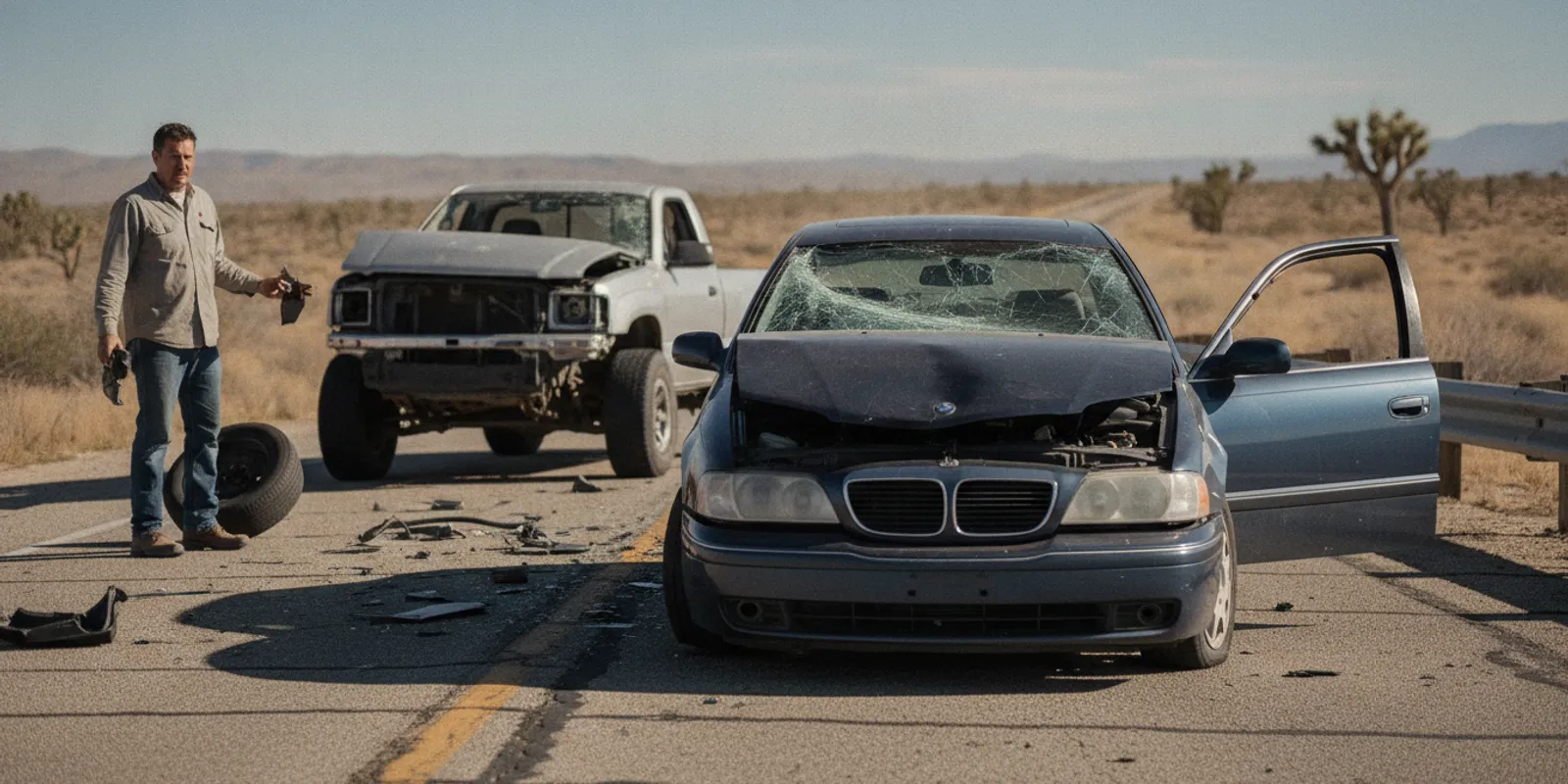
After a crash, the person behind the wheel may not be the only party whose conduct matters. California vicarious liability car accident claims ask whether a business, vehicle owner, or other principal may be legally responsible for a driver’s negligence because of their relationship or permission. The answer depends on why the driver was using the vehicle, who controlled the trip, and what evidence supports the connection.
Discuss your accident with a lawyer
What does vicarious liability mean after a California car accident?
Vicarious liability is a legal rule that can make one person or organization responsible for another person’s wrongful conduct. The responsible party may not have been driving or personally caused the collision. Liability instead comes from a legally significant relationship, such as an employer and employee, or from a California law that assigns some responsibility to a vehicle owner when another person drives with permission.
This is different from a claim that a company or owner was personally careless. For example, a claim that an employer failed to train a driver, or that an owner knowingly lent a car to an unsafe driver, focuses on the defendant’s own conduct. A vicarious-liability theory focuses on the driver’s conduct and the relationship connecting that driver to another party. Depending on the facts, both theories may be considered.
These distinctions matter because identifying only the driver may leave out a potentially responsible party. But a connection to a business or a vehicle owner does not automatically establish liability. The relationship, purpose of the trip, permission given, and applicable legal limits all need to be examined.
Think of the inquiry as a chain of links. First, there must be a basis to show that the driver acted negligently and caused harm. Next, there must be a relationship or rule that connects the driver to another defendant. Finally, evidence must support the link at the time of the collision. A person may own a company or car without being responsible for every trip another person takes.
How does California vicarious liability car accident law apply to employers?
An employer may be responsible for an employee’s negligent driving when the employee was acting within the course and scope of employment at the time of the collision. The key question is not simply whether the driver was on the clock. It is whether the driving was sufficiently connected to the work the employee was hired or directed to perform.
A delivery driver making a scheduled delivery, a technician traveling between job sites, or an employee driving to meet a client may be carrying out work duties. If negligent driving during that work trip causes injury, the employer may be a possible defendant under the doctrine commonly called respondeat superior. The facts of the trip matter more than the job title alone.
By contrast, an employee’s ordinary commute to or from a fixed workplace is generally treated differently from travel undertaken for the employer’s business. There can be exceptions. A work-related stop, a required errand, a special assignment, or employer control over the trip may change the analysis. A brief personal detour may also raise questions about whether the employee had departed from work duties or later returned to them.
For example, compare two trips that begin at an employee’s home. In one, the employee drives straight to the usual office for a regular shift. In another, a supervisor directs the employee to collect equipment from a supplier before going to a worksite. The first looks like a routine commute; the second has an assigned work purpose. The location of the crash alone does not resolve the question. The assignment and the employee’s actual route may be important.
A personal stop does not always have the same effect. A short stop along an assigned route may be treated differently from a substantial deviation that changes the purpose of the trip. If the employee completes the personal errand and returns to the work route, the timing and location of the collision can matter. There is no simple mileage or time formula that answers every case, so the details should be recorded rather than reduced to a label such as “lunch break” or “after hours.”
Relevant details can include:
- Where the employee was going and why.
- Whether a supervisor assigned or approved the trip.
- Whether the employee was transporting work materials, equipment, or passengers.
- Whether the employee was being paid or reimbursed for travel.
- Whether the employer controlled the route, schedule, or destination.
- Whether the driver made a personal detour and how it affected the trip.
No single item necessarily decides the issue. A pay record may help establish the work schedule, but it does not by itself prove that a particular drive was within the scope of employment. A company logo on a vehicle is relevant context, not conclusive proof. The parties’ accounts should be compared with records and other evidence.
When reviewing the timeline, note the employee’s starting point, intended destination, assigned task, and any stop before or after the crash. Preserve messages that set out the assignment and avoid guessing about what a supervisor authorized. Even a small detail—such as whether the employee was carrying a package for delivery or had finished a shift—may help explain why the trip was being made.
When may a business be responsible for a contractor or agent?
Calling a driver an independent contractor does not automatically resolve responsibility. The actual working arrangement may matter, including who directed the task, supplied the vehicle, controlled how the work was performed, and set the driver’s schedule. The contract is relevant, but it may not answer every legal question about the relationship.
A business might also face a claim based on agency. An agent is authorized to act for a principal in certain matters. If a driver was acting on behalf of a business within the authority and task assigned, the relationship may require closer review. Agency and employment are not interchangeable labels, and not every person performing work for a company is its agent for every purpose.
Consider a driver who uses a personal vehicle to make a delivery arranged through a business. Useful questions may include who accepted the delivery, who chose the destination, whether the driver could reject the assignment, and what instructions applied during the trip. Those facts can help describe the working arrangement. The fact that the business received a benefit from the trip is relevant context, but it does not alone establish that the business is legally responsible.
It is also important to distinguish a contractor relationship from a separate contractual or insurance issue. A company’s agreement with a driver may allocate responsibilities between them, but that agreement does not necessarily determine an injured person’s rights. The legal analysis can require examining the real-world arrangement and applicable law, not just the heading on a contract or the description used in an app.
Separate from vicarious liability, a business may be accused of its own negligence. Examples could include inadequate screening, unsafe work demands, or negligent vehicle maintenance, if supported by evidence and applicable law. These are distinct theories. The injured person must have facts supporting them; a business relationship alone is not proof that the business acted carelessly.
How can a vehicle owner share responsibility for a permissive driver?
California law can impose responsibility on a vehicle owner when another person negligently drives the vehicle with the owner’s permission. This is often described as permissive-use or owner liability. The driver’s negligence still matters: permission to use a car is not, on its own, evidence that the driver caused the collision.
Permission may be express, such as an owner handing over the keys, or may be inferred from the circumstances and prior practice. The scope of permission can also matter. Was the driver allowed to use the car for this trip? Did the owner set limits on who could drive, where the car could go, or when it had to be returned? The driver and owner may describe the arrangement differently, so records and witness accounts can help clarify it.
For example, an owner may lend a car to a family member to run a nearby errand, while the driver later takes a different trip. Relevant facts could include what the owner actually authorized, whether the driver had regular access to the keys, and how the vehicle had been used before. Do not assume that a family connection automatically proves permission, or that a disputed restriction automatically defeats it. The evidence and governing law must be considered together.
Permission and ownership should also be kept distinct from who was driving. The registered owner may be an individual, a company, or a leasing entity, while the person with practical authority to lend the car may be someone else. Registration records can identify an owner, but messages, testimony, and prior arrangements may be needed to understand who gave permission and what it covered.
Owner responsibility under a permissive-use statute is not the same as proof that the owner personally acted negligently. A separate negligent-entrustment claim, for instance, would focus on what the owner knew or should have known about the driver and the decision to provide the vehicle. One theory should not be assumed merely because the other may apply.
California has statutory rules that can limit an owner’s liability in some situations. The details can depend on the circumstances and the type of claim. Do not assume that vehicle ownership means unlimited responsibility for every loss, or that a stated limit resolves all claims against every defendant. For general information about California’s court system and legal resources, consult the California Courts website. A lawyer can assess how current law applies to the specific facts.
Which facts matter in a California vicarious liability car accident claim?
Evidence needs to connect the driver’s conduct to the other party. A practical first step is to preserve information about both the collision and the driver’s purpose. If the driver was working, the question may be what task was underway. If the driver had borrowed a vehicle, the question may be what permission the owner gave.
| Possible responsible party | Relationship or theory to examine | Evidence that may help |
|---|---|---|
| Employer | Employee driving within work duties | Dispatch records, work schedule, route information, time records, supervisor messages, and the employee’s account |
| Business using a contractor | Agency, control of assigned work, or the business’s own negligence | Work agreement, assignment details, communications, payment records, vehicle arrangements, and evidence of control |
| Vehicle owner | Permission for the driver to use the vehicle | Registration, messages, prior borrowing history, statements about permission, and restrictions on use |
| Owner or business accused of direct negligence | Negligent entrustment, maintenance, or another independent act or omission | Maintenance records, inspection history, prior warnings, and evidence of what the defendant knew |
Some records may be held by an employer or business rather than the injured person. Preserve what you have, including photographs, messages, the exchange of information, and contact details for witnesses. Do not alter or delete relevant communications. If a vehicle has a dash camera or nearby businesses may have security footage, prompt action can matter because recordings may be overwritten.
Make a simple evidence log while details are still fresh. Record the date and time of each conversation, who was present, and what was said about the trip or vehicle. Keep original photographs and messages where possible, with their dates intact. If you receive a repair estimate, work assignment, insurance letter, or vehicle record, keep the full document rather than only a screenshot of one line.
For a work-related crash, useful details include the vehicle’s registered owner, the name of the employer, any company identification, and what the driver said about the trip. For a borrowed car, write down who gave permission, what the permitted use was, and whether the driver had used the car before. Keep the wording factual and avoid guessing about legal responsibility at the scene.
Medical records and collision evidence serve different purposes. Medical documentation can show the injuries and treatment. Photographs, witness statements, and available collision reports may help establish how the crash occurred. Evidence of the driver’s work or permission relationship helps address whether another party may also be responsible.
When asking about information held by others, be specific about what may exist and why it matters. A request to preserve a particular vehicle’s camera footage or a defined time period of dispatch records is more useful than a general request to “save everything.” Do not trespass, access another person’s accounts, or interfere with a company’s systems to obtain evidence. A lawyer can advise on proper ways to request or seek relevant records.
What if more than one party may be responsible?
A collision can involve multiple possible defendants. The driver may be accused of negligent driving, while an employer or owner may be considered under a separate rule. A company might also be accused of its own conduct. These theories can be investigated at the same time, but each requires a factual and legal basis.
It is useful to keep three questions separate:
- What caused the crash? Identify the driver’s actions and the available evidence about the collision.
- What relationship connected the driver to another party? Determine whether the driver was performing work, acting as an agent, or using a vehicle with permission.
- Does that relationship create responsibility under the applicable rule? Review the precise purpose, control, permission, and any legal limits.
Comparative fault and damages may be relevant to a claim, but they do not answer the threshold question of whether an employer or owner is connected to the driver’s conduct. Keep those issues distinct when organizing the facts. A case may require evaluating both who contributed to the collision and which parties may legally share responsibility.
More than one theory can sometimes arise from the same event, but the parties and evidence supporting each theory may differ. For instance, an employer’s responsibility for an employee’s work driving is a different question from whether the employer independently failed to maintain a vehicle. Likewise, a vehicle owner’s permission to drive is distinct from what the owner knew about the driver. Listing each question separately can make a complicated account easier to review.
What steps can help preserve a claim involving another driver?
After addressing immediate safety and medical needs, consider these practical steps:
- Record the driver and vehicle details. Save the driver’s name, vehicle information, insurance information, and any company or owner details provided.
- Document the scene. Photograph vehicle positions, damage, road conditions, and visible identifying marks when it is safe to do so.
- Keep communications. Save texts or emails about a borrowed vehicle or a work assignment. Note the names of witnesses and what they observed.
- Ask about records promptly. Work schedules, dispatch messages, camera footage, and vehicle records may not remain available indefinitely.
- Be accurate when speaking with insurers. Give truthful information, but do not speculate about whether a driver was working or had permission if you do not know.
- Get advice before accepting a resolution. A release may affect claims involving more than the driver. Understand what parties and claims it covers before signing.
In practice, organizing this information can be straightforward. Create separate folders for crash evidence, medical documents, and records that may show work or permission. Write a timeline in your own words, mark which details you personally observed, and identify what came from another person. If a fact is uncertain, label it as uncertain instead of filling in a likely explanation.
Do not confront an employer or vehicle owner to demand an admission. Keep communications calm and retain copies of any response. If an insurer asks for a recorded statement or a release, ask what the request covers and take time to understand it. A rushed description can blur the distinction between what you know directly and what you inferred.
Deadlines and procedural requirements may depend on who may be liable and the facts of the case. Claims involving public entities can have different notice rules from claims against private parties. Do not assume that investigating an employer or owner pauses any deadline. Prompt legal guidance can help identify the parties and the next steps.
James McKiernan Lawyers represents accident victims in personal injury matters. Learn about the firm’s auto accident representation and personal injury services. Information about San Luis Obispo services and the firm’s office locations is available online.
Call 800-200-HURT to discuss your options
Frequently asked questions
Can an employer be liable if the employee was driving a personal car?
Possibly. Vehicle ownership is not the only issue. The focus may be whether the employee was carrying out work duties when the crash happened. A personal vehicle used for a work assignment can raise different questions from an ordinary commute. The trip’s purpose, the employer’s directions, and the degree of work-related control all matter.
Does an employer automatically become liable if a crash happens during work hours?
No. The time of the collision alone does not establish that the employee was acting within the scope of employment. The task, destination, route, and any personal detour may be relevant. The full circumstances should be reviewed rather than relying on the clock alone.
Is a car owner responsible whenever someone else crashes their car?
No. A claim based on permissive use generally requires examining whether the driver had permission and whether the driver’s negligence caused the crash. California law also contains rules that may limit owner liability in some circumstances. A separate claim based on the owner’s own conduct has different requirements.
Can I make a claim against both the driver and an employer or owner?
More than one party may be considered when the evidence supports separate legal grounds for responsibility. The driver’s role, the work or agency relationship, vehicle permission, and the conduct of each party should be evaluated. Naming another party is not a substitute for establishing the facts that connect that party to the claim.
Ready to discuss a California car accident claim?
When another person’s driving causes an injury, the employer, vehicle owner, or business connected to that driver may also need to be considered. Identifying the relationship early can help preserve relevant evidence and clarify which legal rules may apply. You can review the firm’s background and approach before reaching out.
Contact a lawyer about your accident
Every case turns on its own facts, so an assessment of the driver’s conduct, the relationship, and the available evidence is the best way to understand possible responsibility.