Assumption of Risk California Personal Injury Guide
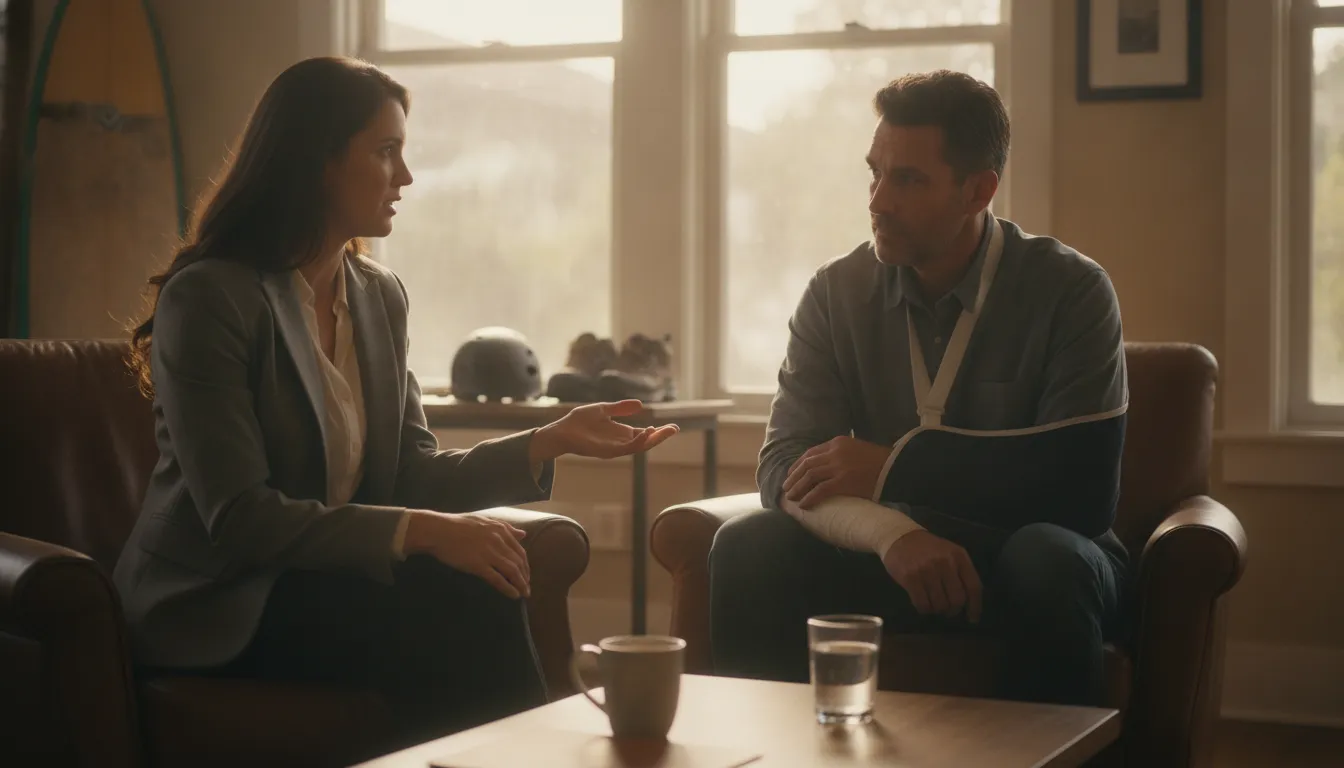
Being injured during a recreational activity or around a hazard you noticed does not automatically end a California personal injury claim. The key questions are what duty the other person or organization owed and whether the injury arose from an inherent risk or conduct that increased or concealed the danger.
Call 800-200-HURT to discuss your California injury claim with James McKiernan Lawyers.
In an assumption of risk california personal injury case, primary assumption of risk may limit recovery when the defendant had no duty to prevent an inherent risk of the activity. Secondary assumption of risk generally applies when a duty existed, but the injured person knowingly encountered a risk created by a breach. The facts, the activity, and the parties’ relationship matter.
California courts developed this duty-focused framework in Knight v. Jewett, a 1992 California Supreme Court decision: read the opinion. Understanding that framework helps clarify why a known hazard, waiver, or recreational setting may matter without deciding the claim by itself.
How Assumption of Risk California Personal Injury Claims Are Evaluated
When a California injury involves a sport, recreation, or a hazard that someone may have recognized, the phrase “assumption of risk” can sound decisive. It is not. The central questions are whether the defendant owed a legal duty to protect the injured person from the particular risk and whether the defendant breached that duty.
The California Supreme Court addressed the doctrine in Knight v. Jewett, decided in 1992. The case considered how assumption of risk should operate after California adopted comparative fault principles. The court separated primary and secondary assumption of risk by focusing on legal duty. That approach avoids treating awareness of danger as the end of the inquiry.
Why legal duty matters
Primary assumption of risk may apply when the nature of an activity means the defendant has no duty to protect the participant from an inherent risk. California Civil Jury Instructions No. 470 explains that primary assumption of risk generally removes a defendant’s duty of care for an injury incurred during a covered sport or recreational activity. That analysis can be relevant in active sports, but it does not automatically apply to every accident at a recreational facility or every visible condition.
For example, someone who chooses to ride a jet ski may encounter ordinary risks inherent in that activity. That does not by itself answer whether an operator, property owner, manufacturer, or another person created an additional danger or failed to perform a separate duty. Readers can learn more about California watercraft injury liability when a claim involves a boat or personal watercraft.
Primary assumption of risk can be a complete bar only when the defendant owed no legal duty regarding the particular inherent risk. Even then, intentional injury or reckless conduct outside the ordinary activity may be treated differently. The activity, the parties’ relationship, the specific hazard, warnings, and the defendant’s conduct all matter. A known hazard is therefore one fact in a duty analysis, not a blanket waiver of California personal injury rights.
What Is Primary Assumption of Risk in California?
Primary assumption of risk concerns the legal duty owed during certain sports and recreational activities. Under California law, a defendant may not owe a duty to protect a participant from a risk that is inherent in the activity itself. California Civil Jury Instructions (CACI) No. 470 describes this doctrine as generally removing a duty of care for injuries arising from covered sports or recreation. The analysis is not based simply on whether someone saw a hazard or understood that an activity could be dangerous.
Instead, the key question is whether the risk was part of the activity’s ordinary nature and whether the defendant’s relationship to the activity created a duty to address it. A person who joins a recreational activity may expect certain risks that cannot be eliminated without fundamentally changing how the activity works. For example, collisions and falls may be inherent in some active sports. That does not mean every injury during recreation is automatically barred, or that every visible condition qualifies as an inherent risk.
The rule can apply to injuries involving facilities, instructors, organizers, or other participants, but the precise duty depends on the facts. A facility may still have obligations that are separate from the risks participants ordinarily accept. Similarly, an operator or participant may be responsible for conduct that increases the danger beyond the activity’s normal level.
For active sports, the duty between coparticipants is generally to avoid intentionally injuring another person or acting so recklessly that the conduct falls outside the range of ordinary activity. Mere carelessness during the sport ordinarily does not create liability for an inherent sporting risk, according to California court materials. This approach reflects concern that imposing ordinary negligence liability on every routine mistake could discourage participation and change the character of the activity.
Primary assumption of risk is therefore different from a simple statement that a hazard was known. A wet floor at an exercise facility, a concealed defect on a boat, or an unusual condition at a recreational site may require a separate duty analysis. Our guide to California watercraft injury liability discusses how the circumstances surrounding a recreational accident can matter. A fact-specific review is often necessary to determine whether the risk was truly inherent or whether someone failed to address an unreasonable danger.
What Is Secondary Assumption of Risk?
Secondary assumption of risk involves a different question from whether an activity includes an inherent danger. Here, the defendant may owe the injured person a duty of care. The person then encounters a risk that the defendant allegedly created or increased by breaching that duty. The analysis may consider what the defendant should have done, what the injured person knew, and how the injury occurred.
For example, a recreational facility may have a duty to take reasonable steps regarding a dangerous condition outside the ordinary risks of the activity. If a participant knows about that condition and proceeds anyway, the defendant may argue that the participant accepted the danger. That argument does not automatically end the claim. Under California’s comparative-fault framework, secondary assumption of risk is generally analyzed as part of comparative fault rather than as an automatic complete bar. The California Supreme Court’s discussion in Knight v. Jewett is commonly cited for this duty-based distinction: read the California Supreme Court’s opinion.
How the distinction can arise in recreational activities
Imagine a person using a treadmill or bicycle at a fitness facility and noticing that a safety feature is malfunctioning. The person continues and is injured. The facts may raise questions about the facility’s duty and whether the defect caused the injury. They may also concern how clearly the risk was known and whether the person had a reasonable alternative. Those issues can differ from the ordinary risks of exercise itself. Learn more about risks during recreational exercise.
Active sports add another layer. California court materials describe the ordinary duty between participants as avoiding intentional injury or conduct so reckless that it falls outside the activity’s ordinary range. That principle does not mean every injury during a game is barred, nor does it turn every careless act into liability. It helps identify the duty owed in the specific setting. See the California courts’ explanation of assumption of risk in active sports.
Whether secondary assumption of risk affects a claim depends on the activity, relationship, warnings, conditions, and available alternatives. A lawyer must examine those details rather than treating knowledge of a hazard as proof that the injured person cannot recover.
Why Assumption of Risk California Personal Injury Cases Are Fact-Specific
California courts do not decide these cases by asking only whether an injured person knew an activity could be dangerous. They examine the activity, the relationship between the parties, the specific conduct that caused the injury, and whether the defendant owed a legal duty in those circumstances. The California Supreme Court explained this duty-based approach in Ford v. Gouin, holding that assumption of risk is a complete bar only when the defendant did not breach a duty of care.
That analysis can change when someone does more than participate in an ordinary risk. In an active sport, a coparticipant may generally avoid liability for conduct that is merely careless or negligent during the activity. But the ordinary duty still includes avoiding intentional injury or conduct so reckless that it falls outside the normal range of the sport. A collision during ordinary play and an intentionally dangerous act may therefore receive very different legal treatment.
Increased or concealed risks can change the analysis
The facts also matter when a defendant increases a risk or fails to disclose a danger that is not inherent in the activity. Gregory v. Cott illustrates why a known risk is not always the end of the inquiry. The court considered whether the risk was one the injured person was specifically hired to confront. That approach shows why not every injury connected to a known hazard is automatically barred. Evidence about warnings, changed conditions, unsafe instructions, concealed defects, and what the defendant knew may help distinguish an ordinary risk from an added one.
Waivers and premises duties are not automatic answers
A signed waiver or release may be relevant, but it does not eliminate the need to examine the language, the activity covered, and the conduct alleged. It may not protect intentional or reckless conduct, or resolve a claim involving a risk outside the agreement. When an injury involves a property condition, the analysis may also include duties owed by an owner, operator, or occupier. That makes it important to distinguish this doctrine from a general premises liability claim. For background, see responsibility for known property hazards and California premises liability rights.
How Does Assumption of Risk Differ From Comparative Negligence?
These concepts can overlap, but they answer different legal questions. California courts generally begin by examining the defendant’s duty, the nature of the activity, and the relationship between the parties. The distinction can affect whether a claim is barred at the outset or evaluated by assigning responsibility among the parties.
| Issue | Assumption of risk | Comparative negligence |
|---|---|---|
| Main question | Did the defendant owe a duty to protect the injured person from this particular risk? | Did the injured person and one or more defendants fail to use reasonable care, and how should fault be allocated? |
| Primary treatment | For an inherent risk of a covered sport or recreational activity, the defendant may owe no duty. This primary form can completely bar recovery for that risk. | Fault is compared after considering the parties’ conduct. The injured person’s share of fault can reduce, rather than automatically eliminate, damages. |
| Secondary treatment | The defendant owes a duty but allegedly breaches it, and the plaintiff encounters a known risk created by that breach. California treats this analysis within comparative fault. | The fact finder may consider the plaintiff’s knowledge, choices, and conduct when determining the percentage of responsibility. |
| Sports example | A coparticipant ordinarily is not liable for merely careless conduct within an active sport, but duties remain against intentional injury or recklessness outside ordinary activity. | If comparative fault applies, the evidence may be used to weigh each party’s conduct and resulting responsibility. |
| Effect of a waiver or warning | A signed waiver or warning may be relevant, but it does not decide whether the defendant owed a duty or whether conduct exceeded an inherent risk. | A warning, the person’s response, and other evidence may affect fault, causation, or damages, depending on the facts. |
In Knight v. Jewett, the California Supreme Court explained the duty-based distinction after California adopted comparative fault principles. Later decisions emphasize that assumption of risk is a complete bar only when the defendant did not breach a legal duty. A known hazard alone does not answer that question. The activity, the conduct involved, and the specific risk must be examined together. Sources include the California Supreme Court’s Knight opinion and California court guidance on primary assumption of risk.
What Evidence Can Help Respond to an Assumption-of-Risk Argument?
Evidence can help show what happened, what risk you actually encountered, and whether another person or business changed, concealed, or failed to address that risk. Preserve information promptly, before surveillance footage, online messages, or memories disappear. These materials do not guarantee a claim, but they can help a lawyer evaluate the facts behind an assumption-of-risk argument.
- Write down the incident details. Record the date, time, location, activity, sequence of events, weather and lighting, safety instructions, and what you understood about the danger. Include any warning you received and whether the injury happened during an ordinary part of the activity or after something unusual occurred.
- Preserve photographs and video. Photograph the scene, equipment, surface conditions, barriers, warning signs, and your visible injuries. Keep original files with their metadata when possible. Ask promptly whether a business, facility, or nearby camera captured the incident, and request that relevant footage be preserved.
- Collect witness information. Save names, phone numbers, email addresses, and brief notes about what each witness saw or heard. Do not ask witnesses to change their account. Their observations may help distinguish an inherent risk from a hazard created or increased by someone else.
- Keep waivers, releases, and communications. Save every signed form, registration screen, posted rule, email, text message, incident report, and conversation about warnings or safety conditions. The wording and circumstances surrounding a release can matter, so do not assume a signature resolves the legal analysis.
- Organize medical and financial records. Keep emergency records, diagnoses, treatment notes, prescriptions, bills, work-loss documentation, and instructions from medical providers. Follow appropriate medical advice and describe symptoms accurately. Avoid posting comments or photographs about the incident or recovery without considering how they could be interpreted.
Also note important dates. California Courts state that a personal-injury lawsuit generally has a two-year deadline from the injury, but deadlines can vary based on the claim, the defendant, and other circumstances. Review the current California Courts statute-of-limitations guidance and seek case-specific advice promptly. You can also review these steps in a California injury claim to organize an initial review.
What Should You Do After an Injury Involving a Known Hazard?
Your immediate priority is safety and appropriate medical care. A hazard that was visible or familiar does not, by itself, answer whether another person or business may be legally responsible. The facts may include the hazard, how it was presented, the warnings given, and whether someone increased a risk beyond what a person would reasonably expect.
After receiving care, take practical steps while the details are fresh:
- Report the incident. Notify the property owner, facility operator, employer, or activity organizer. Ask how the report will be recorded, and keep a copy if one is available.
- Preserve evidence. Photograph the area, lighting, warning signs, equipment, and your visible injuries when it is safe to do so. Keep footwear, clothing, waivers, messages, incident reports, and medical records. Write down what happened and identify witnesses.
- Avoid guessing about fault. Do not assume that seeing a hazard eliminates your options, and do not make a definitive statement about who was responsible before the circumstances are reviewed.
- Get fact-specific legal guidance. A lawyer may need to examine the activity, the relationship between the parties, any waiver, the condition of the property, and whether the risk was concealed or increased. California deadlines also vary by claim and defendant. California Courts generally describe a two-year limit for many personal-injury lawsuits, but that is not a substitute for prompt advice.
If the injury involved a property condition, our guide to slip-and-fall injury claims may provide helpful background. James McKiernan Lawyers can review the circumstances without assuming the outcome in advance.
Call 800-200-HURT to discuss what happened with James McKiernan Lawyers.
Frequently Asked Questions
What are the two types of assumption of risk in California personal injury cases?
Primary assumption of risk concerns dangers inherent in a covered sport or recreational activity, where the defendant may owe no duty to prevent that particular danger. Secondary assumption of risk applies when the defendant owed a duty, but the injured person encountered a known risk created by an alleged breach. The California Supreme Court’s Knight v. Jewett decision explains why the duty analysis matters.
Is assumption of risk a valid defense in a California personal injury claim?
It can be, but knowing about a hazard does not automatically defeat a claim. A court considers the activity, the parties’ relationship, the risk involved, and whether the defendant breached a legal duty. Primary assumption of risk may completely bar recovery for an inherent risk when no duty was owed, while secondary assumption of risk is generally evaluated through comparative fault. The facts and evidence control the result.
What are the exceptions to assumption of risk in California?
Potential exceptions include intentional injury, reckless conduct outside the ordinary range of an activity, failure to warn about a known risk, or conduct that increases the danger beyond what is inherent. California court materials describe the sports-related duty as including protection against intentional or unusually reckless conduct, rather than merely careless conduct during ordinary play: California Courts materials.
Can you give an example of assumption of risk in a personal injury case?
A person who joins an active sport may accept ordinary dangers that are part of the activity, such as an expected collision during play. That does not necessarily cover a participant’s intentional injury or conduct so reckless that it falls outside ordinary activity. At a facility, a separate question may be whether an unsafe condition or concealed danger created a risk the operator had a duty to address.
Ready to Discuss Your California Injury Claim?
An assumption-of-risk argument can depend on the activity, the hazard, the defendant’s conduct, and the evidence available. Contact James McKiernan Lawyers for fact-specific guidance about how those details may affect your claim.