Pothole Accident Claim in California: Who Is Liable?
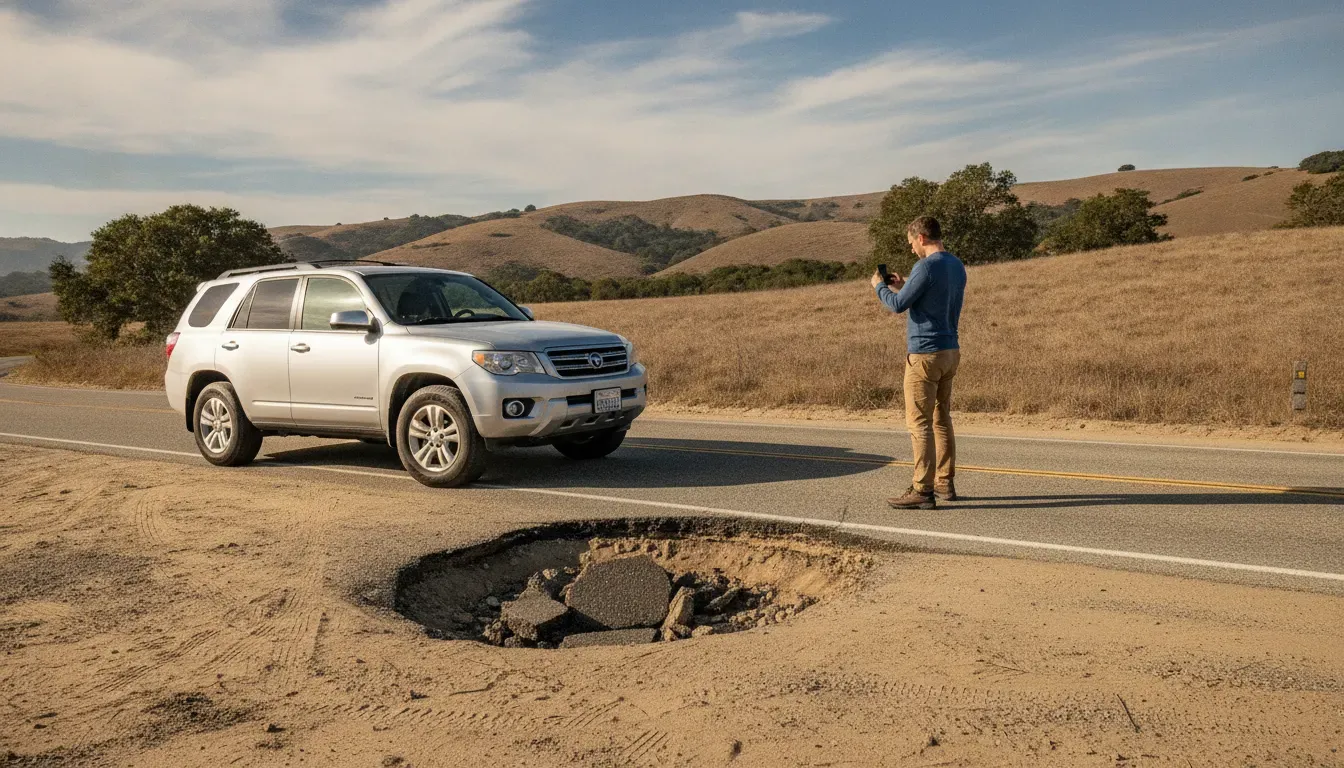
A pothole can do more than damage a tire. A sudden impact may cause a driver to lose control, send a motorcyclist or bicyclist to the pavement, or make a pedestrian fall while avoiding a road defect. A pothole accident claim in California may involve an insurance claim, a claim against a public entity, or both. The result depends on who controlled the road, what the responsible entity knew or should have known, how the defect caused the incident, and whether the right evidence was preserved.
If you were injured in a crash caused by a pothole or dangerous road condition, contact James McKiernan Lawyers for a free consultation.
Is a city or county automatically liable for a pothole?
No. A public agency is not automatically responsible every time a vehicle hits a pothole. California law requires proof of specific elements before a public entity can be held liable for a dangerous condition of public property. The road may also be controlled by a different public entity, a private owner, or another party.
The starting point is California Government Code section 835. In general, a claimant must show that:
- The public property was in a dangerous condition when the incident occurred.
- The dangerous condition was a substantial factor in causing the injury.
- The condition created a reasonably foreseeable risk of the type of injury that occurred.
- Either a public employee’s wrongful or negligent act created the condition, or the public entity had actual or constructive notice and enough time to take protective measures.
That framework is different from simply saying that a road was rough or that maintenance could have been better. The condition and the facts surrounding the incident must be evaluated together.
What makes a pothole a dangerous condition?
California Government Code section 830 defines a dangerous condition as a condition of public property that creates a substantial risk of injury when the property is used with reasonable care in a reasonably foreseeable manner. A pothole may support that theory when its size, depth, location, visibility, traffic setting, or surrounding conditions make a serious incident reasonably foreseeable.
The analysis can include questions such as:
- How large and deep was the pothole?
- Was it located in a travel lane, bike lane, shoulder, crosswalk, or another area people reasonably use?
- Could a person using reasonable care see and avoid it in time?
- Did darkness, standing water, traffic, road markings, glare, or a curve make it difficult to detect?
- Did the condition affect steering, braking, balance, or the ability to remain in the proper lane?
- Was there a warning, barrier, repair patch, or other protection?
A public entity may argue that the defect was minor, open and obvious, not dangerous when used with reasonable care, or not the cause of the injury. Under Government Code section 835.4, reasonableness and the practicality of protective measures can also become part of the defense. These issues are fact-specific and cannot be decided from the word “pothole” alone.
Who controls the road where the accident happened?
Before sending a claim, identify the agency or owner with responsibility for the exact roadway segment. A road’s location or mailing address does not always identify the entity that owns or maintains it. Depending on the route, responsibility may rest with a city, county, the State of California through Caltrans, another public agency, a private road owner, or more than one entity.
In the Central Coast and San Luis Obispo area, a crash may occur on a local street, a county road, or a state-maintained highway. Preserve the route name, nearest cross street, direction of travel, lane, mile marker if available, and GPS location. For an incident on a state route, Caltrans provides a damage-claim process and district claims-office information. That process is not an insurance program, and using the correct procedure does not eliminate the need to prove liability.
Do not assume that reporting a pothole to one agency proves that agency controlled the road. The report may still be valuable evidence of notice, but control and maintenance records should be confirmed.
How does notice affect a pothole accident claim?
Notice is often the central issue in a road-defect case. Under Government Code section 835.2, actual notice generally means the public entity knew the condition existed and knew or should have known that it was dangerous. Constructive notice generally requires evidence that the condition existed long enough, and was obvious enough, that the entity should have discovered it through due care.
Evidence of actual notice
Actual notice may be shown by a prior complaint, service request, inspection entry, work order, employee observation, police report, or other record that identifies the defect before the crash. A witness who reported the pothole can also be important. A later repair does not by itself prove what the agency knew before the incident, so the timing of reports and work is significant.
Evidence of constructive notice
Constructive notice may depend on how long the pothole existed, whether it was visible, the agency’s inspection practices, and whether a reasonable inspection would have found it. Photographs from earlier dates, neighborhood messages, dated videos, recurring repair patches, and road-maintenance records may help establish a timeline. A lawyer may need to request public records or investigate inspection and repair history.
The absence of a prior complaint does not automatically end the analysis. A condition may still have existed long enough and been obvious enough to support constructive notice, but the claimant must develop facts rather than rely on speculation.
What should you document after a pothole crash?
Safety comes first. Do not stand in an active traffic lane or walk into a travel path to photograph a defect. Move to a safe location if possible, call emergency services when anyone is injured or traffic is dangerous, and get medical care. Then preserve the details that may disappear after a road crew repairs the pothole.
- Photograph the scene safely. Take wide images showing the road, lane, intersection, signs, lighting, traffic direction, and nearby landmarks. Take closer images of the pothole only from a safe position. Include a scale reference only if it can be done without entering danger.
- Record the location. Save the address, cross streets, route number, lane, travel direction, GPS pin, and the date and time. Note weather, darkness, standing water, construction, and visibility.
- Preserve vehicle or bicycle evidence. Photograph the damaged tire, wheel, suspension, frame, handlebars, lights, and other affected parts before repairs when practical. Keep damaged parts and obtain detailed repair estimates, invoices, and photographs from the repair shop.
- Document the injury and treatment. Obtain prompt medical evaluation, follow medical instructions, and keep records of symptoms, appointments, prescriptions, bills, work absences, and changes to daily activities.
- Gather witness information. Ask witnesses for names and contact details. A witness may have seen the impact, the road condition, a warning, or how long the defect had been present.
- Save digital evidence. Preserve original photographs and videos with their metadata. Look for nearby business, traffic, doorbell, or vehicle-camera footage, and note that many systems automatically overwrite recordings.
- Report the hazard. Use the appropriate city, county, or state reporting channel after reaching safety. Save the confirmation number, submission date, agency response, and any photographs attached to the report.
- Do not give up evidence casually. Avoid posting detailed statements or edited footage on social media. Do not discard damaged equipment or sign a release before understanding what it covers.
How can comparative fault affect the claim?
A public entity may argue that the injured person was speeding, distracted, riding or driving unsafely, failed to keep a proper lookout, or could have avoided the defect. California’s comparative-fault rules can reduce a recovery by the share of fault assigned to the claimant, but an allegation of fault is not the same as proof.
For a driver, useful evidence may include speed, lane position, visibility, traffic, and whether an evasive maneuver would have created a greater risk. For a motorcyclist or bicyclist, braking, balance, lighting, helmet use, lane position, and the exact path around the defect may be examined. For a pedestrian, the location of the fall, visibility, lighting, and whether the person was using a crosswalk or shoulder may matter.
Do not try to recreate the incident by returning to an unsafe roadway. A scene diagram, photographs from a safe position, witness accounts, vehicle data, medical records, and roadway evidence can help explain what happened without creating another danger.
What is the difference between proving liability and meeting the government-claim deadline?
They are separate requirements. Evidence may show that a pothole was dangerous, caused the crash, and was known or discoverable by the responsible public entity. A government claim must still be presented using the proper procedure and within the applicable time period.
California Government Code section 911.2 generally requires claims for death, injury to a person, injury to personal property, or injury to growing crops to be presented within six months after accrual. Other types of claims generally have a different period. Accrual, claim contents, the correct entity, delivery method, and possible late-claim remedies can affect the analysis.
Do not treat the six-month period as permission to wait. A claim can fail because it was sent to the wrong public entity, omitted required information, used the wrong procedure, or was filed after a deadline. For a fuller explanation of timing, see our guide to the California government claim deadline. That deadline article covers timing; this guide focuses on proving that a road defect created a legally actionable danger and preserving the evidence needed to investigate it.
If you need help identifying the responsible road authority or preserving a potential claim, schedule a free consultation with James McKiernan Lawyers as soon as possible.
Concise pothole accident claim checklist
Use this checklist as an immediate starting point, not as a substitute for legal advice:
- Get to safety and obtain medical care for any injury.
- Photograph the road defect, roadway context, damage, and visible conditions safely.
- Record the exact location, time, weather, traffic, and lighting.
- Identify witnesses and preserve original photos, videos, and camera leads.
- Keep medical records, repair records, bills, and proof of missed work.
- Report the hazard to the likely road authority and save the confirmation.
- Determine whether the road is controlled by a city, county, Caltrans, or another owner.
- Get advice promptly about public-entity claim procedures and deadlines.
Frequently Asked Questions
Can I file a claim if the pothole damaged my car but did not injure me?
Possibly. Vehicle damage may support an insurance claim or a claim against the responsible public entity, depending on coverage, road control, notice, causation, and applicable procedures. Keep repair estimates, photographs, towing records, and proof of the road condition. A property-damage claim can still have a government-claim deadline.
Can I sue the city if I did not report the pothole before the accident?
A prior report can help prove actual notice, but it is not the only possible evidence. Constructive notice may be shown through the pothole’s duration, visibility, inspection practices, repair history, photographs, witnesses, or other records. The absence of your own report does not answer the notice question by itself.
What if I swerved and hit another vehicle while avoiding a pothole?
The evidence should address the pothole, the maneuver, the traffic conditions, and each person’s conduct. A claim may involve more than one potentially responsible party, and comparative fault may be disputed. Preserve crash reports, vehicle damage, witness information, and any video.
How long do I have to make a California government claim after a pothole accident?
For many claims involving personal injury or personal property damage, Government Code section 911.2 generally provides a six-month presentation period after accrual. Exceptions and additional deadlines may apply. The responsible entity, accrual date, claim type, and filing method should be reviewed promptly rather than assumed.
Should I photograph the pothole immediately after the crash?
Only if it is safe. Do not enter traffic or put yourself near moving vehicles for a photograph. Use a safe shoulder or another lawful vantage point, ask a witness to preserve observations, and record the location and conditions as soon as practical.
Talk with a California personal injury lawyer
Road-defect cases often turn on details that disappear quickly: a repair, a changed lane, overwritten video, an unrecorded complaint, or a missed claim deadline. James McKiernan Lawyers represents injured people throughout California and has served Central Coast communities for almost 50 years. The firm reports more than 500 five-star reviews. Each case is different, and that figure does not predict the outcome of any individual claim.
For information about the firm’s broader services, visit the California personal injury practice page or the San Luis Obispo personal injury office page. A consultation can help you identify the road authority, preserve evidence, and understand the next step before a deadline passes.
Call 800-200-HURT to discuss your pothole accident claim in a free consultation.